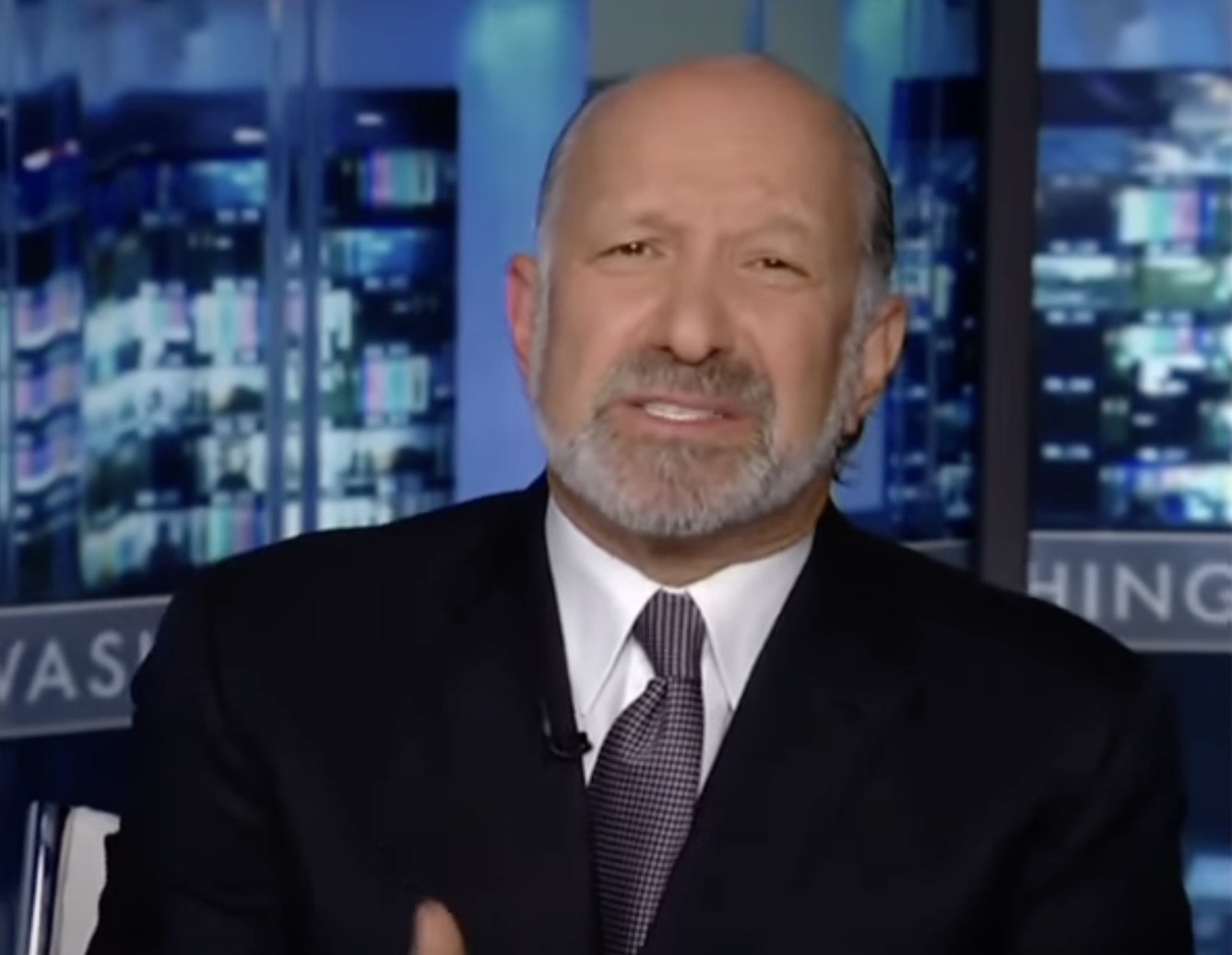
Commerce Secretary Howard Lutnick told Fox News host Laura Ingraham that the H-1B program and the green-card system are set for overhaul, with a new “gold card” aimed at top talent. Image via screen capture
Commerce Secretary Howard Lutnick says H-1B program and the green-card system are set for overhaul, with a new “gold card” aimed at top talent; details and timelines remain unclear.
U.S. Commerce Secretary Howard Lutnick said Monday night that the Trump administration plans to change both the H-1B program for skilled workers and the process for awarding U.S. permanent residence, telling Fox News host Laura Ingraham that a new “gold card” aimed at “the best people” is in the works.
“I’m involved in changing the H-1B program. We’re going to change that program… We’re going to change the green card,” Lutnick said on “The Ingraham Angle.” He added that the administration intends to “start picking the best people to come into this country.”
Lutnick, a former chairman and CEO of Cantor Fitzgerald, a financial institution and real estate services holding company, also claimed that the “average American makes $75,000 a year and the average green card recipient $66,000,” arguing that the U.S. is “taking the bottom quartile” — a rationale, he said, for the forthcoming “gold card.”
Ingraham responded that the H-1B system is “a scam.” The Commerce Secretary did not provide sourcing for the earnings figures during the segment.
The comments extend ideas Lutnick and Trump-world allies have previewed for months, including a premium residency track sometimes branded a “gold” or “golden” card that would target top talent and investors. Trump himself has described a “gold card” as a “green card plus,” and Lutnick has previously linked the concept to large-scale investor visas on Fox platforms. Details, including legal pathway and eligibility, remain unclear.
What changing H-1B would mean:
The H-1B is an employer-sponsored visa for specialty-occupation workers. It is administered by USCIS, which is under the Department of Homeland Security, with a congressionally set annual cap — 65,000 regular slots plus 20,000 for U.S. advanced-degree holders — typically allocated by lottery. Any overhaul would likely require DHS rulemaking (and, for quota or statute changes, Congress).
Indian nationals are the clear majority among H-1B workers. In FY2023, 72.3% of approved H-1B petitions were for people born in India (China was a distant second at 11.7%), and roughly three-quarters of approvals have gone to Indians in recent years—a majority every year since 2010.
A shift toward “merit” or wage-based selection for H-1Bs would advantage higher-paid roles and advanced-degree talent (e.g., PhDs), while making it harder for entry-level candidates and outsourcing-heavy employers to win slots; research and policy briefs expect wage-based systems to reweigh outcomes this way.
Changes to employment-based green cards could be even more consequential: easing per-country caps or expanding high-skill pathways would meaningfully shorten today’s long backlogs (which heavily affect Indians), improving retention for U.S. employers and stability for families; the reverse—tighter caps or narrower criteria—would lengthen queues, raise churn, and push more work offshore. Either way, universities, tech firms, and H-1B families (including H-4 spouses and “Documented Dreamers”) would feel the impact first.
Where green cards come from:
Employment-based immigrants account for a minority of new lawful permanent residents in a typical year; most green cards go to immediate relatives of U.S. citizens and family-sponsored categories. In FY2023, employment-based categories — including workers and accompanying family — represented roughly 17% of the 1.17 million new green cards, according to DHS. That mix matters for any shift toward a “best and brightest” model.
“Gold cards”: The United States already has high-skill and investor pathways—EB-1 (extraordinary ability), O-1 (extraordinary ability, nonimmigrant), EB-2 NIW (national interest waivers), and EB-5 (investor green cards that require capital investment and job creation). A new “gold card” could rebrand or expand these channels, tighten merit filters, or add pricing and fast-track features—but would still need to navigate statutory caps and agency processes.
Ending or reshaping the H-1B lottery has been floated by the administration and sympathetic commentators this summer, but proposed rules have not yet been published; formal notice-and-comment would follow.
Lutnick’s remarks signal the White House’s direction, but USCIS and DOL are the primary implementing agencies for any visa-category change.
Watch the interview:
Read the transcript:
Lutnick: I will tell you what I am involved in. I am involved in changing the H1B program. Right? We’re going to change that program.
Ingraham: That’s a scam!
Lutnick: Because that’s terrible, right? We’re going to change the green card. You know we give green cards. The average American makes $75,000 a year and the average green card recipient $66,000. So we’re taking the bottom quartile. Like why are we doing that that’s why Donald Trump is going to change it that’s the gold card that’s coming, and that’s we’re going to start picking the best people to come into this country. It’s time for that to change.
Ingraham: I think we are American engineering students need to be given the first role at every job, and I think they’re brilliant when given half a chance.