



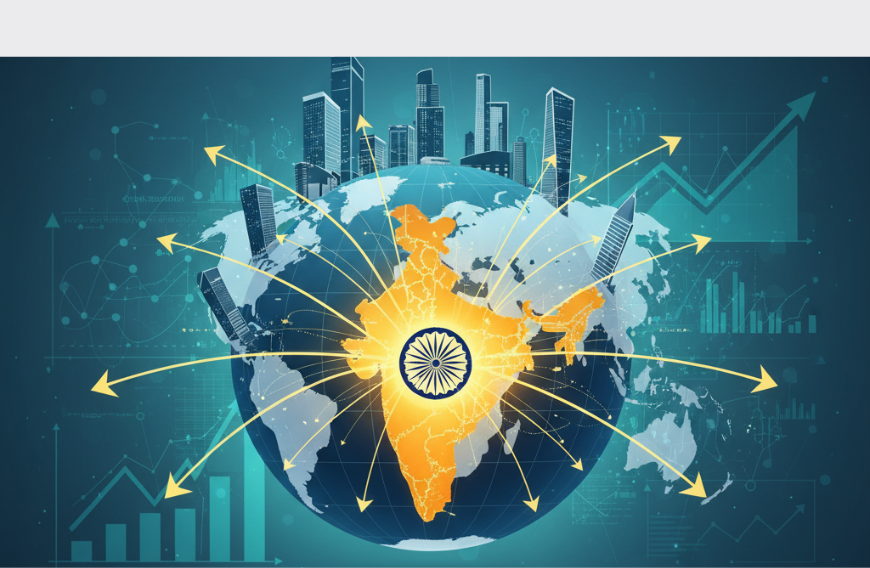
More than two in five multinational companies (MNCs) are planning to increase their trade and manufacturing operations in India, according to a recent report, “Future of Trade: Resilience” by Standard Chartered. The bank attributes this interest to India’s status as “the world’s most populous market and one of the fastest-growing large economies,” highlighting the country’s appeal to global businesses.
The report underscores India’s growing prominence as a hub for multinational investment, driven by its expanding consumer base, favorable business reforms, and strategic location within Asia. As companies seek to diversify their operations and tap into new markets, India’s robust economic growth and policy initiatives make it an attractive destination for global trade and manufacturing expansion.
A survey of 1,200 senior executives across 17 markets revealed that over 40% of companies intend to expand their operations in India, driven primarily by its position as the world’s most populous country and one of the fastest-growing major economies.
READ: Small brands, big burden: How US tariffs on India are squeezing small businesses (
“India is the leading market of interest from our survey, where almost half of the respondents are looking to ramp up or maintain trade activities,” the report noted.
The survey also found that the over 60% of corporates from United States, United Kingdom, China, Hong Kong, and Singapore are among the countries looking to boost trade and investment in India.
The report also pointed to India’s recent trade initiatives, such as a free trade agreement with the UK and moves to expand market access with Singapore and China. It also noted that recent reforms aimed at attracting foreign investment have helped India move up the global value chain.
Meanwhile, the report also found that, on a global scale, trade tariffs remain a major concern for companies, but emerging technologies and overall economic growth are increasingly shaping corporate strategies. Around 53% of executives surveyed identified these factors as key influences on the future of international trade.
READ: How immigrant entrepreneurs serve as America’s secret startup engine (
The United States recently imposed a 50% tariff on certain Indian exports, including a 25% levy tied to India’s ongoing imports of Russian oil. The move underscores rising tensions in global trade, even as companies explore new strategies to navigate the shifting landscape.
“Although trade fragmentation is likely to hinder global growth in the short term, rising prosperity in developing economies and emerging technology mean that the picture, while complex, is still compelling,” Standard Chartered’s Sunil Kaushal shared with The Economic Times.
The report also highlighted that Asia will remain a key driver of trade growth over the next three to five years, while the Middle East is gaining prominence and the United States continues to play a major role. “Yet one thing is also clear: both the U.S. and Mainland China will remain key players in the global supply chain,” the report added.