



By Soumoshree Mukherjee
Editor’s note: This article is based on insights from a podcast series. The views expressed in the podcast reflect the speakers’ perspectives and do not necessarily represent those of this publication. Readers are encouraged to explore the full podcast for additional context.
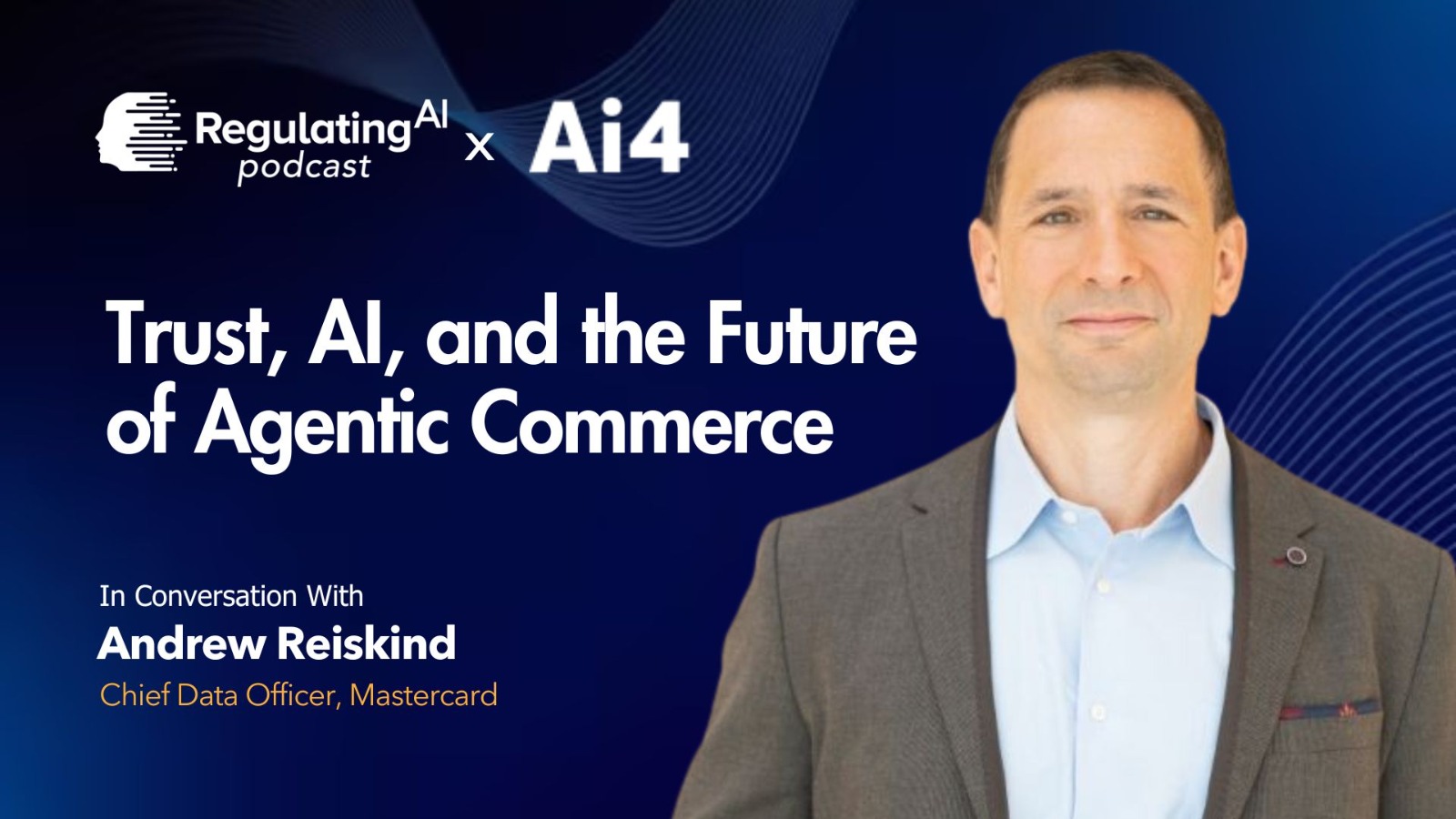
At the AI Conference in Las Vegas, the “Regulating AI” podcast brought together industry leaders to discuss the evolving role of artificial intelligence in financial services. Host Sanjay Puri welcomed Andrew Reiskind, Chief Data Officer of Mastercard, for a wide-ranging conversation on data, AI, and the future of trust in digital commerce.
Reiskind, who oversees “data governance, data management, data strategy, data quality, data sourcing all the data, all things data,” highlighted how Mastercard has embedded AI across its operations for over two decades. “We’ve historically used our data for 20 years to personalize things, to create business intelligence, and to fight fraud. We always believe that our network should be safe and secure,” he said.
The conversation also touched on the industry’s hot topic: agentic AI. Reiskind explained that Mastercard is cautiously advancing in this area, first applying it internally for efficiency.
“Internally we’re using agentic AI for customer support, customer service for internal efficiency purposes. I would say all that [is] external to Mastercard, a lot of enablement of others [is] how to leverage agentic AI,” But he was quick to note that trust must guide adoption. “Everything we do, our brand stands for trust. So, we want to make sure we keep that trust, build that trust,” he said.
READ: ‘We were AI before AI was cool’: Emerson CTO Peter Zornio on boundless innovation (August 18, 2025)
Safety and security remain at the heart of these efforts. Reiskind detailed how Mastercard has already removed actual account numbers from transactions, replacing them with hashed tokens for added protection. “As we’re looking at that piece of agentic [AI], that safety and security piece is important…Is it accurate? Is it doing what you asked it to do?”
Beyond technology, Reiskind emphasized the importance of values-driven governance. He explained that MasterCard began building its AI principles six to seven years ago. “It’s something our own employees can rally behind, but it’s also our customers can rally behind. And it builds confidence in an ecosystem that builds that trust.” This principle-first approach, he argued, shapes risk frameworks and ensures consistency across global operations.
On navigating diverse regulatory environments, Reiskind advised peers to adopt the strictest standards as a baseline. “We tend to say what is the highest level of protection or highest level and strictest regulation? And how do we meet that stricter regulation? And then if we need to dial things back in other countries, we will.”
As the discussion wrapped up, the host acknowledged the depth of unanswered questions. Reiskind, though, left the audience with a clear message: in the age of AI, trust is not an afterthought, it is the foundation.