



Tata Technologies is expanding its U.S. operations and plans to hire more American workers, the company’s CEO said, as the Indian engineering firm navigates the effects of President Donald Trump’s stringent immigration policies.
“As we react and respond to the change in legislation in and around visas, it will mean that we will be recruiting more local nationals in the United States,” Tata Technologies CEO and Managing Director Warren Harris told Reuters on Friday.
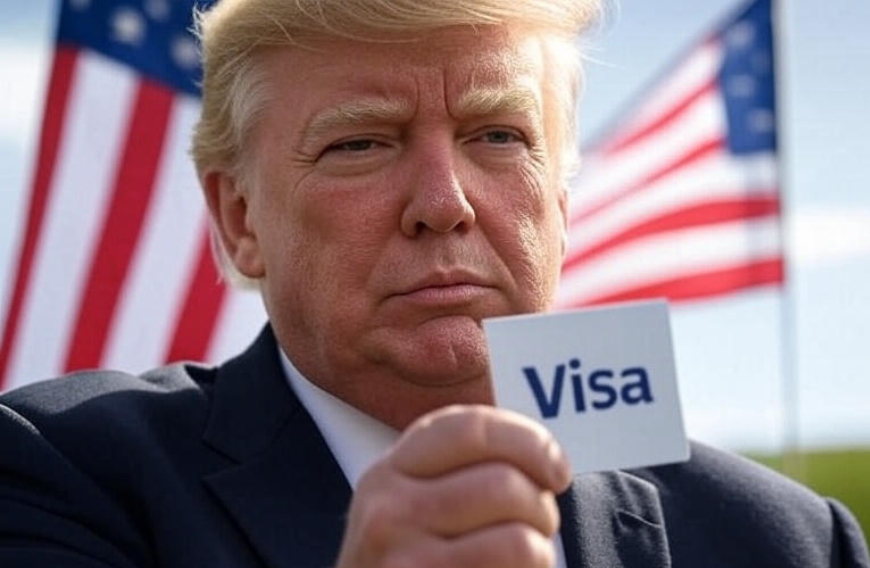
The U.S. government is set to impose higher fees on H-1B visas, widely used by tech giants such as Amazon and Meta, in an effort aimed at protecting American workers from foreign wage competition, according to the Trump administration.
Government data shows that last year, nearly 75% of H-1B visa recipients were from India.
Tata Technologies, a global engineering and technology services provider for the automotive, aerospace, and heavy machinery sectors, employs over 12,000 people worldwide, including a significant workforce in the United States.
Headquartered in Pune, India, Tata Technologies does not break down revenue or staffing by country, but North America contributed about 20% of the company’s estimated $588 million revenue in 2024–2025.
READ: Amazon, Microsoft, Apple lead surge in H-1B sponsorships despite ‘America First’ push (
Tata Technologies, which counts Jaguar Land Rover, Vietnamese electric vehicle maker VinFast, and Boeing among its clients, has already built a largely local workforce in several countries, with more than 70% of employees in China, Sweden, the UK, and the U.S. being local nationals. The company now plans to extend this approach further in the United States, increasing hiring of American workers as part of its global strategy.
At the same time, Indian engineering service firms, which depend heavily on outsourcing contracts from U.S. companies, have faced challenges as automotive clients scale back amid the effects of U.S. tariffs. Despite this, Tata Technologies’ CEO remains optimistic about the company’s prospects in the United States.
“That market continues to be a very vibrant and important market,” Harris said, adding, “We do see a pickup in the United States in the next 6 to 9 months now that our customers have come to terms with… the new tariff regime.”
Harris added that Tata Technologies, which recently announced its $87.5 million acquisition of German firm ES-Tec Group, plans to pursue additional “targeted” acquisitions in the coming years.
Other Indian engineering and IT service firms operating in the United States are also feeling the impact of higher H-1B visa fees, which increase the cost of bringing skilled foreign workers into the country. Companies such as Infosys, Wipro, and HCL Technologies, which rely on a mix of local hires and visa holders to staff U.S. projects, are being forced to reconsider staffing strategies, scale back some assignments, or accelerate efforts to hire American workers.
READ: H-1B visa fee surge forces Walmart to pause hiring (
While Tata Technologies is increasing its U.S. workforce by hiring more local talent, other companies are scaling back their hiring of foreign workers due to the recent surge in H-1B visa fees. Walmart, the largest private employer in the U.S., has paused job offers for candidates requiring H-1B visas, citing the new $100,000 application fee imposed by the Trump administration.
Tata Technologies’ strategy of prioritizing local hiring in the United States aligns closely with President Trump’s emphasis on boosting American employment. By focusing on hiring U.S. nationals rather than relying heavily on H-1B visa holders, the company not only navigates the rising visa costs but also positions itself in line with the administration’s goal of protecting domestic jobs and encouraging companies to invest in the American workforce.
This could be seen as the Tata Technologies’ focus on hiring American workers could also help the company curry favor with the Trump administration, potentially smoothing the path for future business opportunities in the United States. By aligning its workforce strategy with the administration’s “America First” policies, Indian firm Tata may position itself more favorably for U.S. government contracts or other strategic deals that require a strong domestic employment footprint.