



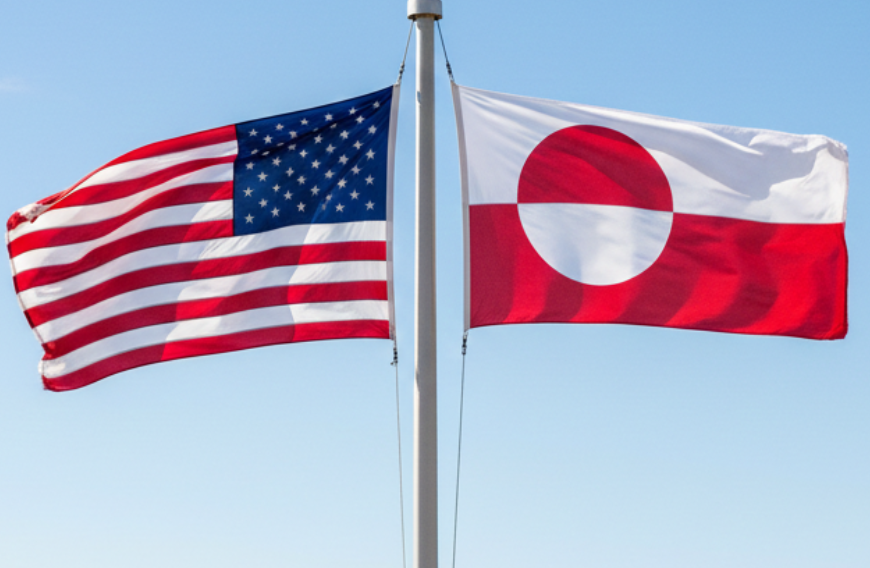
Rising tensions between the United States and Denmark over Greenland have triggered a rare public confrontation between two long-standing NATO allies, as Washington weighs unprecedented incentives to sway Greenlanders and Copenhagen doubles down on defending its Arctic territory.
The Trump administration is reportedly considering offering direct cash payments to each Greenland resident potentially between $10,000 and $100,000 per person as part of a new strategy to encourage the semi-autonomous island to break with Denmark and align more closely with the United States. The idea, under active discussion among senior White House aides and diplomats, is seen as a non-military mechanism to bolster U.S. influence in the Arctic, where strategic interests are rising amid great-power competition.
Such a financial inducement would amount to billions of dollars given Greenland’s population of about 57,000, but the exact mechanics and legal implications remain unclear. Both Copenhagen and Nuuk have rejected suggestions that Greenland is “for sale,” and European leaders have stressed that any decision about the island’s future rests with Greenlanders and Denmark alone.
READ: US ‘disrespectful’ stance on Greenland alarms NATO allies (January 7, 2026)
The proposal comes amid existing interest by the Trump administration in expanding U.S. influence in the Arctic, a region of growing geopolitical importance due to melting ice, untapped mineral reserves and the presence of Russian and Chinese forces. Trump allies emphasize Greenland’s value for national security and military logistics, though critics argue that the approach risks ruining long-standing diplomatic norms.
In response to the intensifying dispute, the Danish Defence Ministry has invoked a rarely cited Cold War-era directive dating from 1952 that orders Danish troops stationed in Greenland to “shoot first, ask questions later” if any foreign power attempts to invade. Under the rule of engagement, Danish forces are authorized to open fire on an invading force without awaiting orders from higher command a policy rooted in the lessons of World War II when Nazi Germany swiftly overran Denmark.
READ: Trump says US ‘needs Greenland’ after Venezuela shock (January 5, 2026)
Denmark’s use of such strong, dramatic statements caused deep alarm in Copenhagen about the possibility of U.S. military action in the Arctic theatre, even though U.S. officials have made no public announcement of a planned invasion. Danish Prime Minister Mette Frederiksen has warned that any unilateral military action against Greenland by the United States would lead to a rupture in NATO and a violation of the alliance’s principles.
European capitals have rallied in support of Denmark’s position, with senior officials from France, Germany, Italy, Spain, Poland and Britain issuing statements underscoring that Greenland’s sovereignty should not be compromised by external pressure. These governments emphasized that defending Greenland’s territorial integrity remains a collective priority and that only Greenlanders themselves can determine their political future.
As debate continues in Washington and Copenhagen, the situation highlights broader strains in handling diplomatic relations and the growing geopolitical importance of the Arctic a region once peripheral but now central to global strategic competition.