



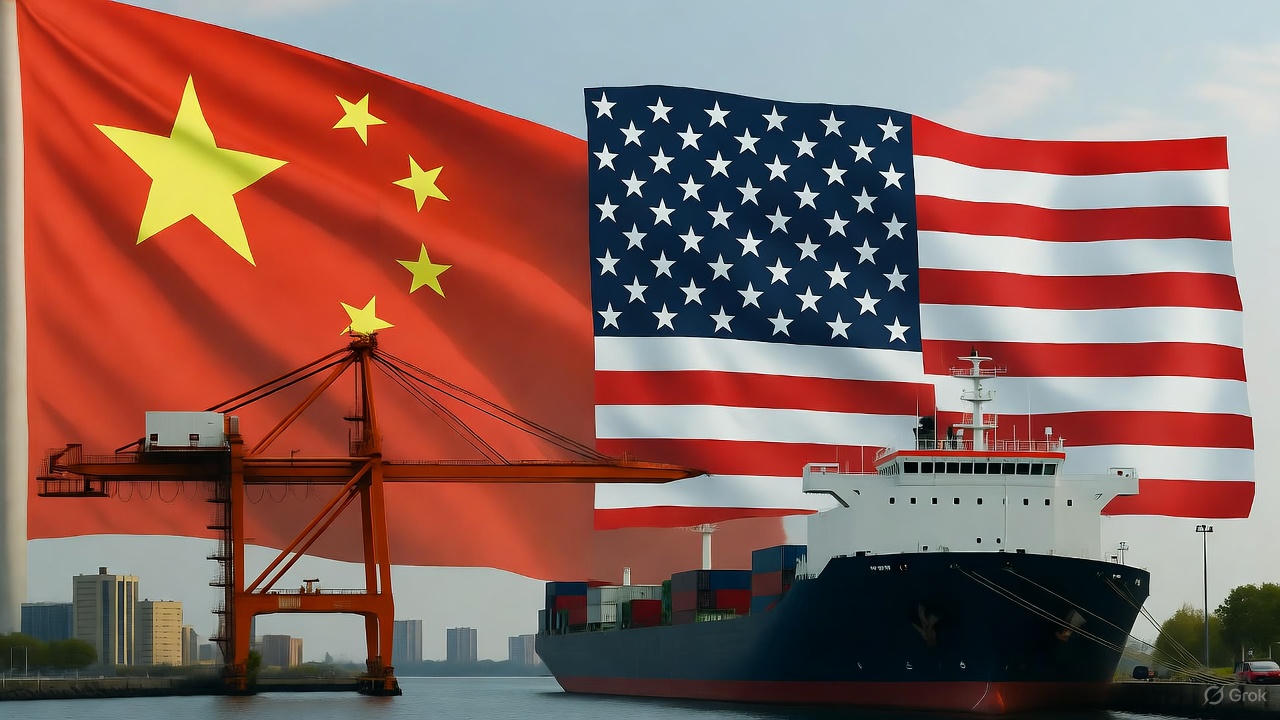
It looks like U.S. President Donald Trump’s tariff pressure on China has yet to meaningfully curb the country’s export machine, as Beijing has reported a record trade surplus. Reportedly, China on Wednesday said it posted a nearly $1.2 trillion trade surplus in 2025, driven by booming exports to non-U.S. markets as producers sought to build global scale to withstand sustained pressure from the Trump administration.
“China’s economy remains extraordinarily competitive,” said Fred Neumann, chief Asia economist at HSBC. “While this reflects gains in productivity and the rising technological sophistication of Chinese manufacturers, it is also due to weak domestic demand and attendant excess capacity.”
READ: Nvidia’s H200 chips no longer allowed in China, according to officials (January 14, 2026)
According to reports, Beijing’s strategy to broaden its export footprint appears to be paying off. A push by policymakers for Chinese firms to diversify beyond the world’s largest consumer market by shifting focus to Southeast Asia, Africa, and Latin America helped cushion the economy against U.S. tariffs, even as trade, technology, and geopolitical frictions have intensified since President Trump returned to the White House last year.
“Rising Chinese trade surpluses could raise tensions with trade partners, especially those reliant on manufacturing exports themselves,” Neumann said.
“With more diversified trading partners, (China’s) ability to withstand risks has been significantly enhanced,” Wang Jun, a vice minister at China’s customs administration, said at a press briefing following the data release.
Even with stronger export performance, challenges are mounting for Beijing heading into 2026. Reportedly, the government faces growing pushback from an increasing number of global capitals over concerns about China’s trade practices, industrial overcapacity, and foreign overreliance on key Chinese products.
The latest trade figures highlight the complexity of global economic interdependence and the limits of unilateral policy tools. While tariffs can shift trade flows in the short term, they do not always reshape supply chains or erase competitive advantages built over decades. China’s ability to expand exports across new markets illustrates how major economies can adjust to external pressures, even as those adjustments may generate new frictions with trading partners. This adaptability also reinforces the broader challenge for policymakers: balancing domestic economic goals against the realities of an increasingly interconnected global market.
“Strong export growth helps to mitigate the weak domestic demand,” said Zhiwei Zhang, chief economist at Pinpoint Asset Management.
“Combined with the booming stock market and stable U.S.-China relations, the government is likely to keep the macro policy stance unchanged at least in Q1.”
READ: Nvidia pulls off remarkable turnaround in AI chip arena? (
Looking ahead, attention is likely to shift toward structural issues, including overcapacity in some industries, dependency on key products, and questions around the sustainability of long-term growth models, topics that remain contested among economists and policymakers. As trade negotiations continue, governments may also need to weigh broader factors such as investment flows, technological competition, and regulatory alignment, not just tariffs and market access.
The evolving trade landscape will require careful navigation and strategic judgment from all sides, as governments, businesses, and multilateral institutions seek to manage tensions, foster cooperation, and encourage innovation. The challenge will be balancing national economic interests with broader stability, as trade relationships continue to shape economic and geopolitical outcomes in ways that remain uncertain.