



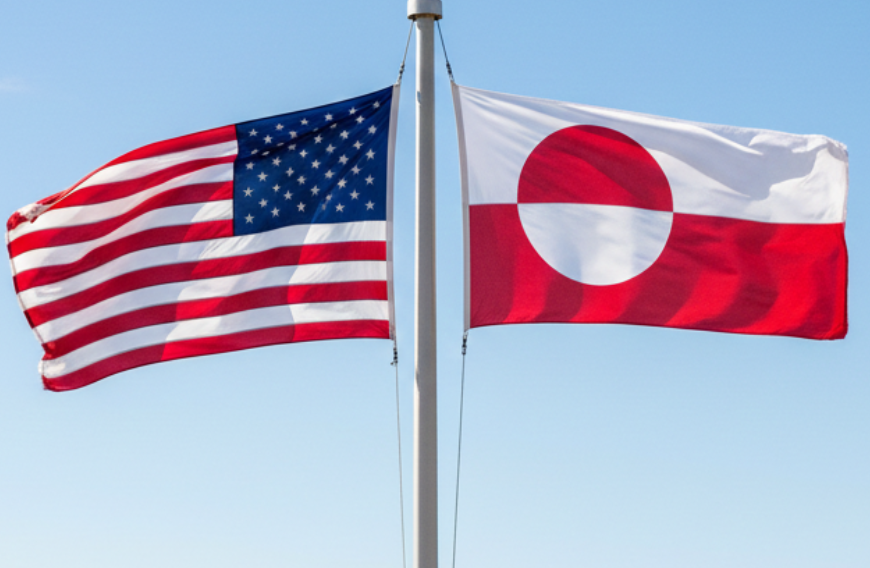
European leaders are preparing a strong response after President Donald Trump disclosed new tariff threats against several European countries tied to his controversial efforts to gain control of Greenland.
Trump announced last weekend that starting from Feb. 1 the United States would impose 10% tariffs on goods from eight European nations, Denmark, Norway, Sweden, France, Germany, United Kingdom, Netherland and Finland, until he finalizes a deal to buy Greenland or otherwise resolves a dispute over the island’s future. If no agreement is reached by June 1, he said the duties could rise to 25%
The move stems from Trump’s assertion that Greenland, an autonomous territory of Denmark, is strategically vital to U.S. security. Drawing criticism at home and abroad, Trump wrote on social media that other global powers such as China and Russia “want Greenland,” and only the United States can secure it effectively.
European capitals reacted with alarm. Leaders from the eight targeted nations issued a joint statement on Sunday saying the planned tariffs would undermine translantic ties and risk a dangerous downward spiral for economic and diplomatic cooperation.
Denmark’s Prime Minister, Mette Frederiksen, used forceful language to describe the situation, declaring that “Europe will not be blackmailed” in response to the U.S. pressure. Her remarks were echoed by senior officials in Germany and Sweden, emphasizing a shared stance against what they describe as coercive tactics.
READ: US ‘disrespectful’ stance on Greenland alarms NATO allies (January 7, 2026)
Trump’s tariff plans also featured in the U.S. political discussions. Treasury Secretary Scott Bessent, appearing on the television program “Meet the Press,” suggested the president sees strength in his approach, asserting that Europeans “project weakness” while the United States signals resolve.
In Greenland and Denmark, public protests broke out over the tariff threat and the broader push to influence Greenland’s governance. Thousands marched in Nuuk, Greenland’s capital, chanting the island’s native name, “Kalaallit Nunaat,” and demonstrating against outside pressure on their homeland.
READ: Greenland and Denmark to meet JD Vance to discuss Trump takeover threats (January 13, 2026)
European Union officials have signaled that discussions are underway in Brussels about possible retaliatory tariffs on U.S. exports, with figures mentioned at around $107 billion in goods. Emergency meetings among EU members are planned to assess options, balancing the need to defend economic interests with a desire to avoid an all-out trade war.
For now, both sides face heightened uncertainty in relations between long-standing allies. European leaders continue to insist diplomacy should guide the path forward, while the Trump administration appears prepared to use tariffs as leverage in its broader strategic aims.