


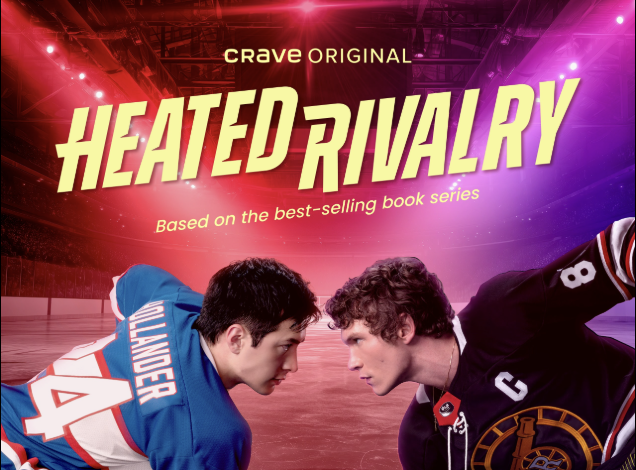
“Heated Rivalry” has overnight become a global sensation revealing topics once considered taboo. At first glance one may not expect to see anything that speaks directly to Indian American families, and certainly not something that would linger well after the episodes ended, but what stayed with us is not the intense surface narrative but the quieter struggle beneath it—the tension between someone who knows themselves internally and who they feel permitted to be within the expectations of family, profession, culture, and society.
This is a struggle many Indian American children confront but is often ignored. In our drive to ensure stability and success, we push our children toward professions that signal achievement and respect—medicine, engineering, finance—without always realizing that we may be asking them to suppress or postpone the exploration of their deepest inner identity in order to meet expectations we rarely question.
Sreedhar Potarazu: What it will take for doctors to transform US healthcare in a widening gap (
At its core, the story of Shane Holland (Hudson Williams) and Ilya Rosanov (Connor Storrie) is not really about gender or sexuality in the way those terms are often debated publicly, but about an inner contradiction many people live with for years which is the fear that authenticity, once revealed, will be judged, misunderstood, or quietly held against them by the very structures that have shaped their identity. That fear shows up not as drama, but as restraint, silence, and shame which is precisely why the story resonates across cultures.
Shane’s experience growing up within a mixed-race family carries the subtle weight of negotiating belonging, visibility, and cultural fluency, while Ilya’s relationship with traditional Russian family expectations reflects a familiar emphasis on legacy, toughness, and conformity. While the cultures differ, the emotional dynamics feel immediately recognizable to Indian American families, where children often learn early how to live in two worlds—one private and inward, one public and compliant.
For many Indian American children, the deepest struggles are rarely spoken aloud. There are inner identities, aspirations, relationships, and choices that remain hidden not because of defiance, but because of shame, guilt, and the fear of disappointing parents whose sacrifices are deeply felt. These conflicts are not limited to gender or sexuality; they extend to career paths, personal values, creative ambitions, and definitions of success that diverge from what is expected. “Heated Rivalry” captures this internal dissonance with unusual honesty, showing how people learn to survive emotionally by separating parts of themselves rather than integrating them.
Sreedhar Potarazu: The dilemma of destiny as our own prisoners: What MLK would tell us (
It would be unfair to suggest that all Indian families are rigid or unevolved; many parents have grown in remarkable ways. Yet it is also true that in many households, difficult conversations are avoided rather than engaged, not out of cruelty, but out of discomfort and fear. Silence is often mistaken for stability, and restraint is confused with maturity. The show reflects this reality without vilifying families, instead revealing how love and control can coexist, and how protection can unintentionally become constraining.
One of the most meaningful aspects of the series is the role of friends and chosen family as emotional scaffolding. The support Shane and Ilya receive imperfect, sometimes awkward, illustrates how psychological safety allows people to explore identity without immediate judgment. This feels particularly relevant for Indian American children, many of whom first find acceptance outside the family before they feel safe enough to bring those conversations home. The show does not suggest that families are irrelevant, but that growth often requires spaces where vulnerability is allowed before it is shared.
The discomfort around conversations involving gender, sex, and intimacy is also portrayed honestly. These are not topics Indian society, or many immigrant families, are comfortable verbalizing. In fact, the show is not widely available in India despite its roaring success globally. Many parents may never watch this show, and many aunties and uncles will find it difficult to accept. But that discomfort is not unique to Indian culture; it reflects a broader stage in social evolution, where emotional realities exist long before language and comfort catch up.
What “Heated Rivalry” offers is not instruction or advocacy, but the importance of creating safe spaces for expression. It highlights the emotional cost of suppression and the quiet relief that comes with being seen, even partially. Its lessons—about coping, self-discovery, acceptance, and forgiveness—are not loud or ideological; they unfold slowly, the way real life does.
There is added resonance in knowing that Hudson Williams, who plays Shane Hollander in the book-to-series adaption, himself has spoken about navigating the complexities of mixed Asian identity, grounding the story in lived experience rather than abstraction. It reinforces the sense that this is not a manufactured narrative, but one shaped by real inner conflicts.
For Indian American families, “Heated Rivalry” matters not because it mirrors their lives exactly, but because it articulates something many recognize but rarely name: the distance between who we are inside and who we believe we are allowed to be, and the quiet courage it takes to bridge that gap.