



At a time when women continue to be underrepresented in research leadership across the world, a new fellowship in India is seeking to tackle a quieter but deeply entrenched problem in science: the steady loss of talented women from research careers.
The India RISE Fellowship, short for Research and Innovation STEMM Empowerment, has launched its first cohort with a clear focus on retaining and supporting women scientists at a crucial point in their professional journeys.
The program is a flagship initiative of the Gupta-Klinsky India Institute at Johns Hopkins University and was inaugurated in January at the Indian Institute of Science in Bengaluru.
Developed under the U.S.–India Alliance for Women’s Economic Empowerment, the fellowship is designed as a year-long, part-time program for early-career women scientists.
Most participants are within ten years of completing their highest degree, a phase when structural barriers, caregiving responsibilities, and limited institutional support often push women out of academic and research pathways.
Reflecting on this, Dr Soumya Swaminathan, former Chief Scientist at the World Health Organization and former Director General of the Indian Council of Medical Research (ICMR), stated, “Women are often expected to make disproportionate personal sacrifices, but a fulfilling career in STEMM and a meaningful personal life need not be mutually exclusive. With theright support systems, women can grow into leadership while sustaining both.”
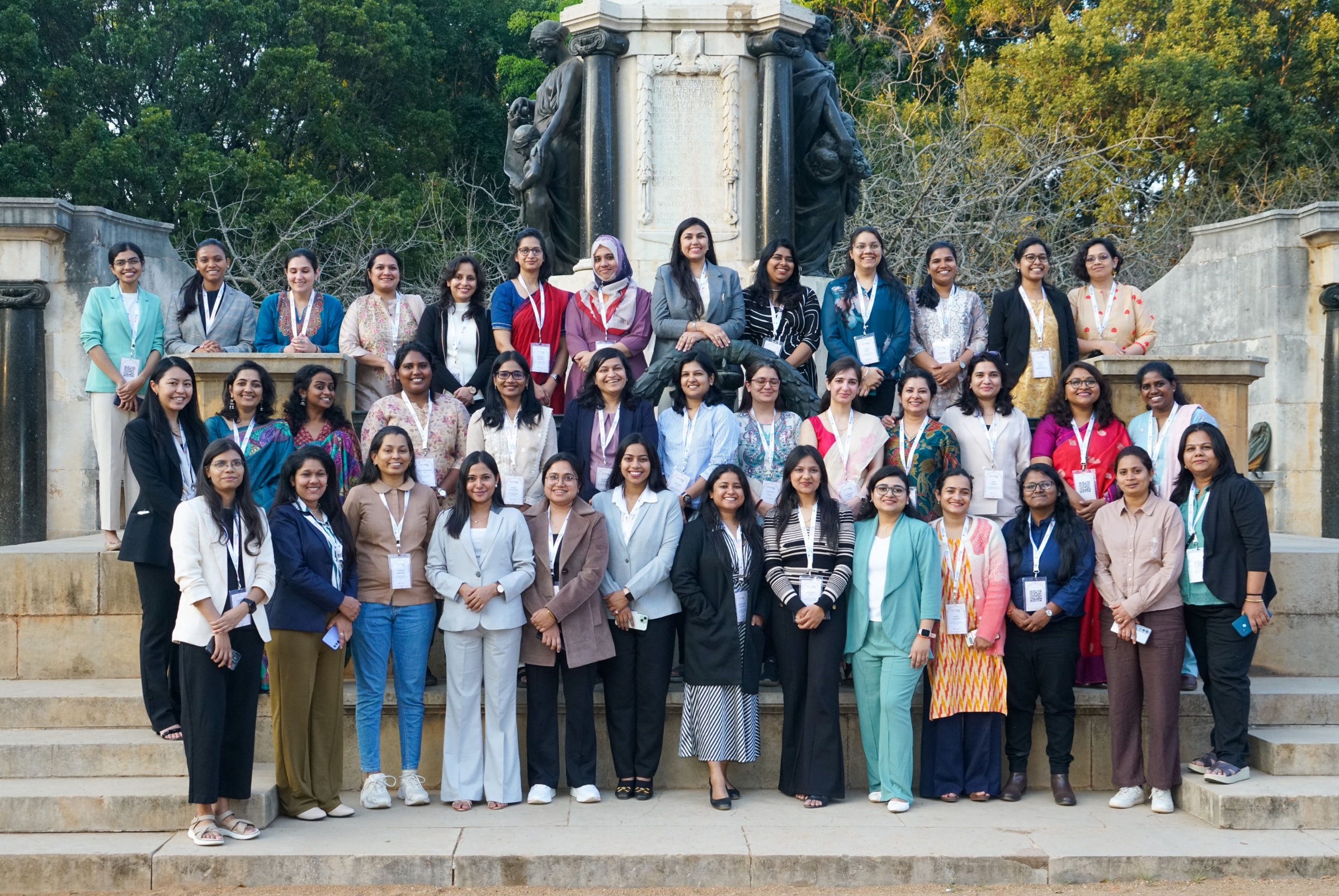
The 2026 cohort brings together women researchers from 16 Indian states and Union Territories, representing 30 leading research and academic institutions. These include IISc, several Indian Institutes of Technology, campuses of the All India Institute of Medical Sciences, Indian Council of Medical Research institutes, and major public universities across the country.
“ANRF is proud to support the India RISE Fellowship. The program is thoughtfully designed, and it is encouraging to see its strong emphasis on both excellence,” said Dr Shivkumar Kalyanaraman, Chief Executive Officer of the Anusandhan National Research Foundation (ANRF), adding that there is also a strong focus on diversity in the selection of fellows.
READ: 3 Indian Americans win Connecticut’s Women of Innovation Awards (November 10, 2025)
Fellows are working across a wide range of high-impact research areas, from non-communicable diseases and public health to infectious diseases, maternal and child health, digital health, medical devices, artificial intelligence, statistics, and medical diagnostics. Most participants hold doctoral or medical terminal degrees, with 61 percent having earned PhDs.
The launch event at IISc brought together academic leaders, policymakers, industry partners, and early-career researchers for three days of programming that combined leadership training with discussions on institutional change.
Keynote and special remarks were delivered by Dr Soumya Swaminathan, along with Dr Uma Nambiar, CEO of Bagchi-Parthasarathy Hospital at IISc Bangalore; Dr Shivkumar Kalyanaraman; and Dr Usha Vijayraghavan, Dean of the Biological Sciences Division at IISc Bangalore.
In addition to panel discussions and a fireside chat on systemic reform in research institutions, the program included leadership workshops, mentorship orientations, and hands-on sessions led by subject matter experts. Fellows also took part in site visits hosted by Siemens Healthineers and the Becton Dickinson Technology Campus, offering a closer look at how academic research can translate into public health impact and industry innovation.
READ: US leads, India follows in funding for women-led tech startups (April 16, 2025)
For members of the Indian diaspora in the United States, India RISE represents more than a fellowship. It is positioned as a long-term investment in India’s scientific capacity and a platform for sustained collaboration between Indian researchers and global institutions.
The program’s structure combines research excellence with leadership development and formal mentorship, aiming to create conditions that allow women scientists not only to remain in research but also to move into decision-making and leadership roles.
Dr Usha Vijayraghavan, Dean of the Biological Sciences Division at IISc Bangalore, said, “Recognising and supporting women in science is not beneficial to the individuals; it is in the long-term interest of institutions themselves.”
By focusing on a career stage where attrition is highest, the India RISE Fellowship is attempting to address a gap that has long existed in India’s research ecosystem. Its broader goal is to strengthen the long-term participation of women in science while contributing to global conversations on equity, innovation, and capacity-building in research.