



By Swatilina Barik
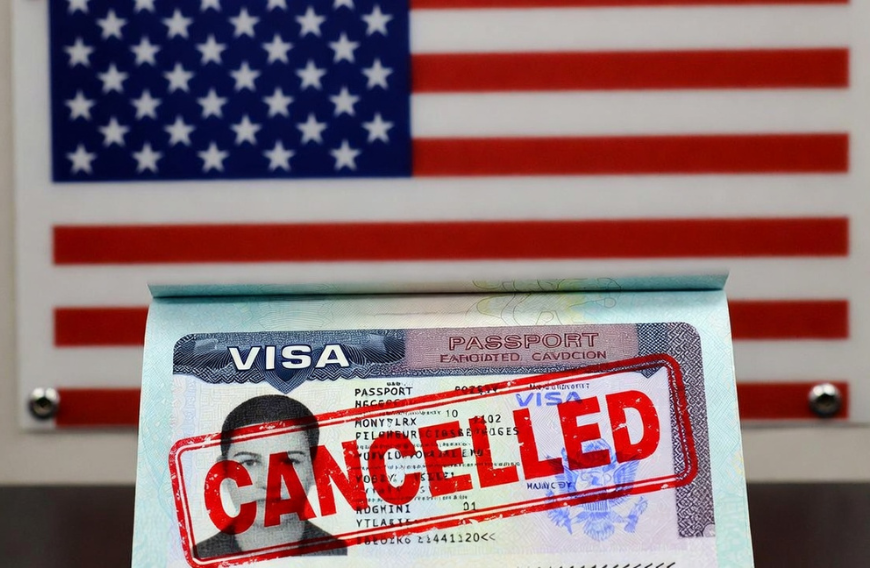
The words “your visa is refused” can feel like a dismissal of ambition, credibility, even identity. But in reality, a U.S. visa denial is not a referendum on talent or success. It is a legal determination rooted in statutory standards, evidentiary thresholds, and rapid risk assessment.
There is a moment that almost every ambitious applicant fears, the quiet slide of a passport back across the counter, followed by a polite but final sentence: “Your visa is refused.”
For many, that moment feels deeply personal. It can feel like judgment, like years of effort reduced to a few minutes at a window. People walk out replaying every word they said, every document they carried, every decision they made leading up to that day.
But the reality is far less emotional than it feels in that moment. A U.S. visa refusal is rarely a verdict on your worth, intelligence, or credibility as a professional. More often, it reflects a misalignment between your story, your documentation, and the legal standards that govern entry into the United States.
I remember speaking to a researcher who left the consulate feeling invisible. She believed her work had been dismissed entirely. Months later, after she reorganized her profile and clearly articulated how her research contributed to her field, she received approval. Nothing about her talent changed. Only the clarity of her narrative did.
Understanding the reality behind a rejection
The US immigration system runs on structure, not sentiment. Consular officers operate within strict statutory frameworks. Their role is not to evaluate your dreams; it is to assess risk, credibility, and legal eligibility within a limited window of time.
Many applicants underestimate how quickly these decisions are made. An officer may review your profile in minutes, looking for consistency between your answers, your documents, and the visa category’s legal requirements. If something feels unclear or incomplete, the decision may lean toward refusal- not because you lack merit, but because the case does not feel fully aligned.
READ: Despite strong credentials, more Indians report sudden US visa refusals (
A rejection often reflects one of three things:
- A gap between intent and evidence.
- A profile that feels scattered rather than structurally clear.
- Or a narrative that doesn’t quite fit the visa category applied for.
An entrepreneur once shared his refusal experience with me. He had built successful ventures and assumed that success alone would carry his application. But his documents read like a motivational story instead of legal proof. When he reframed his achievements through measurable impact, contracts, recognitions, and independent validation, his case finally resonated within the framework immigration law expects.
Why strong people still get refused
One of the hardest truths to accept is that immigration law is not a reward system. It does not automatically translate professional success into visa approval. It functions as a threshold system; you either meet the specific evidentiary and narrative standards, or you don’t, regardless of how impressive your career may be.
This is why even accomplished researchers, artists, founders, and senior professionals face refusals. The officer is not asking, “Is this person talented?” They are asking, “Does this application clearly meet the legal standard for this visa category right now?”
Consistency matters. Credibility matters. Clarity matters.
A senior designer once told me she assumed her portfolio would speak for itself. It was visually stunning, but immigration law does not evaluate beauty; it evaluates evidence. Once her case included structured recommendation letters, independent press features, and a clearer explanation of her industry impact, the same portfolio began to carry a different weight.
The emotional layer no one talks about
Behind every refusal is an emotional aftermath that few people discuss openly. There is embarrassment, self-doubt, and sometimes even anger. For professionals who have built their identity around resilience and self-respect, a refusal can feel like a public dismissal of years of effort.
Some applicants withdraw socially after a refusal. Others rush into immediate reapplication, driven by the need to prove something; to themselves or to others. Both reactions are deeply human.
But what many people realize later is that the refusal forced a pause they might never have taken otherwise. That pause creates space to step back from urgency and look at the application from a legal perspective rather than an emotional one.
One client stepped away from the process for nearly six months after a refusal. Instead of reapplying immediately, she focused on strengthening her professional presence; publishing new work, collaborating with recognized institutions, and gaining third-party endorsements. When she reapplied, her case felt grounded, cohesive, and far more aligned with the visa category.
What officers are really looking for
Applicants often believe they must impress an officer with extraordinary achievements. In reality, officers look for something simpler: clarity.
They want to see a coherent story, who you are professionally, why you are applying under this specific visa category, and whether your evidence supports that narrative without contradictions.
Ambiguity raises questions. Over-explanation can create confusion, and sometimes, too much information without structure weakens an otherwise strong profile.
Think of it less like storytelling and more like legal architecture. Each document should support the same core narrative. Each piece of evidence should answer an implicit question: Does this application make sense within the rules?
What to do after a refusal
The instinct to reapply immediately is understandable. After investing time, money, and emotional energy, waiting can feel unbearable. But rushing often repeats the same structural gaps that led to refusal in the first place.
Instead, consider a quieter approach:
- Understand the refusal category and what it actually means. A refusal under one section may be temporary, while another may require a deeper strategy.
- Reevaluate whether the visa category truly fits your professional identity. Sometimes the issue is not strength- it is misalignment.
- Strengthen objective evidence. This could mean publications, recognitions, contracts, financial clarity, or demonstrating ties to your home country, depending on the visa type.
- Seek perspective from someone who can look at your profile without emotional attachment. Fresh eyes often identify structural gaps that applicants cannot see themselves.
I have seen applicants transform outcomes simply by refining their positioning- shifting from a broad, general narrative to a clearly defined domain expert identity. The difference was not dramatic; it was intentional.
READ: NeoSapien CEO Dhananjay Yadav says US visa rejected despite investor invite (
Rebuilding confidence after refusal
Beyond strategy, there is also the personal journey of rebuilding confidence. Many applicants carry the weight of refusal long after the decision itself. They begin to question whether they aimed too high, whether they misunderstood their own value, or whether the system is simply closed to them.
But immigration journeys are rarely linear. Some of the strongest approvals emerge after setbacks because the applicant returns with deeper clarity, not only about their documents, but about themselves.
It is important to separate rejection from identity. A refusal is a procedural outcome, not a personal evaluation. When you learn to see it that way, the process becomes less about proving yourself and more about positioning yourself correctly within a legal framework.
Reframing the narrative
A visa refusal does not define your trajectory. It is a checkpoint; sometimes harsh, sometimes unexpected, but rarely final.
The strongest applicants are not those who never faced rejection; they are those who learned to transform refusal into refinement. They take the pause seriously. They rebuild quietly. And when they return, their case reflects not just ambition, but preparedness.
There is power in recalibration. There is dignity in stepping back, reassessing, and moving forward with intention.
Because in immigration and often in life, timing and positioning matter as much as capability. And sometimes, the pause before approval is what shapes the most grounded success stories.
Visa decisions are grounded in statutory standards and evidentiary thresholds rather than subjective evaluation of personal success.
(Swatilina Barik is the Founder of Visa Architect, recognized for shaping high-impact immigration strategies for global professionals and visionaries. Her work focuses on profile positioning and strategic case planning across specialized U.S. visa pathways.)