



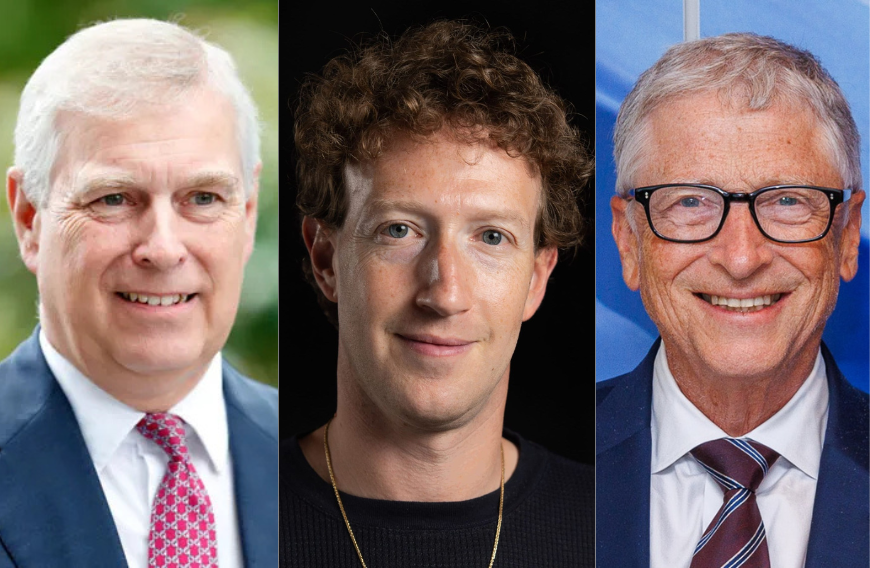
In a stunning twist of fate unfolding today, the world is watching scenes once thought unimaginable as a member of British royalty arrested, tech titans on trial, and powerful philanthropists withdrawing from global summits. Prince Andrew, Mark Zuckerberg and Bill Gates all in one moment seems to reveal a deeper rot at the heart of elite power and its impact on children.
Today, Prince Andrew was arrested in England on suspicion of misconduct in public office related to his decades‑long association with convicted child sex offender Jeffrey Epstein.
Police executed the arrest at his Norfolk residence on what should have been his 66th birthday, and he remains in custody amid an investigation triggered by newly released “Epstein files” that allege improper sharing of sensitive information and ties to trafficking networks. Despite years of denials and a long record of evasion, he now faces public reckoning in a way the royal family never anticipated.
Photographs released from the scene show law enforcement carrying out the arrest — images that will forever redefine the veneer of immunity once enjoyed by the ultra‑wealthy and well connected. They are a reminder that no matter how powerful the name or how lofty the institution, the exploitation of children eventually follows truth to the front door.
Sreedhar Potarazu: The dilemma of destiny as our own prisoners: What MLK would tell us (
Half a world away on the West Coast of the United States, Mark Zuckerberg is under oath in a landmark trial in Los Angeles. He is being questioned about whether Meta and its platforms — particularly Instagram — were designed in ways that intentionally or negligently harm the mental health of children by encouraging addictive use and failing to keep underage users off the platforms, despite internal awareness of the risks.
Plaintiffs and advocates argue that algorithms that track, anticipate, and exploit children’s psychological vulnerabilities are a new form of exploitation. Zuckerberg has insisted Meta does not target children, even as evidence and internal communications are brought into the courtroom.
Meanwhile, another global power, Bill Gates, has withdrawn from a high-profile conference on artificial intelligence in India, canceling a keynote address at the India AI Impact Summit. Gates’s withdrawal came amid renewed scrutiny over past connections appearing in Epstein-related documents, scrutiny that has also affected other elite figures. While the Gates Foundation continues its work, his absence from the summit speaks to the broader unease triggered by the current moment.
Taken together with an aristocrat facing arrest for decades of alleged misconduct, a tech titan defending his company’s impact on child wellbeing under oath, and one of the world’s best-known philanthropists stepping back under pressure we are witnessing what feels like a perfect storm for the fall of the rich and mighty. These are not isolated news items.
They are symbols of a global cultural crisis in which the voices of children and adolescents have been routinely discounted, dismissed, or outright ignored by those in positions of influence.
For too long, powerful men and institutions have operated with a form of willful blindness pretending that allegations of abuse were exceptions and that technology’s harms were manageable trade-offs. This collective silence has allowed children to suffer in anguish, hidden behind corporate protections, political clout, and social prestige.
Now, as the scandals converge — from the legacy of Epstein to the mental health harms tied to social media to questions of influence in the global AI agenda the world must confront a stark truth that exploitation belongs to a system that prioritizes power over protection.
What will it take for the world to wake up to the influence of men in power who feel invincible? How do we break the cycle where wealth, authority, and status create a shield around misconduct? There are no easy answers, and I do not claim to be perfect.
But one principle must guide our collective response: accountability is everything. Every allegation ignored, every algorithm optimized without regard for children’s wellbeing, and every decision made in the comfort of elite circles comes at the expense of the most vulnerable. The world cannot wait for another crisis to expose the cost of inaction.
And in this moment of exposure, accountability is not just possible — it is inevitable. Children cannot afford our silence. They deserve protection not after scandals erupt, but before harm becomes normalized.