



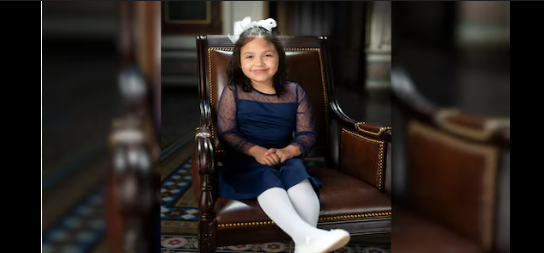
In an emotional centerpiece of his State of the Union address, President Donald Trump called on Congress to pass “Dalilah’s Law,” a federal mandate that would prohibit states from issuing commercial driver’s licenses to undocumented immigrants.
The proposal is named after Dalilah Coleman, a 7-year-old girl who sat in the gallery as a guest of the president. Her presence served as a living reminder of a 2024 tragedy that has become a flashpoint in the national debate over border security and public safety.
The legislation stems from a catastrophic collision involving an 18-wheeler driven by Partap Singh, an Indian-origin man who federal authorities say entered the U.S. illegally in 2022.
According to the Department of Homeland Security, Singh failed to stop in a construction zone, striking the Coleman family vehicle.
The impact was devastating. Dalilah, then just 5, spent three weeks in a coma and underwent a grueling six-month hospitalization. For nearly half a year, she lived without part of her skull following a craniectomy. Today, she continues to navigate the long-term effects of multiple skull fractures, a broken femur, and a diagnosis of diplegic cerebral palsy.
Read: Indian fraudster convicted in US; MAGA netizens call for ‘merciless’ immigration crackdown
“Many, if not most, illegal aliens do not speak English and cannot read even the most basic road signs,” Trump told the joint session of Congress. “That is why tonight, I am calling for the ‘Dalilah Law’ to ensure our roads are safe for American families.”
The case has reignited criticism of “catch-and-release” policies. Singh had been released into the country under the previous administration before being re-arrested by Immigration and Customs Enforcement in August 2025. He is currently awaiting deportation.
Critics of the proposed ban argue that licensing drivers regardless of status ensures they are tested on road rules and carry insurance.
However, the administration argues that granting high-level commercial privileges to those without legal status creates an inherent security risk.
For the Coleman family, the policy debate is secondary to the daily reality of Dalilah’s recovery. Once unable to eat orally and facing a lifetime of therapy, the young girl is now relearning how to walk. As she stood to be recognized during the speech, her journey from a hospital bed to the Capitol served as the administration’s most potent argument for a fundamental shift in how the nation handles both its borders and its backroads.