



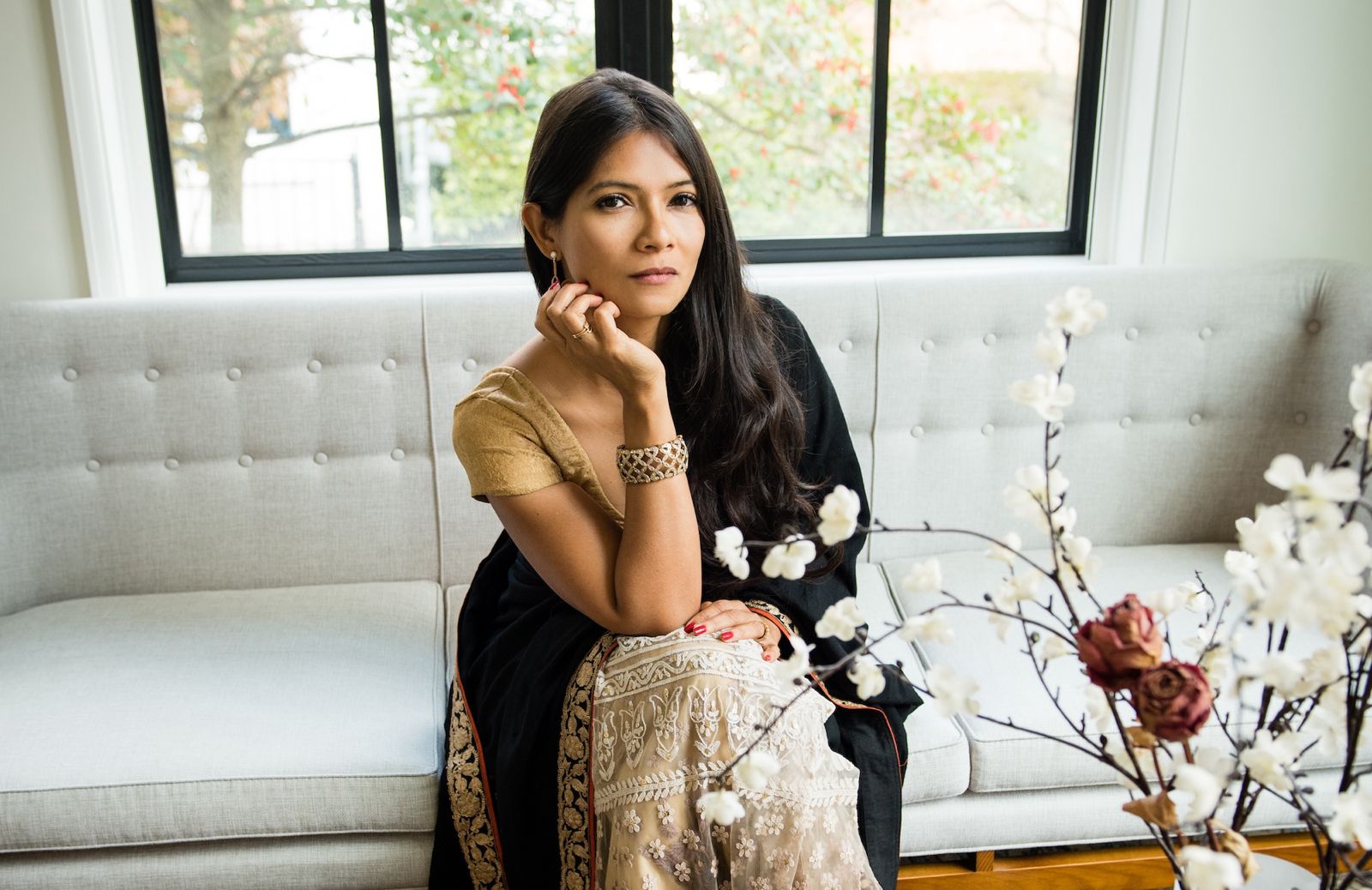
For decades, Chandrani Ghosh was the one shaping the narrative, chasing deadlines for Time, Forbes, and Business Standard. But after a career spent documenting the facts of other people’s lives, the veteran journalist has pivoted to a world where she finally holds the pen over destiny itself.
In a recent appearance on the American Bazaar podcast Inside Indian America with Aziz Haniffa, Ghosh spoke about her literary debut, “Heartlines,” offering an intimate glimpse into the emotions, experiences, and inspirations that shaped her book.
Published by Bloomsbury, the novel is a high-stakes, evocative exploration of love, identity, and scandal nestled within the Indian American “power circles” of Washington, D.C. Ghosh cheekily describes the book as “Crazy Rich Asians meets the Beltway,” a world where romantic entanglements are inextricably linked to political turmoil and social standing.
The books is available in India on Amazon.
Listen to the podcast on Spotify
Watch the podcast on YouTube:
The story centers on Sharmila Basu, a sharp Indian-American journalist whose life in Georgetown seems curated for perfection. She is ambitious, stylish, and partnered with a high-profile television anchor. However, this meticulously constructed world begins to fracture with the arrival of a charismatic tech entrepreneur.
As a love triangle forms, a haunting secret from Sharmila’s past threatens to emerge forcing a woman who usually writes the news to become the very headline she fears.
“As a journalist, you are always the one on the other side of the notepad. You shape the narrative,” Ghosh told the podcast. “Suddenly, Sharmila becomes the story. That loss of control is terrifying, especially for someone who knows exactly how the media machine works. I wanted to dive into that vulnerability.”
While the book draws on Ghosh’s own professional DNA and her “passport flex” of a life having lived in Kolkata, Delhi, London, Geneva, and Kathmandu she clarifies that the work is not an autobiography. Though Sharmila shares her creator’s career path and global footprint, Ghosh notes with a laugh that her protagonist possesses a “much better wardrobe” and a level of public-speaking confidence she herself envies.
Beyond the romantic intrigue, Heartlines serves a deeper purpose such as redefining the South Asian immigrant trope. Ghosh observed that much of immigrant literature is steeped in the melancholy of loss and the pain of displacement. She chose a different path, focusing instead on “cultural abundance.”
“You don’t have to give up India because you moved to the U.S.; both exist in your world simultaneously,” Ghosh explained. “I didn’t swap Diwali for Christmas I added Christmas and Hanukkah to my life. I wanted to tell a joyful story of richness where the protagonist is fully at home in both worlds without feeling like she has to choose between them.”
The transition from the rigid world of fact-checking to the “freeing” world of fiction was a byproduct of the pandemic.
Ghosh admits that without the forced stillness of COVID-19, the book might never have been written. The discipline she honed in the newsroom eventually merged with the joy of storytelling, allowing her to move her characters across the globe even while she was tethered to a desk.
The literary world has taken notice. Ghosh is already several chapters into a follow-up, tentatively titled Mrs. Jhunjhunwala’s Daughter, and is currently in discussions regarding a potential television miniseries adaptation of Heartlines.
Now an empty nester as her children having achieved their own fame in the culinary and social media worlds, Ghosh is embracing her “turn” in the spotlight. Heartlines is currently available on Amazon and will arrive in independent bookstores this March, supported by a global tour hitting major cities from Delhi to New York.