



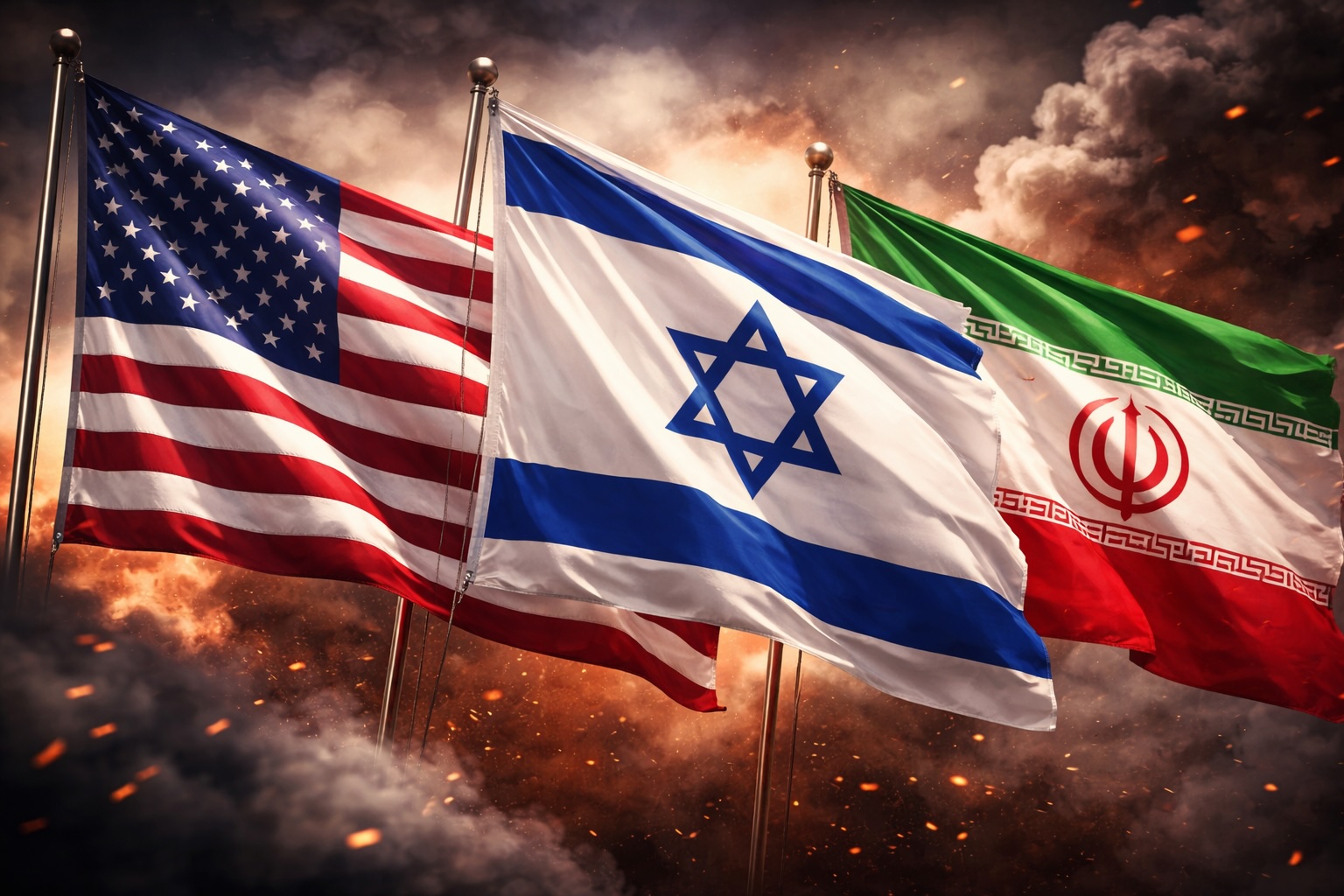
Federal counterterrorism agencies are on high alert for a potential retaliatory attack on U.S. soil after U.S. and Israeli forces launched strikes on Iran that killed the nation’s supreme leader, Ayatollah Ali Khamenei, and other top officials.
“Iran has developed this capability to carry out attacks abroad over many years,” including in the United States, former FBI and Treasury Department counterterrorism official Matthew Levitt said. “If there was ever a time the regime would want to act on it, it would be now.”
The FBI and the Department of Homeland Security have both announced they are on war footing, as they have been in the past over whether U.S. strikes, ordered by President Donald Trump, on Iranian targets would prompt the Tehran regime and its proxy forces to seek revenge.
READ: Iran conflict threatens global oil supply, crude prices on edge (
Any major strike on a foreign state, particularly one with established international capabilities, creates the possibility of retaliatory attacks that extend beyond traditional battlefields. As a result, intelligence, counterterrorism, and law enforcement agencies must operate continuously to anticipate, detect, and prevent threats before they materialize, balancing vigilance with civil liberties and public confidence.
On Feb. 28, FBI Director Kash Patel said the bureau is “fully engaged on the situation overseas,” and that he has instructed the FBI’s Counterterrorism and intelligence teams, including its 200-plus Joint Terrorism Task Forces across the country, to be on high alert and to “mobilize all assisting security assets needed.”
“Our JTTFs throughout the country are working 24/7, as always, to address and disrupt any potential threats to the homeland,” FBI Director Kash Patel said in an X post. “While the military handles force protection overseas, the @FBI remains at the forefront of deterring attacks here at home – and will continue to have our team work around the clock to protect Americans.”
This situation underscores the interconnectedness of foreign policy, military operations, and domestic security. How Iran or its affiliated groups may respond remains uncertain, and the timing, scope, and methods of any retaliation cannot be predicted with certainty. Agencies must therefore rely on a mix of intelligence collection, international cooperation, and rapid response capabilities to mitigate risk.
The current environment also highlights the need for long-term strategic planning, investment in counterterrorism infrastructure, and robust coordination across federal, state, and local levels. The broader public and private sectors may also face indirect consequences, including heightened risk perception, increased security expenditures, or disruptions to daily operations, though the magnitude of these effects is unclear.
Preparing for potential retaliation demonstrates that military decisions abroad can have immediate and tangible consequences at home. The degree to which these preparations successfully prevent attacks, or the severity of any incident if it occurs, remains uncertain, emphasizing the ongoing tension between proactive defense and unpredictable global dynamics.
READ: Who decides when the world burns? (
The situation also emphasizes the importance of public communication and trust in national security institutions. How the public perceives the threat and responds to heightened alerts can influence both social stability and the effectiveness of counterterrorism measures. Clear guidance, transparency where possible, and measured messaging are critical to prevent panic or misinformation from spreading.
It is also uncertain how long agencies will maintain elevated readiness or whether ongoing international developments could further escalate domestic precautions. Moreover, the evolving nature of asymmetric threats and technological capabilities means that traditional security approaches may need continuous adaptation.