



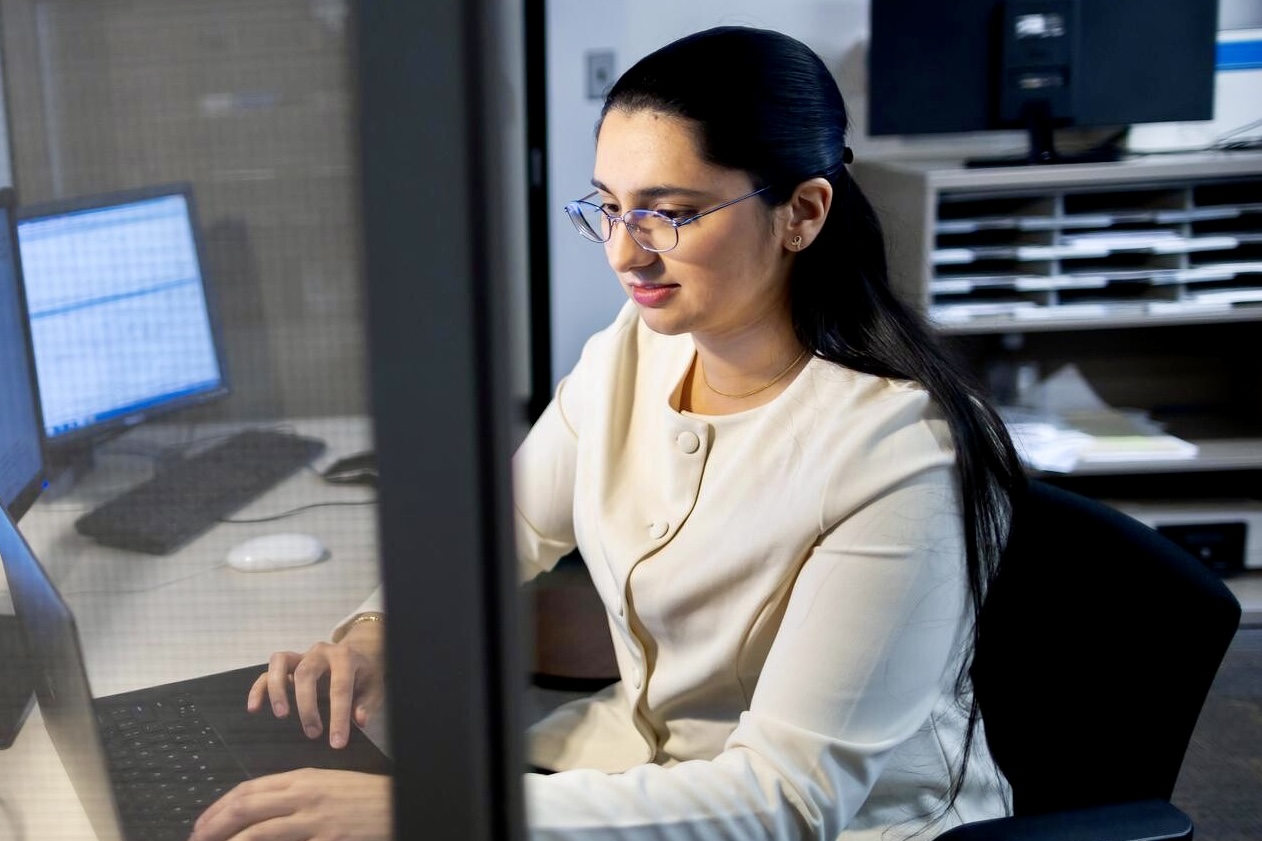
Growing up across two continents shaped Indian American researcher Shreya Parchure’s understanding of language ability as central to quality of life.
During clinical rotations in a neurocritical care unit, her interactions with patients solidified her desire to advance research and care for those with post-stroke aphasia.
This impaired ability to understand or produce speech affects one-third of stroke survivors and can cause long-term language deficits. One patient, Parchure recalls, was initially unable to speak, but gradually, through speech therapy, began regaining words day by day.
“She was overjoyed,” says Parchure, a bioengineering MD-PhD candidate in Pennsylvania university’s Perelman School of Medicine and the School of Engineering and Applied Science, noting how the progress brought her patient renewed hope for recovery, according to Penn today.
Speech therapies for post-stroke aphasia are typically standardized. In a recent study, however, Parchure and her team in the Laboratory for Cognition and Neural Stimulation(LCNS) explored whether “explainable AI”—a set of machine learning methods and approaches focused on providing rationale behind results, enabling human users to better interpret and trust recommendations—could help doctors tailor treatment by predicting the most effective path to language recovery.
Some AI models have looked at neuroimaging and length of time from a stroke to determine the severity of aphasia, but Parchure and colleagues expanded these methods by accounting for how language is formed in and processed by the brain.
Read: Indian American-led researchers launch AI legislation tracking portal
Explainable AI, Parchure says, can integrate clinically available data—such as age, education, or the size of a stroke—with the linguistic difficulty of words. This approach enables the AI model to help predict recovery time and suggest treatments to physicians. The AI model also provides a clinical rationale for those treatments based on the patient’s unique situation.
“When we have an AI making a prediction, we really want to know why,” says Parchure, who also earned her bachelor’s and master’s degrees in bioengineering from Penn.
Parchure and her team collected speech samples from patients with post-stroke aphasia. She used this data to train an explainable AI algorithm, testing it to account for various language tasks and make predictions for patient recovery based on a diverse range of clinically relevant information. The tool also integrated personal attributes, such as the size of a stroke and individual social support.
“Incorporating language into the fold adds a new layer of considering human [and] brain complexity,” Parchure says, noting how the explainable AI tool was also able to predict speech performance word by word.
This granularity can help clinicians better uncover the underlying factors affecting a patient’s speech abilities and inform nuanced treatment and predicted recovery. What makes the model especially useful, Parchure says, is the ability to share the reasoning behind its recommendations.
“It’ll help tailor speech therapy for where exactly people are having trouble,” Parchure says. “We can really meet patients where they are in a more personalized manner.”
Parchure and colleagues developed and launched an AI-powered app for use in clinical and research settings. A particularly innovative feature of this research, Parchure says, is that the AI model can simulate a “digital twin” for each patient, which functions as a predictive tool for language recovery.
The simulated “twin” provides a comparative example of how a patient may respond to different treatments, which can elevate clinical trial efficiency by allowing researchers to compare projected versus actual recovery.
“The goal of my MD-PhD training has been to translate advances in research in a way that will benefit patients,” says Parchure, who was awarded Best Poster in Translational Research at the 2025 PSOM Student Research Symposium.
Parchure anticipates that over the next decade, AI will play a pivotal role in personalizing speech therapy and help build a world in which every stroke survivor with aphasia can reconnect with the joy of language.