



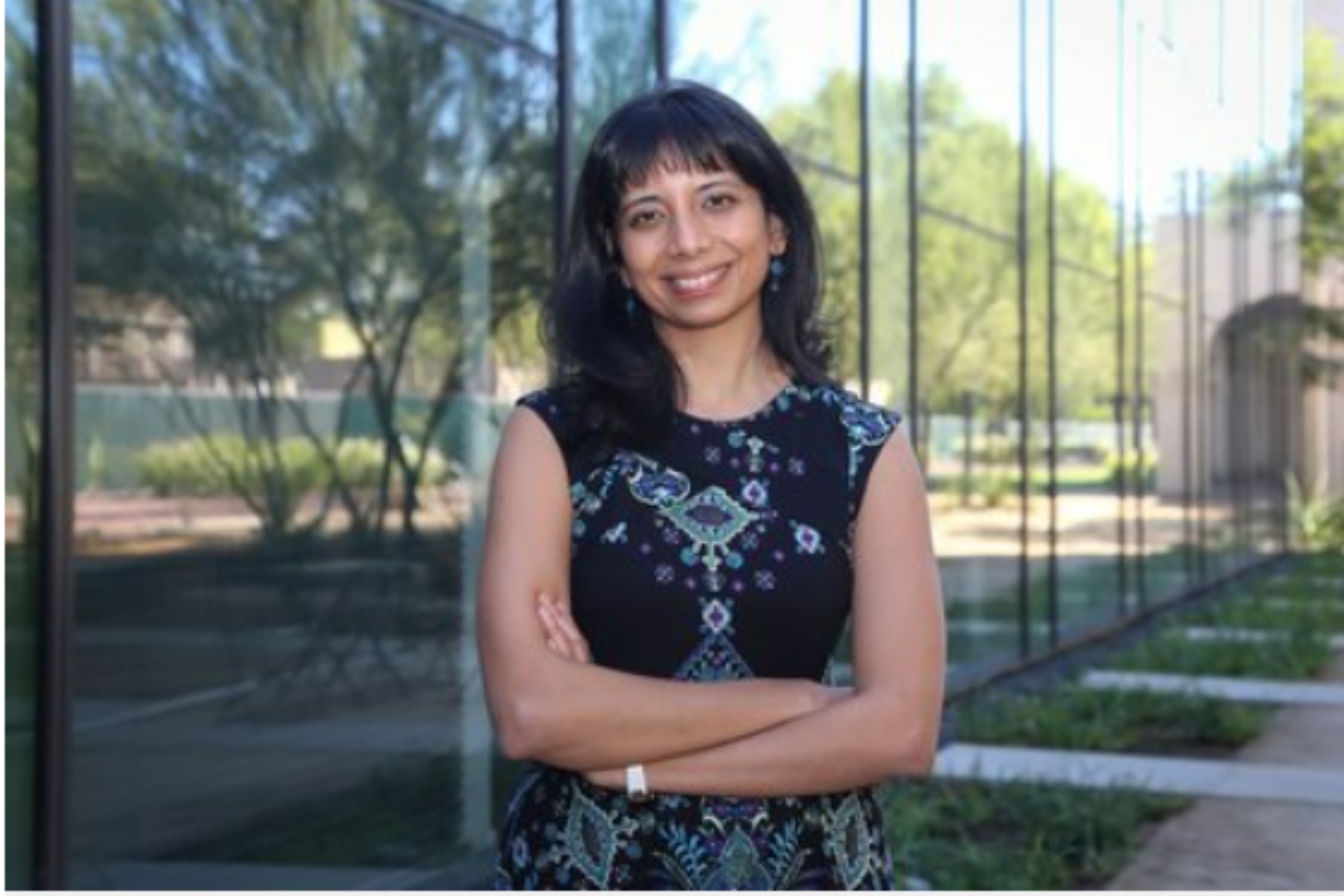
Animashree Anandkumar, a leading figure in the intersection of artificial intelligence and physical sciences, has been appointed to the United Nations Secretary General’s Scientific Advisory Board.
The appointment places the California Institute of Technology professor at the center of global policy, where she will advise UN leadership on leveraging emerging technologies to address humanity’s most pressing challenges.
Anandkumar, the Bren Professor of Computing and Mathematical Sciences at Caltech, is widely recognized for her development of “neural operators.” Unlike traditional AI that focuses on text or images, her work enables computers to understand the laws of physics, allowing for the simulation of complex systems, such as weather patterns and fluid dynamics, thousands of times faster than conventional methods.
“Key areas of our work will involve AI, including AI with respect to weather, climate, food, and diseases,” Anandkumar stated. “At Caltech, I am leading the AI+Science initiative that integrates AI deeply into scientific domains.”
Her journey to the pinnacle of global science began in Mysore, India. Born into a family of engineers, her father a mechanical engineer and her mother an electronics engineer, Anandkumar was immersed in technical thinking from childhood. She frequently recounts watching her father write programs for manufacturing machines and being inspired by her mother’s determination to pursue engineering despite social pressures.
Read: Rice University and IIT Madras crown inaugural research partnership winners
A Distinguished Alumna of the Indian Institute of Technology (IIT) Madras, where she earned her Bachelor of Technology in 2004, Anandkumar’s roots remain a driving force in her work.
She has highlighted how her AI-based weather model, FourCastNet, is being used in India to predict monsoons with greater precision, a critical tool for millions of farmers whose livelihoods depend on seasonal rains.
Beyond her technical accolades, which include senior roles at NVIDIA and Amazon Web Services, Anandkumar has been a vocal advocate for “democratizing” AI. She has pushed for the development of large language models in local languages to ensure that technological progress does not leave non-English speaking populations behind.
“It is important that we take a global approach,” she noted, emphasizing that local language models can raise literacy and education levels worldwide.
As a member of the UN board, she joins an elite group of scientists tasked with grounding international regulation in rigorous science. Her role will be pivotal in ensuring that AI serves as a bridge for global equity rather than a tool for further division.
“I do think having scientists in the room when all these important decisions are going to be made about AI… is crucial,” Anandkumar said.