



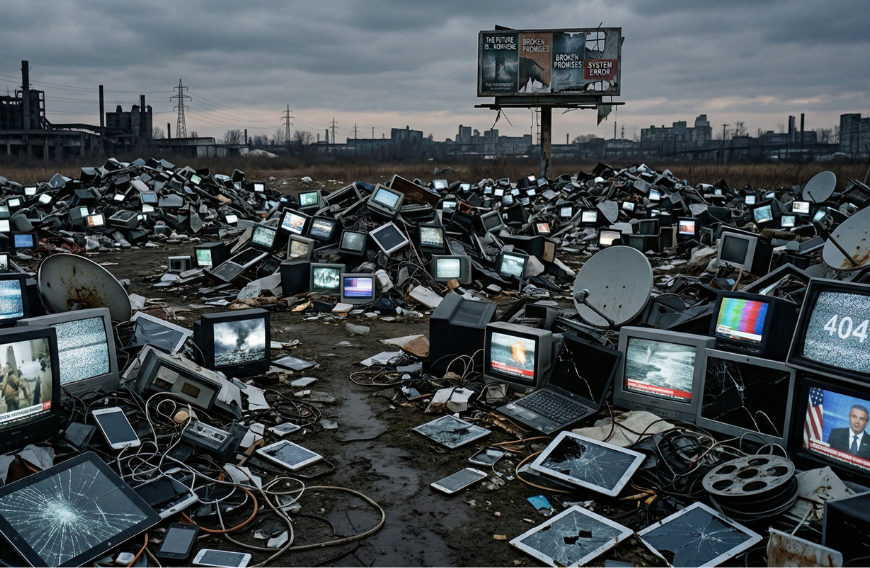
Would you rather relive your twenties or be twenty years old today?
A reporter asked NVIDIA’s Jensen Huang this question and he said he would choose to be twenty when he actually was twenty, in the early 1980s, because, as he put it, those were “happier times.” There was still room for optimism, he explained. Young people today see so much, know so much, that they become cynical before they’ve even begun. They’re too informed, overwhelmed by an ocean of information that drowns possibility in probability.
 Back then, Huang said, you could be optimistic precisely because you were ignorant to some degree. If you truly understood all the obstacles involved in building NVIDIA, the technical challenges, the market forces, the countless ways it could fail, you might never try. But if you’re ignorantly optimistic about what it will take, you dive in because belief propels you forward. You see the possibility, not the thousand reasons it won’t work.
Jensen’s observation is both profound and troubling. We’re not just exposing young people to more information; we’re fundamentally altering their relationship to possibility itself. And nowhere is this transformation more evident than in the content they consume during those crucial years when the architecture of hope and ambition is being constructed.
Lost grace period
I remember Thursday nights in 1984, sitting cross-legged on our living room carpet, watching Jack Tripper pretend to be gay so he could live with two women, a premise that seemed daringly transgressive at the time. The biggest shock “Three’s Company” could deliver was a misunderstood conversation through a bathroom door or Mr. Roper catching Jack in an innocent but compromising position. “Happy Days” showed us the Cunninghams navigating life in 1950s Milwaukee with warmth and gentle lessons. The Three Stooges’ slapstick violence was the most graphic content readily available. The most Machiavellian content I encountered came through Dallas, where J.R. Ewing’s schemes felt genuinely sinister, though they unfolded at a pace that allowed a week of playground speculation between episodes.
That world, where these shows represented the apex of adolescent viewing, preserved something Jensen Huang identified as essential: a certain productive ignorance. We didn’t see behind every curtain. We didn’t understand all the ways institutions were corrupt, all the ways power worked, all the darkness lurking beneath social surfaces. This wasn’t just censorship or prudishness; it was a developmental grace period that allowed optimism to take root before cynicism could strangle it.
Today, a fourteen-year-old with an HBO Max subscription has immediate access to Succession’s patricidal corporate warfare, Game of Thrones’ graphic depiction of power’s corrupting nature, Euphoria’s unflinching portrayal of teenage drug use and explicit sexuality, and The White Lotus’ dissection of how wealth corrodes the soul. All rendered with cinematic sophistication that makes the lessons impossible to dismiss as unrealistic or exaggerated.
These shows aren’t just “mature” in the sense of containing sex or violence. They’re masterclasses in disillusionment, sophisticated tutorials in cynicism, beautifully crafted arguments that systems are corrupt, people are selfish, idealism is naïve, and anyone who believes otherwise is a fool waiting to be exploited.
Cynicism on demand
How did we get here? I grew up during the broadcast television era, which, for all its limitations, operated under a framework that largely preserved aspirational narratives. The FCC’s regulatory framework, combined with commercial television’s need to appeal to broad audiences including families, created content that generally affirmed institutions, portrayed moral growth as possible, and suggested that goodness could prevail.
Even shows that pushed boundaries maintained this fundamental orientation. “All in the Family” tackled racism and sexism but suggested these were problems that could be confronted and overcome through dialogue. “MASH” showed the absurdity of war but portrayed its characters’ efforts to maintain humanity under impossible circumstances as meaningful. “The Waltons” and “Little House on the Prairie” explicitly celebrated community, family, and moral principle.
Just look at the difference in political television across generations. “The West Wing,” which premiered in 1999, portrayed government service as fundamentally noble despite its frustrations. President Bartlet and his staff were flawed but ultimately good people trying to do right by the country. The show’s conflicts arose from competing visions of the good, not from the absence of good itself.
Today’s teenagers are more likely to encounter “House of Cards,” where nearly every character operates from pure self-interest, where idealism is a mask for ambition, where the only question is how ruthlessly one pursues power. President Frank Underwood doesn’t represent a cautionary tale; he represents the show’s understanding of how politics actually works. The message is clear: if you want to succeed in public life, you must become this.
READ: The Review by Ajay Raju | Insurance premium: The most powerful weapon in the Iran war (March 16, 2026)
The shift mirrors what’s happened in our actual political culture. My generation grew up with lions of the Senate, figures like Daniel Patrick Moynihan, Ted Kennedy, Bob Dole, who commanded respect across party lines. We had newscasters like Tim Russert who were trusted arbiters of fact. These weren’t perfect people, but their authority rested on accumulated credibility, on years of demonstrated judgment.
Too many of our prominent political figures today are mostly performative virtue signalers who willingly sacrifice long-term credibility for immediate social media engagement. They’ve become this way either because social media’s incentive structures made them so, or because they’ve made social media culture what it is by driving out the credible reporters and principled leaders who once anchored public discourse. Either way, the result is the same: a public sphere where cynicism is realism and earnestness is a liability.
Network television isn’t alone in this transformation. The cable revolution began shifting television’s framework in parallel. “The Sopranos” (1999-2007) was revolutionary precisely because it asked audiences to invest in a protagonist who was irredeemable, to find meaning in a world where therapy couldn’t heal trauma and family ties didn’t transcend self-interest. But The Sopranos aired late at night on a premium channel that required parental subscription and, initially at least, mostly adult viewership.
By the time “Game of Thrones” premiered in 2011, the template was established: prestige television meant moral ambiguity, institutional cynicism, and the systematic subversion of heroic narratives. The show’s popularity among teenagers, despite its TV-MA rating, demonstrated both the appeal and the accessibility of such content.
Succession, which concluded in 2023, represents perhaps the apotheosis of prestige cynicism, showing how power actually works, how wealth insulates people from consequences, and how family can be a prison. These are important, even essential insights. The question is whether fourteen-year-olds, at the moment when they’re forming their foundational beliefs about whether effort matters and change is possible, need these lessons delivered with such unrelenting sophistication.
Drinking an ocean
The shift isn’t merely content but access. When I was fourteen, watching something required being in a specific place at a specific time or convincing parents to rent something from the video store. There were natural friction points that limited exposure and created opportunities for parental guidance.
Streaming platforms have eliminated all such friction by making a wholesale shift from communal viewing to privatized consumption, on personal devices rather than family televisions, and without parental presence. Moreover, the platforms themselves are designed to maximize engagement through sophisticated algorithmic curation. Recommendation engines actively promote TV-MA content to teenage user profiles because teenagers are more likely to binge-watch such content.
The business model depends on watch time, and prestige cynicism is extraordinarily bingeable. These shows are designed to be addictive: cliffhangers, shocking twists, complex mysteries that demand resolution. A teenager who starts “Succession” on Friday night may well finish the entire series by Sunday evening, emerging having spent 20+ hours immersed in the Roy family’s dysfunction.
Going back to Jensen’s point about optimism: if your neural architecture has been trained to expect constant stimulation and emotional peaks, can you sustain the kind of grinding, uncertain work that building something significant like NVIDIA requires?
The acceleration argument
A countercase can be made that exposure to complex narratives produces genuinely beneficial sophistication. There’s evidence supporting this view that deserves serious consideration. Adolescents who regularly engaged with complex, morally ambiguous narratives demonstrate enhanced abilities in perspective-taking, symbolic interpretation, and ethical reasoning. Shows like “Succession,” which present characters without clear heroes or villains, require viewers to hold multiple competing perspectives simultaneously, a cognitive skill that transfers to real-world situations.
The Review by Ajay Raju: Bikini: What we don’t cover (
Consumers of prestige television demonstrate superior ability to decode implicit meanings, understand narrative subtext, and recognize manipulative communication patterns. These aren’t trivial skills; in a complex information environment, the ability to recognize when you’re being manipulated is valuable.
Again, the question is whether these benefits outweigh the costs, and more fundamentally, whether the same benefits could be achieved through graduated exposure that preserves optimism alongside sophistication.
Last Word
In this world of cynicism, where “House of Cards” is more believable than “The West Wing,” where politicians prioritize viral moments over credibility, where the trusted arbiters have been replaced by partisan performers, how do we expect young people to pursue goodness? To chase dreams that seem impossible? To maintain optimism?
My one-year old grandson, Henry, will inherit a world of extraordinary technological capability and deepening human cynicism. He’ll have access to all human knowledge and all human darkness simultaneously, curated by algorithms that profit from engagement rather than flourishing. The tools that might allow him to build something remarkable will be available alongside thousands of hours of sophisticated content explaining why remarkable things don’t get built, why the people who try are either naive or secretly selfish, why the game is rigged and the house always wins.
The question for Henry’s generation isn’t whether they’ll be smart enough or sophisticated enough. They’ll be both, perhaps more than any generation before them. The question is whether, having seen behind every curtain, having understood every system’s corruption, having been taught that cynicism is realism, they’ll retain enough productive ignorance to try building something anyway. Whether they’ll be able to take off the armor of pessimism long enough to be wounded by hope. Whether we’ve left them any room, in that vast ocean of information, for the dangerous, necessary act of belief.