



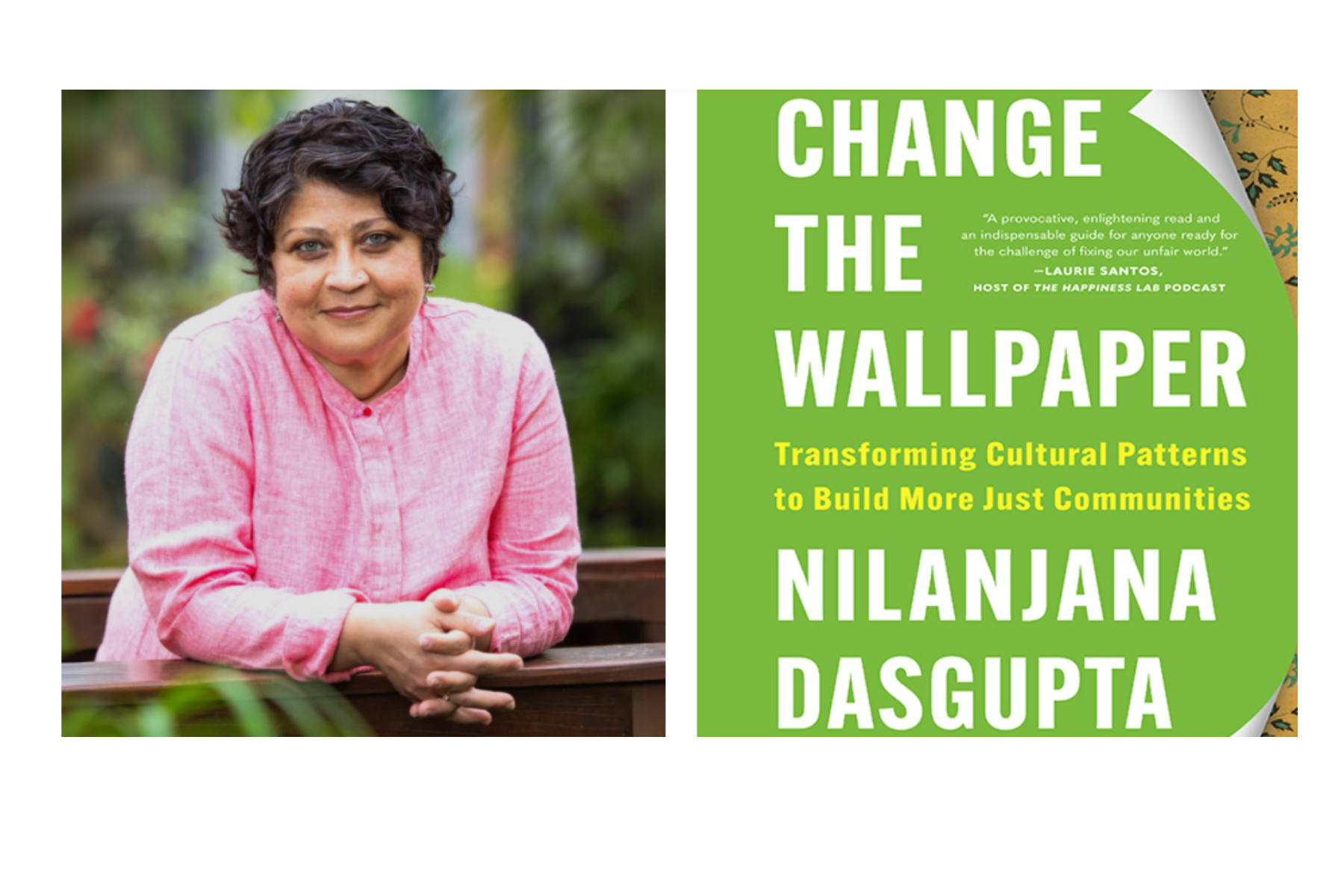
For Nilanjana Dasgupta, social change isn’t just about massive policy shifts or high-level legislation, it is about the “wallpaper” the subtle, often unnoticed norms and physical designs of our immediate environments that dictate who feels welcome and who is left behind.
Her debut work, “Change the Wallpaper: Transforming Cultural Patterns to Build More than Just Communities,” has won a gold medal in the 2026 Axiom Business Book Awards, honouring the best books in business literature.
This year’s awards attracted over 600 entrants from 31 countries globally, showcasing the depth and diversity of business publishing. Designed to celebrate excellence in business books, the Axiom Business Book Awards recognize works that help readers navigate the complexities of leadership, entrepreneurship, finance, and innovation.
Dasgupta, the University of Massachusetts Amherst professor and researcher provides a science-backed roadmap for ordinary people to dismantle structural inequality.
Drawing on 25 years of research into implicit bias, Dasgupta moves beyond the idea that simple awareness training is enough. Instead, she explores how the “local culture” of a classroom, a neighbourhood, or a boardroom act as a nudge, either reinforcing or challenging long-standing disparities.
“One person’s action alone is powerless in the face of a strong culture,” the book notes, emphasizing that collective, incremental shifts in these local spaces are what eventually move the needle on a global scale.
Dasgupta’s perspective is deeply rooted in her journey as an Indian American. Born and raised in Kolkata, India, she moved to the United States for her higher education, eventually earning her PhD in social psychology from Yale University.
Her transition from the vibrant, communal streets of Kolkata to the halls of American academia informed her fascination with how different environments “signal” value to the individuals within them.
Her research often highlights how the presence of “peers,” people who look like us or share our backgrounds, can dramatically alter a person’s performance and sense of belonging.
This “Stereotype Inoculation Model,” which she pioneered, suggests that seeing successful Indian Americans in leadership roles serves as a “social vaccine” against the negative effects of stereotypes. The book challenges the modern corporate reliance on diversity, equity, and inclusion (DEI) seminars that focus solely on internal thoughts.
Dasgupta argues that knowing one has a bias does not automatically change behaviour. Instead, she invites readers to look at the physical and social “wallpaper”: the portraits on the wall, the way meetings are structured, and the informal networks that exclude outsiders.
By humanizing the data with stories of everyday people, Dasgupta offers a hopeful message. If the local culture is the locus of the harm, it is also the locus of the cure. Through intentional, collective action, the book suggests that we can all participate in redecorating our shared spaces to reflect a more just and inclusive world.