



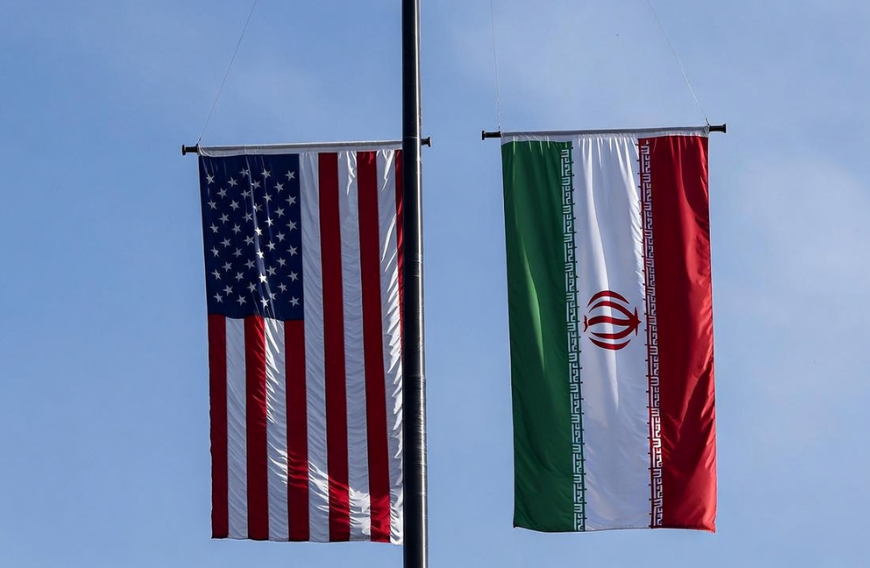
Iran is refusing to back down after President Donald Trump gave the country a deadline to meet his demands. According to multiple reports, Iran showed no sign of agreeing to Trump’s demand that it open the Strait of Hormuz by the end of Tuesday or face massive attacks on its civilian infrastructure, in what would be the biggest escalation yet of the war.
“The Zionist regime did not spare the community during Jewish holidays and attacked one of our ancient and holy synagogues,” Homayoun Sameh, who represents the Jewish community in Iran’s parliament, was quoted as saying in state media. “The synagogue building was completely destroyed and our Torah scrolls were left under the rubble.”
READ: Oil prices climb amid Iran war, Hormuz disruption sparks fears of worst crisis since 1970s (March 23, 2026)
A senior Iranian source told Reuters that Tehran had rejected a proposal conveyed by intermediaries for a temporary ceasefire.
According to Reuters, Trump has given Iran until 8 p.m. in Washington (midnight GMT and 3:30 a.m. in Tehran) to end its blockade of Gulf oil, saying he will otherwise destroy every bridge and power plant in Iran within four hours.
“We are back on a Trump-imposed countdown clock and there’s no way to predict with any confidence what will happen,” said Kyle Rodda, senior markets analyst at Capital.com. “The more intrepid traders might make a bet one way or the other. Others will look to hedge risk or stay out entirely. But there’s not much market participants can really do but wait and see.”
At a press conference on Monday, Trump doubled down: “The entire country can be taken out in one night, and that night might be tomorrow night,” he said. “Every bridge in Iran will be decimated… Every power plant in Iran will be out of business, burning, exploding, and never to be used again.”
The standoff between Trump’s administration and Iran has moved beyond political posturing, carrying the weight of potential military consequences. For Iran, the stakes extend beyond immediate security concerns to questions of sovereignty, regional influence, and domestic legitimacy. Yielding under pressure could be perceived internally and externally as a loss of strategic autonomy, while continued defiance risks severe economic damage and humanitarian fallout if critical infrastructure is targeted. The scale and immediacy of the threatened destruction, however, remain uncertain and may reflect political signaling rather than confirmed operational plans.
For the United States, this moment reflects a broader strategy of coercive diplomacy backed by overwhelming force. While such an approach may aim to secure rapid compliance, it also heightens the risk of miscalculation, unintended escalation, and long-term entanglement in another conflict in the Middle East. The likelihood, timing, and exact scope of any military response remain unclear, as much of the current posture is based on official statements and reported positions rather than confirmed actions. Any military move could strain alliances, disrupt global energy markets, and provoke retaliatory measures not only from Iran but also from aligned non-state actors in the region.
READ: Countries turn to Saudi port as Strait of Hormuz closes (March 24, 2026)
This standoff underscores how fragile geopolitical stability can become when deadlines, ultimatums, and military threats converge. Even without immediate conflict, the uncertainty alone can ripple across global systems, including financial markets, energy supplies, and diplomatic relations. Reports of specific incidents and internal impacts within Iran should be treated cautiously, as some originate from limited or state-linked sources and are not independently verified. Ultimately, the trajectory of this crisis will shape not just bilateral ties, but also the credibility of deterrence, the limits of negotiation under pressure, and the future balance of power in an already volatile region.