


By Kashmira Konduparty
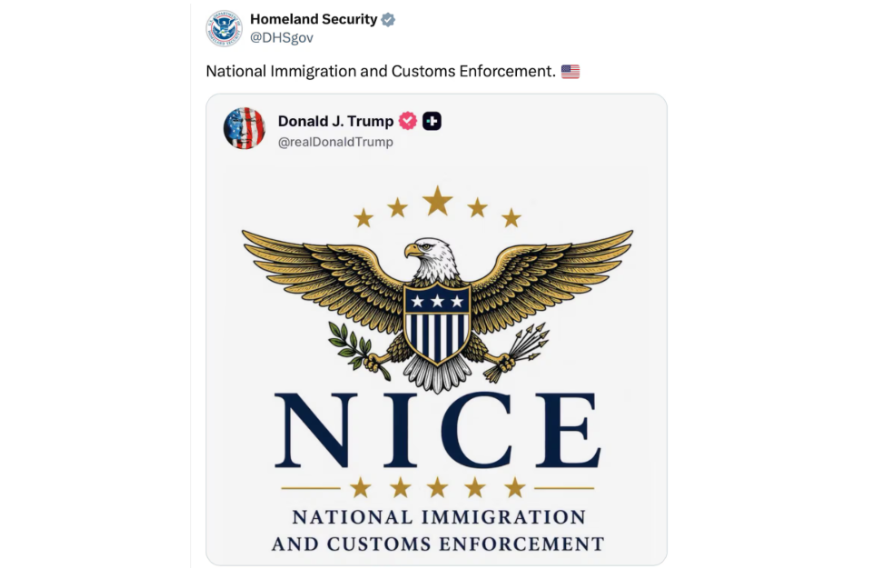
The U.S. Department of Homeland Security has drawn widespread attention after unveiling a proposed new logo and patch branding for “National Immigration and Customs Enforcement,” or NICE, echoing support from President Trump for renaming the agency that is currently known as ICE, even as officials confirmed no formal name change has been enacted.
The episode began with a post on X by Alyssa Marie, a journalist for The Conservative Caucus, saying “I want Trump to change ICE to NICE (National Immigration and Customs Enforcement) so the media has to say NICE agents all day everyday”, which she posted on March 25.
Trump reacted to the post on May 6, as a response to which DHS posted a new logo and patch. The concept was promoted on social media by the White House and the supporters and has drawn mixed reaction from the citizens.
READ: ‘Great idea’: Trump backs ‘NICE’ rebrand for ICE debate (April 27, 2026)
The supporters are calling this a ‘Boss move’, amplified by responses of people like Congressman Randy Fine, who said “The radical left should be forced to talk about our incredible “NICE” agents while they execute the mission — removing the foreign INVADERS that Democrats imported.” and Alyssa Marie’s “ICE is NICE!”.
The critics like Tom Steyer, who said “Call them whatever you want – I’ll send federal agents who break the law to jail” and user @WUTangKids says “They’re still trying to do this “NICE” rebrand of ICE like we will all of a sudden forget about all the murders and kidnappings by their masked thugs”.
The citizens respond with comic strips of ICE agents detaining immigrants in the “NICE uniforms” and users editing the NICE patch to “MICE-Men In Constant Emasculation” and “NOPE- National Overreach and Political Enforcement”
READ: ICE arrests Indian national in Michigan with child-related criminal convictions (April 24, 2026)
Despite the online traction, officials have indicated that the rebranding remains informal, with no legal steps taken to change the agency’s name. The DHL continues to refer to the agency as Immigration and Customs Enforcement in official communications and on government websites.
Analysts note that any formal renaming would require administrative and potentially legislative action, making the current development largely symbolic.
The debate surrounding the proposed “NICE” branding highlights the growing influence of social media in shaping political messaging and public discourse. While supporters view the move as a strategic communication shift, critics argue it does little to address deeper concerns about immigration enforcement policies.
As the discussion continues to unfold online, the episode underscores how digital platforms are increasingly driving narratives around government actions and public perception.