



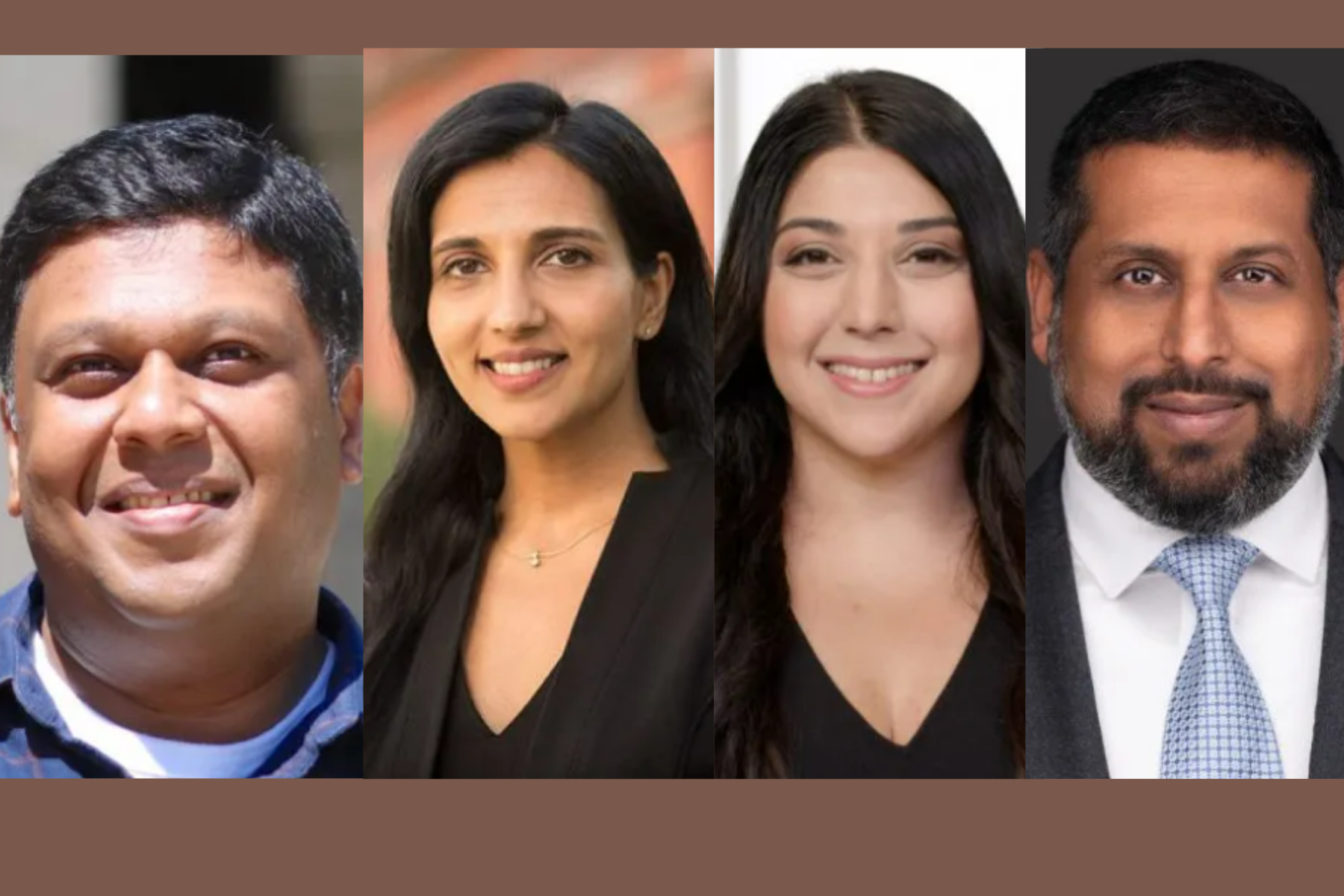
The 2026 Thinkers50 Radar list has identified four Indian American leaders whose ideas are poised to transform global management.
Arvind Karunakaran, Sunita Sah, Nidhi Tewari, and Vilas Dhar have been named to the prestigious cohort for their work at the intersection of technology, psychology, and human dignity.
Every year Thinkers50 Radar identifies a cohort of 30 up-and-coming thinkers whose ideas it predicts will make an important impact on management thinking in the future.
It identifies new talent and ideas and provides an early alert system for managers, publishers, speaker bureaus, and others in the thought leadership industry
Read: Four Indian American academics cleared for Stanford jobs
Arvind Karunakaran, an assistant professor at Stanford University, is tackling the tension between high-tech tools and human workers. Having completed his foundational education in India before moving to the U.S. for a PhD at the MIT Sloan School of Management, Karunakaran brings a global perspective to organizational theory.
His research examines how generative AI and predictive analytics can be deployed without eroding worker accountability or deepening workplace inequality.
Sunita Sah, a professor at Cornell University, offers a unique bridge between medicine and management. Born in the United Kingdom to Indian immigrant parents, Sah spent over a decade as a physician in the NHS before transitioning to organizational psychology in the U.S. in 2008.
Her 2025 book, Defy, explores “insinuation anxiety”, the psychological pressure to comply with bad advice to avoid appearing distrustful, and provides a framework for professionals to act on their core values.
Read: Four Indian American researchers win 2026 Florida University honors
Nidhi Tewari, a licensed clinical social worker and keynote speaker, is being recognized for her “science of attunement.” Her work challenges the corporate tradition of compartmentalization, urging leaders to see employees as whole human beings.
In her book Working Well, Tewari, whose heritage informs her focus on community and connection, argues that making individuals feel seen and valued is the essential evolution of emotional intelligence required to prevent burnout.
Vilas Dhar, President of the Patrick J. McGovern Foundation, is a leading voice in AI governance. While a native of Illinois, Dhar credits his moral framework to childhood summers spent in Agrahara, a rural Indian village without electricity.
Watching his grandfather settle local disputes with “moral clarity” inspired Dhar’s current efforts to build a “civic layer” for AI. He now advises the United Nations and the U.S. government on ensuring technology serves the public good rather than just commercial interests.
These four honorees reflect the growing influence of the Indian American community in shaping the ethical and structural future of the global workforce.