



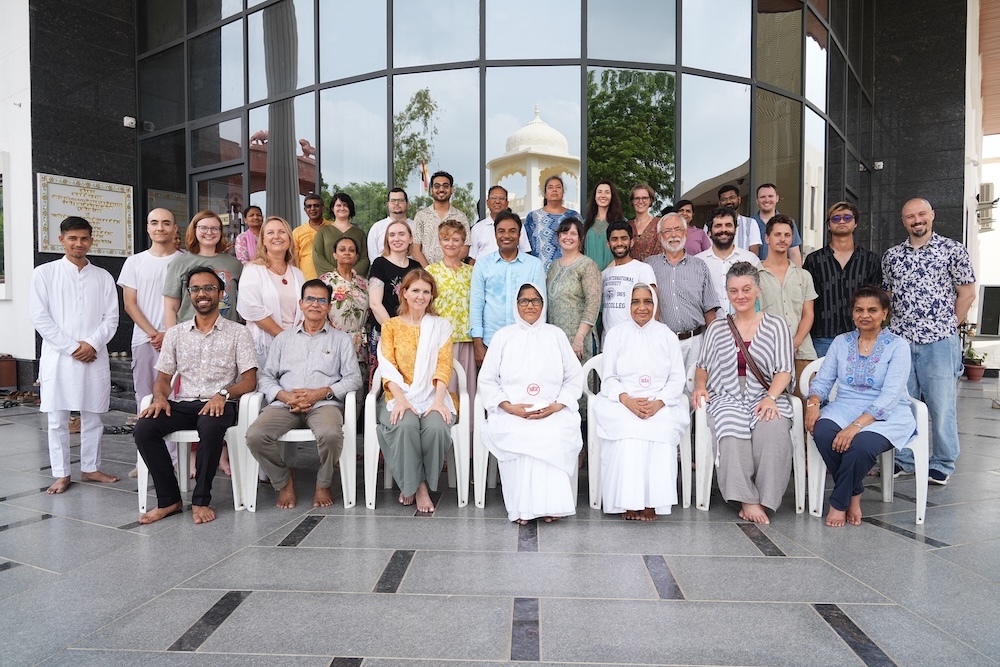
Vishwa Bharati Institute, based in the Rajasthani city of Ladnun, is hosting a landmark three-week immersive program in collaboration with Florida International University. The program brings together nearly 40 students, scholars, and professors from more than 12 countries to experience the “Jain Way of Life,” according to a press release.
Conceived as a think tank modeled on the United Nations, the program is working toward “Ahimsa to bring peace” by learning and living the world’s lowest-carbon-footprint lifestyle.
READ: Jain studies summer school to bring global scholars to Rajasthan (June 3, 2026)
Participants are engaging in deep study and practice of Ahimsa Paramo Dharma and its core values of Anekantvad (multiplicity of viewpoints) and Aparigraha (non-possession).
The initiative has been made possible through the collective funding support of Florida International University, donors, and Jain Vishwa Bharati Institute. The Jain Education and Research Foundation (JERF) cosponsored the initiative, with Grand Sponsor Dr. Jasvant Modi of the Vardhamana Charitable Foundation.
Founded by Dr. Modi, the Vardhamana Charitable Foundation is dedicated to promoting peace through Jain educational values.
READ: Minimizing harm in advocacy: Integrating Jain philosophy into law (July 12, 2026)
The program is hosted on Jain Vishwa Bharati’s sprawling 125-acre campus in Ladnun. The university is home to 500 sadhus and sadhvis, more than 200 saman and samanijis, and several mumukshus.
This vision was brought to life by Prof. Samni Dr. Pratibha Pragyaji with the blessings and inspiration of Acharya Mahashramanji and executed through the dedicated academic planning of Dr. Sasha Restifo of FIU and Dr. Shivani Bothra of California State University, Long Beach.
“What makes this program distinctive is that it refuses to separate the classroom from the community,” said Dr. Nirmal Baid, co-chair of the Jain Education and Research Foundation and Program Director of the Immersive Jain Summer School. “A scholar can study the Prakrit grammar of a text in the morning and sit in the presence of hundreds of monastics by evening. That combination is very hard to find anywhere else, and it changes how people understand what they are studying.”