



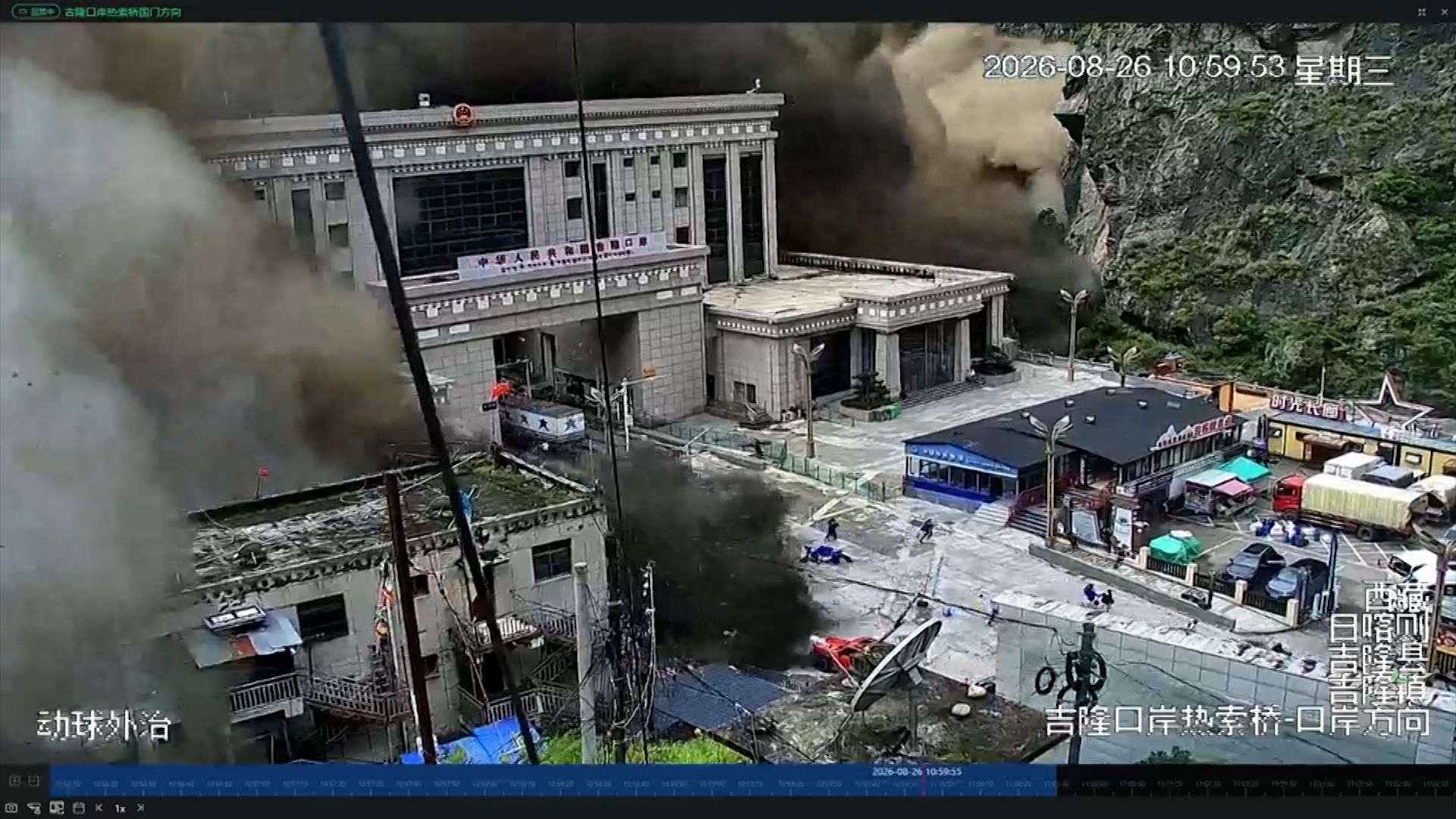
There are moments when a tragedy becomes so overwhelming that the instinct to explain it gives way to silence. The images emerging from the Himalayas after the catastrophic floods along the Nepal China border are such moments. Roads, bridges, vehicles and buildings were swept away with terrifying speed as water, ice, rock and debris came crashing through mountain valleys. Among those caught in the disaster were Indian pilgrims traveling toward one of the most sacred places on Earth, Mount Kailash. As the numbers of missing and dead continue to emerge, the question that naturally rises above all the others is one that human beings have asked after every great tragedy: Why?
Why these people? Why at this place? Why at this moment? And for those of us who believe in karma, perhaps the most difficult question is whether what happened represents good karma or bad karma. Did these people somehow deserve what happened to them, or was their suffering simply the consequence of forces beyond human control?
Some survived by what can only be described as the narrowest of margins. They found higher ground, were pulled from the rushing water, reached safety moments before the destruction arrived, or simply happened to be somewhere the torrent did not reach. Others, traveling through the same landscape and often on the same pilgrimage, were swept away and perished within minutes.
Looking at the images of people running for their lives, of vehicles and buildings disappearing beneath an overwhelming wall of water and debris, it is impossible not to wonder what separated one fate from the other. Was it a decision made seconds earlier, a road taken instead of another, a moment of extraordinary fortune, or something we cannot see or understand?
Read more by Sreedhar Potarazu
And for those of us who believe in karma and divine providence, the question becomes even more profound: Why did some escape while others perished?
Mount Kailash is not simply a mountain. Rising approximately 6,638 meters above sea level in the Gangdise range of the Himalayas in southwestern Tibet, in China’s Ngari Prefecture, the mountain lies in one of the most remote and physically demanding regions of the world.
For Hindus, Kailash is traditionally regarded as the abode of Lord Shiva and Parvati and is associated with Mount Meru, the cosmic mountain and axis of the universe. For Tibetan Buddhists, it is similarly associated with Mount Meru and occupies an important place in Buddhist cosmology. Jains associate the region with the liberation of Rishabhanatha, the first Tirthankara, while the ancient Bon tradition of Tibet also regards Kailash as sacred.
What makes Kailash particularly remarkable is that pilgrims do not traditionally climb it. They circumambulate it in a pilgrimage known as the kora. The journey is physically demanding because of the altitude, terrain, weather and remoteness, but the hardship is itself part of the spiritual experience. For many people, reaching Kailash represents the fulfillment of a dream held for years or even decades. Many aspire to make the pilgrimage but never have the opportunity because of age, health, finances, geography or circumstance. Those who finally make the journey often regard it not as tourism or adventure, but as an act of devotion.
That is what makes the tragedy so difficult to comprehend. These were people traveling toward a place they believed was sacred when nature suddenly demonstrated a power that no human being could control. A collapse involving glacial material, ice, rock and water produced a devastating surge through the region, destroying infrastructure and sweeping away everything in its path. Scientists can investigate the physical causes and help us understand how such an event occurred, particularly as climate change raises increasing concerns about the stability of Himalayan glaciers and mountain systems. That scientific understanding is essential because it may help us develop better warning systems and prevent future loss of life.
But science can explain how the disaster happened. It cannot answer the question that grief inevitably asks: Why did it happen to me?
That question takes us beyond science and into philosophy, spirituality and the deepest uncertainties of human existence.
Karma is often misunderstood as a simple system of reward and punishment, in which good people receive good things and bad people receive bad things. But the philosophical concept is much more complicated. To look at a person who died in this catastrophe and conclude that they had bad karma is to claim knowledge that none of us possesses. We cannot see the entirety of another person’s life, much less the complete chain of causes and consequences that Hindu philosophy associates with karma. We may believe in karma without believing that we have the ability to interpret the karma of another human being.
Perhaps the more honest response is humility.
We do not know why one person survived while another did not. We do not know why one family will receive the call they have been praying for while another will receive devastating news. We do not know why the glacier collapsed on that particular day or why these particular pilgrims happened to be there. To pretend that we know the divine or karmic explanation for such suffering may provide psychological comfort, but it can also become an act of arrogance.
What we do know is that the images from the Himalayas reveal something that modern life often allows us to forget: we are not nearly as much in control as we imagine.
Wealth and technology have given individuals and societies an extraordinary sense of power over their circumstances. Gradually, almost imperceptibly, we begin to believe that if we have enough money, knowledge, technology or influence, we can protect ourselves from almost anything.
Then a mountain moves.A glacier collapses. A river rises. And within minutes, that illusion of control disappears.
Money cannot negotiate with a wall of water. Political power cannot command a mountain to remain still. Technology cannot guarantee that a person standing in the path of an enormous natural force will survive. In such moments, the distinctions that human beings spend their lives constructing become irrelevant. The wealthy and the poor, the powerful and the powerless, the famous and the unknown are ultimately subject to the same physical laws.
Perhaps that is why Kailash has such extraordinary spiritual significance. People travel toward a mountain that symbolizes permanence because, consciously or unconsciously, they recognize the impermanence of their own lives. They do not go to conquer it. They go to walk around it, to place themselves within a landscape that is far greater than their individual existence. The pilgrimage is an act of surrender as much as an act of devotion.
There is therefore something profoundly symbolic about what has happened. People traveled toward a place associated with the eternal, and along the way they encountered the fragility of human life. They went seeking the sacred and were reminded of their own mortality. They went believing they were undertaking a journey they had chosen, only to discover how completely the journey remained subject to forces beyond their control.
Perhaps that is one of the deeper purposes of pilgrimage. We imagine that we are traveling toward a destination, but the real journey may be inward, toward a recognition of who we are and how little control we ultimately possess.
READ: Indian American families search for loved ones missing in Nepal floods (
The tragedy should therefore not lead us to declare that those who died had bad karma or that those who survived had good karma. We should resist the temptation to turn suffering into a moral equation that we have neither the knowledge nor the authority to solve. Instead, perhaps we should allow the tragedy to confront us with a more difficult truth: there are things in this universe that we can understand scientifically but cannot explain existentially.
The images from the Himalayas should make us pause because they remind us that our lives are temporary, our possessions are temporary, our accomplishments are temporary and even our sense of control is temporary. That realization should not diminish the value of life; it should make us appreciate it more deeply.
When we understand how fragile existence is, the ordinary things we take for granted become extraordinary: a conversation with someone we love, a phone call we have been meaning to make, an opportunity to forgive, a morning we are fortunate enough to wake up and experience.
The pilgrims who set out toward Kailash carried their own hopes, faith and reasons for making the journey. Their lives should not be reduced to the circumstances of their deaths, nor should their tragedy be explained away through simplistic interpretations of karma. They were human beings who believed that the journey mattered, and perhaps that is what we should remember.
Perhaps the question Why? does not always demand an answer.
Perhaps sometimes it demands humility and silence .
The mountains have existed long before us and will remain long after most of us are forgotten. They have watched generations of pilgrims arrive with their hopes and depart with their memories. They have witnessed civilizations rise and disappear, while remaining largely unchanged. And now, once again, they remind us of something we spend much of our lives trying to forget: that we are small, that life is fragile and that none of us ultimately controls the journey.
We may never know why this tragedy happened. But perhaps we can allow it to change the way we live the lives we still have.
And perhaps that is the only answer to WHY? that is within our control.