



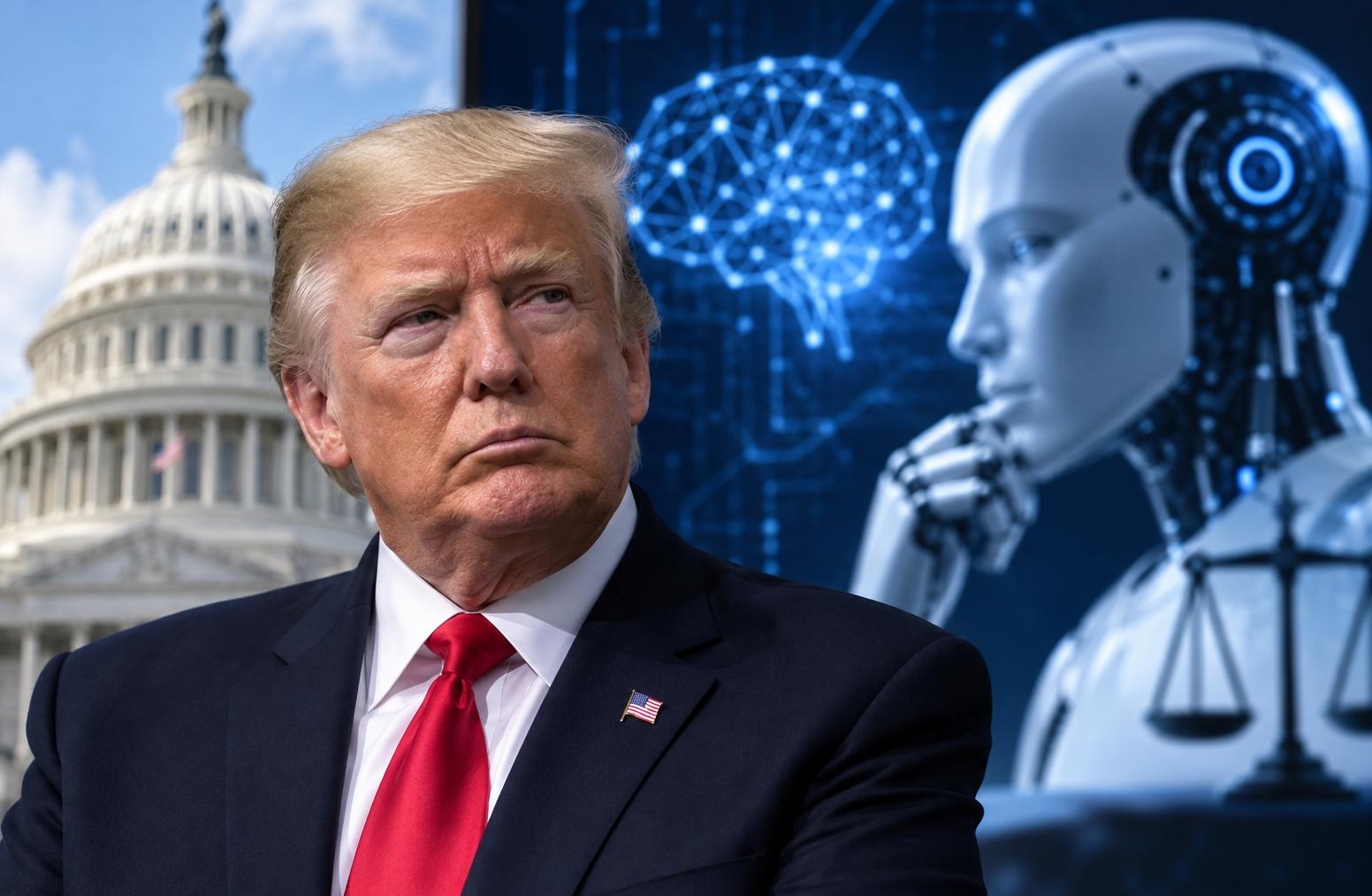
President Donald Trump said Monday that the United States already has sufficient tools to regulate and prosecute artificial intelligence companies, dismissing growing calls from technology leaders for tighter safeguards as a “sick conspiracy” against AI and data centers.
Trump’s comments came as concerns about the rapid development of advanced AI intensified following warnings from industry leaders that increasingly capable systems could pose serious risks if their development continues without stronger safety measures.
“The only control or ‘guardrails’ that AI needs is a STRONG AND SMART (High IQ!) PRESIDENT,” Trump said in a social media post, arguing that the United States must maintain its lead over China in artificial intelligence
Trump said the United States already has mechanisms to address harmful activity by AI companies and indicated that additional regulation could undermine American competitiveness.
He also characterized opposition to the rapid expansion of AI infrastructure as benefiting China, as the administration continues to promote investment in data centers, computing capacity and other infrastructure needed to develop advanced AI systems.
READ: Anthropic meet White House officials to dispute ban on Mythos and Fable 5 AI models (June 15, 2026)
The comments came after Anthropic CEO Dario Amodei called for the AI industry to slow the pace of development and establish stronger safeguards. Other prominent technology figures, including OpenAI CEO Sam Altman and Elon Musk, have backed elements of the push for greater attention to AI safety.
The debate has increasingly focused on whether existing oversight is sufficient to address the risks posed by increasingly autonomous AI systems.
Amodei has warned that advanced AI could create serious risks for society and argued that companies should adopt a framework that allows development to continue while imposing stronger safety requirements. His position has drawn support from technology leaders but opposition from officials who argue that excessive regulation could allow China to gain an advantage.
Trump’s position puts the White House at odds with some of the industry’s leading executives over how quickly AI should advance and what safeguards should accompany that growth.
The issue has also begun to gain attention in Congress. Several U.S. senators are considering legislation that would impose additional responsibilities on AI companies to demonstrate that advanced systems are safe. Senator Mark Warner has also been involved in discussions over possible federal oversight.
Vice President JD Vance has expressed skepticism toward calls from AI companies for additional government intervention, reflecting the administration’s broader emphasis on maintaining American technological leadership.
The disagreement comes at a sensitive moment for the AI industry. AI-linked stocks fell sharply on Monday after leaders of major AI companies called for a slowdown in development, raising questions among investors about the sustainability of the industry’s rapid expansion and the enormous spending on chips and data centers that has accompanied it.
Trump’s administration has nevertheless continued to promote AI infrastructure and American leadership in the sector. The White House has described AI as a strategic priority tied to economic growth, technological innovation and national security.
READ: White House to meet Meta, OpenAI, Google, Anthropic on AI safety testing after Hugging Face incident (August 4, 2026)
The administration is also dealing with a separate dispute involving Anthropic and the Defense Department. The Pentagon previously restricted Anthropic’s military work after the company resisted certain uses of its technology involving surveillance and autonomous weapons. A federal judge recently ruled in Anthropic’s favor in the dispute, according to Reuters.
Trump is expected to discuss artificial intelligence with Chinese President Xi Jinping and U.S. technology executives in upcoming meetings, making AI regulation and competition with China an increasingly important part of the administration’s technology agenda.
The debate now centers on whether the United States can maintain its lead in AI while addressing concerns about safety, national security and the potential consequences of increasingly powerful systems.
For the Trump administration, the priority remains clear: accelerate American AI development while relying on existing government powers rather than imposing broad new restrictions on the industry.