



American families now need to spend more on children’s gifts this holiday season as a result of rising import tariffs and higher energy costs. The increasing prices of goods are adding pressure to household budgets at a time when broader inflation is also accelerating.
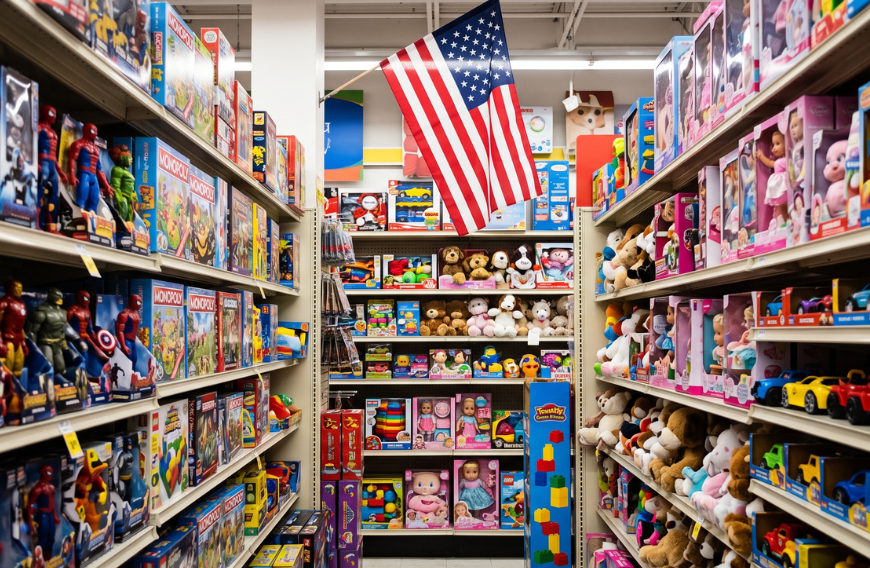
Toy prices in the U.S. rose 6.6% over the past year. Prices increased by 4.2% in September alone. The rise was sharper than in several other consumer product categories as retailers prepared for the peak holiday buying period. A large percentage of toys sold in the country is manufactured in China.
Hence, the industry is particularly vulnerable to trade policy changes, including higher tariffs.
Trump administration initially imposed tariffs of up to 145% on Chinese goods in 2025 before reducing the rate to 30%. The effects continue to influence retail prices despite the ease in tariffs.
Last month, U.S. and China have agreed to reduce tariffs on about $60 billion worth of goods, marking a step toward easing trade tensions following a meeting between President Donald Trump and Chinese President Xi Jinping.
READ: Holiday spending rises 4.2%, led by e-commerce and electronics: Visa (December 24, 2025)
Under the arrangement, each country had identified about $30 billion worth of goods that could receive more favorable tariff treatment from each side. The agreement focuses largely on non-sensitive products, including toys from China.
Manufacturers often set prices months before products reach store shelves. Toys are largely made from petroleum-based plastics, so rising oil prices linked to the Iran war are adding to cost for consumers. David Silverman, a senior director at Fitch Ratings, said “The impact from the Iran conflict on commodity costs and shipping costs will certainly persist for the next several quarters.”
The pressure is also affecting major toy companies. Mattel, the maker of Barbie dolls, reported moderate inflationary pressure associated with developments in the Middle East. The company’s chief financial officer Paul Ruh said during earnings call in August that Mattel had also faced pressure on profit margins from tariffs related expenses. Meanwhile, Hasbro acknowledged higher input costs.
READ: Halloween spending soars to $13.1 billion, turning holiday into major retail event (September 25, 2025)
Adding to these concerns, U.S. consumer prices increased 3.7% in Sept from a year earlier, and up from 3.4% in August. Higher energy costs have contributed to this increase. Like toy prices, goods such as clothing, footwear and other goods have also become more expensive to the Americans.
In April 2025, Trump admitted that his tariffs could raise consumer prices. But major criticism over the policy came when he suggested that children might have “two dolls instead of 30 dolls.”
Trump administration’s policies have been long criticized by political analysts and opposition leaders. Adding to this public criticism, a Reuters/Ipsos poll conducted through Octo 5 found that 21% of respondents approved Trump’s handling of the cost of leaving, while 67% disapproved.
As the holiday season is approaching, manufacturers and retailers face uncertainty over how much additional cost consumers are willing to absorb.