



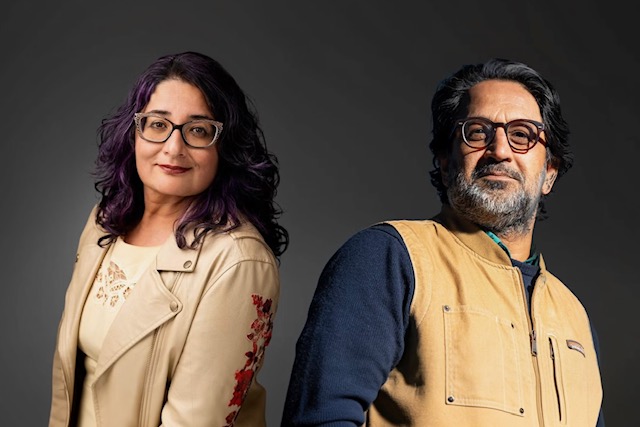
Two Indian American professors Jigna Desai and Sameer Pandya will co-lead a new South Asian American studies center
at the University of California at Santa Barbara (UCSB) set up with a $750,000 gift from the Mellon Foundation.
The $750,000 award from the foundation allows campus scholars to build a systematic framework for a discipline that has historically lacked centralized institutional support, according to a university release.
The project is led by Desai and Pandya, both faculty members in the Department of Asian American Studies. Department chair Pandya is also a bestselling novelist, while Desai doubles as the inaugural director of the university’s Center for Feminist Futures. The twin talents offer a rare academic alignment.
“It’s a real rarity to have two people who do South Asian American studies in an Asian American studies department,” Desai noted.
The initiative also addresses a critical gap in the academy. While Asian American studies programs have expanded nationally over the past two decades, dedicated resources for South Asian American studies research remain scarce. Scholars often navigate their careers without formal pipelines, coursework, or structured mentorship.
Read: Indian American cardiovascular genetics innovator wins 2026 Population Research Prize (October 2, 2026)
“In a way, the field has been in existence for 30 years in a space between post-colonial studies…and the rise of Asian American Studies,” Pandya explained. “And so there’s never been a clear, dedicated space for South Asian American studies.”
A primary objective of the grant is to expand research into subjects historically minimized within broader Asian American frameworks, including caste.
While caste analysis is established in South Asian subcontinental studies, its mechanics within the global South Asian diaspora and its varying levels of generational acculturation within American and European societies require deeper academic attention.
“Caste is one of those categories, and specifically caste in relation to migration, but also how it plays a highly present force in shaping people’s lives in the diaspora,” Desai said.
Over the next four years, Desai and Pandya said that the funding will deploy targeted programming across four key areas: undergraduate curriculum development and learning opportunities, graduate training and research support, junior faculty mentorship, and partnerships with public-facing projects.
Read: Indian American founded Aiseptor joins Cornell Tech’s Runway Startup program (September 24, 2026)
Planned initiatives include open-access online curricula, summer undergraduate internships, dissertation fellowships and manuscript workshops.
The overarching goal is to transform a historically fragmented network into a permanent academic fixture. As Pandya emphasized, the initiative aims to bring together senior scholars, junior faculty, and students to foster a robust intellectual community.
“We like the collective noisiness of the current conversation in a way that before we were all just working on our own, trying to figure it all out,” Pandya said.
The center’s inaugural event brought in 20 scholars from across the country. The symposium focused on research attuned to questions of power, dominance and complicity within South Asian American studies.
The symposium deepened engagements across the field, built connections between scholars of various career stages and utilized workshops to strengthen scholarship that will be considered for an upcoming edited collection on critical South Asian American studies.