



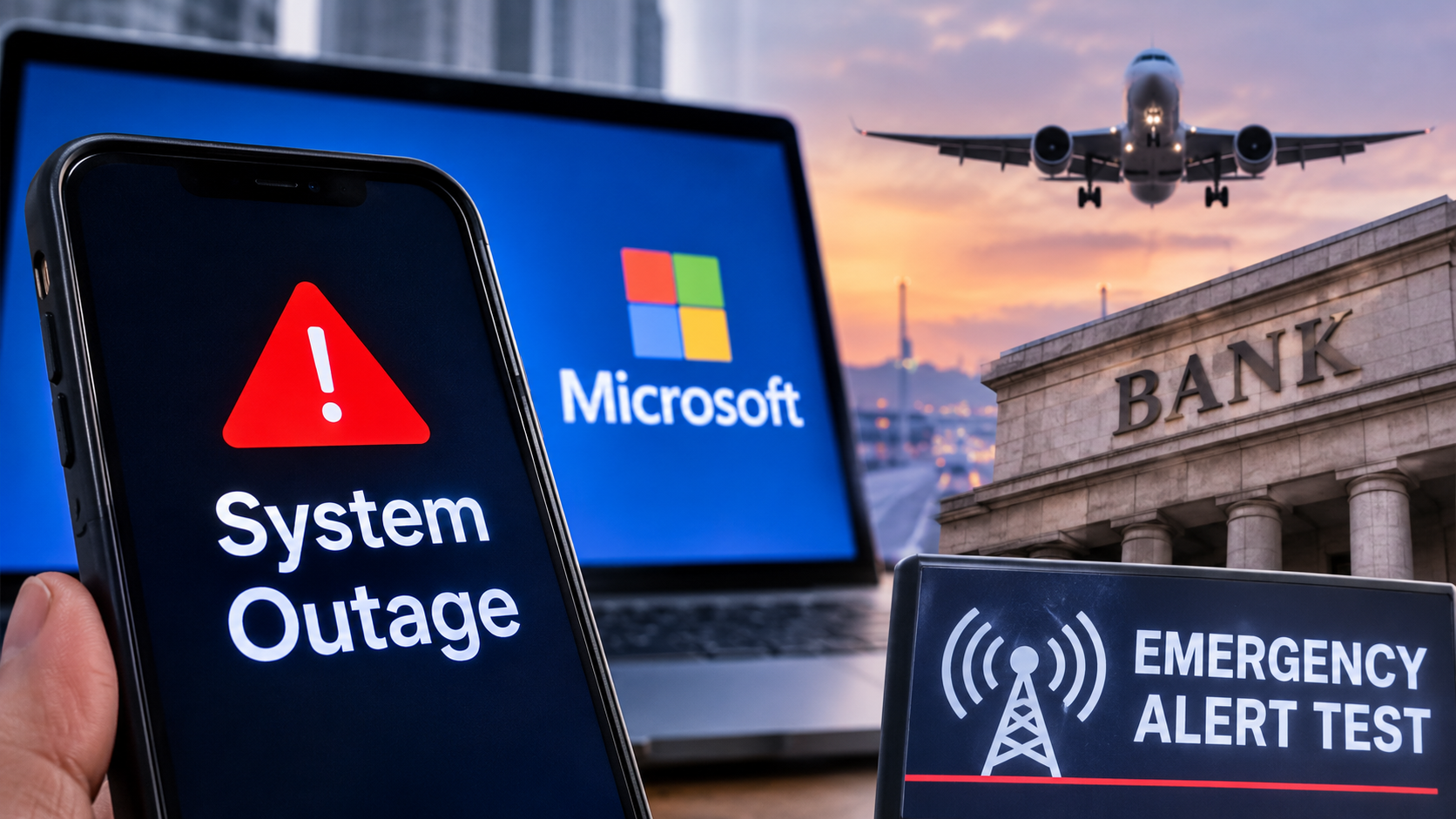
Disruptions affecting airlines, banks and technology platforms, combined with a nationwide emergency alert test, sparked speculation about cyberattacks and a prolonged blackout.
The United States was gripped by a wave of social media speculation about a supposed digital apocalypse on Nov. 17, as recent disruptions to technology platforms, airline operations and banking services fueled conspiracy theories.
Claims of an impending nationwide blackout, a prolonged internet shutdown, artificial intelligence (AI)-driven cyberattacks and bank account resets circulated widely on social media. However, there was no credible evidence to support these predictions or suggest that the disruptions were part of a coordinated attack.
Adding to the speculation was a previously announced nationwide test of the Emergency Alert System (EAS) by the Federal Emergency Management Agency (FEMA) and the Federal Communications Commission (FCC), reportedly scheduled for the same day.
The online warnings gained traction after several major technology disruptions occurred within days of one another.
On Nov. 12, Microsoft experienced a widespread outage affecting Outlook, Teams and other Microsoft 365 services, disrupting operations at businesses and government agencies worldwide. A day later, the Federal Aviation Administration (FAA) ordered a nationwide ground stop after telecommunications problems disrupted its air traffic control network.
According to the FAA, the disruption involved legacy equipment that became unstable after an unusually large volume of data flooded its network. The agency said the problem affected 17 of its 22 Air Route Traffic Control Centers. Approximately 12,462 flights were canceled on Nov. 13, although the FAA acknowledged that not all cancellations were directly attributable to the ground stop.
Banking disruptions on Nov. 16 added to the growing concerns, with customers reporting difficulties accessing online services at JPMorgan Chase, Bank of America, Wells Fargo and U.S. Bank, among other financial institutions.
JPMorgan Chase attributed the disruption to a software bug affecting its on-premises hardware systems, which delayed some transactions. The bank said there was no evidence of a cyberattack and assured customers that their accounts and funds remained accessible.
READ: Microsoft, banks, airlines hit by outages: DHS chief points to AI, ‘superintelligence’ (November 17, 2026)
The disruption also impacted transactions involving other financial institutions. U.S. Bank said its systems were functioning normally, although some customers experienced delays with Zelle payments involving other banks. Bank of America similarly reported that its systems were operating normally.
The series of disruptions fueled speculation that the incidents were connected, although no evidence emerged to suggest a common cause.
In a report, WIRED cited cybersecurity experts who noted that routine technical failures are far more common than coordinated cyberattacks. Cloudflare CEO Matthew Prince characterized such incidents as among the challenges inherent in operating complex technology infrastructure.
What actually happened on November 17?
The FEMA-FCC exercise was a routine nationwide test of the Emergency Alert System, not a warning of an impending emergency.
Conducted at approximately 2:20 p.m. Eastern Time on Nov. 17, the test briefly interrupted regular programming on radio and television stations, cable systems, satellite services and other participating platforms with a message lasting about one minute.
The exercise did not include Wireless Emergency Alerts sent directly to mobile phones. FEMA said the test was intended to assess the country’s public warning infrastructure and identify potential technical or operational problems before an actual emergency.
Federal law requires a nationwide test of the public alert and warning system at least once every three years. The Nov. 17 date had been publicly announced in September, with December 3 designated as a backup date in case the exercise had to be postponed.
Social media posts nevertheless connected the scheduled test to claims that the government would shut down the internet, reset bank accounts or impose a prolonged nationwide blackout.
Some posts also invoked The Simpsons, suggesting that the animated television series had predicted Nov. 17 would bring chaos. However, such claims do not establish that the show accurately forecast the events or that any planned nationwide shutdown was imminent.
PolitiFact rated claims of a nationwide 90-day blackout beginning Nov. 17 false. The fact-checking organization also found that a viral video purporting to show President Donald Trump announcing such a blackout had been manipulated. The original footage, from a Nov. 9 White House news conference, contained no such announcement.
AI fears and social media algorithms
The speculation also emerged amid growing public concern about the role of artificial intelligence in critical infrastructure.
A Business Insider report examined speculation by Homeland Security Secretary Markwayne Mullin that artificial intelligence might have contributed to the recent technology disruptions.
Mullin said his assessment was based on a conversation with a technology expert, but acknowledged that he did not know the precise cause of the outages. He also maintained that there was no evidence of a coordinated cyberattack.
The report emphasized that AI’s possible involvement remained a theory rather than an established explanation for the disruptions.
A LinkedIn News report by Rachel Kleinman also examined how social media algorithms helped amplify the anxiety. The report cited CNN’s Brian Stelter on how engagement-driven recommendation systems can create echo chambers, repeatedly exposing users to similar alarming content.
READ: Did FAA’s new AI system play a role in flight disruptions? Officials say no (November 16, 2026)
As people interacted with posts about outages and potential emergencies, their feeds increasingly displayed related doomsday predictions, making isolated claims appear more widespread and credible.
The anxiety also appeared to have commercial consequences. Bloomberg reported that Costco shoppers were buying emergency-preparedness products amid the disruptions and online warnings. An analyst note from Mizuho Securities cited by LinkedIn said 21 of 26 high-ticket generators listed on Costco’s website were sold out as of Sunday.
Experts urge preparedness, not panic
The incidents have renewed questions about the dependence of households and businesses on interconnected digital systems.
In her LinkedIn post, Kelsey Waag suggested several practical steps to reduce the impact of future outages. These included keeping offline copies of important documents, exporting contact lists, saving bank statements and insurance records, and checking whether essential accounts could be accessed through alternative devices.
The advice focused on basic digital preparedness rather than anticipating a disaster.
Similarly, WIRED recommended checking official company announcements, verified social media accounts and service-status dashboards before concluding that an outage was the result of a cyberattack.
The Nov. 17 episode demonstrated how genuine infrastructure problems, uncertainty about their causes and algorithm-driven social media amplification can combine to create widespread public anxiety.
While the recent outages exposed vulnerabilities in technology-dependent services, they did not provide evidence of a coordinated digital attack, a government-mandated internet shutdown or an impending nationwide blackout.