


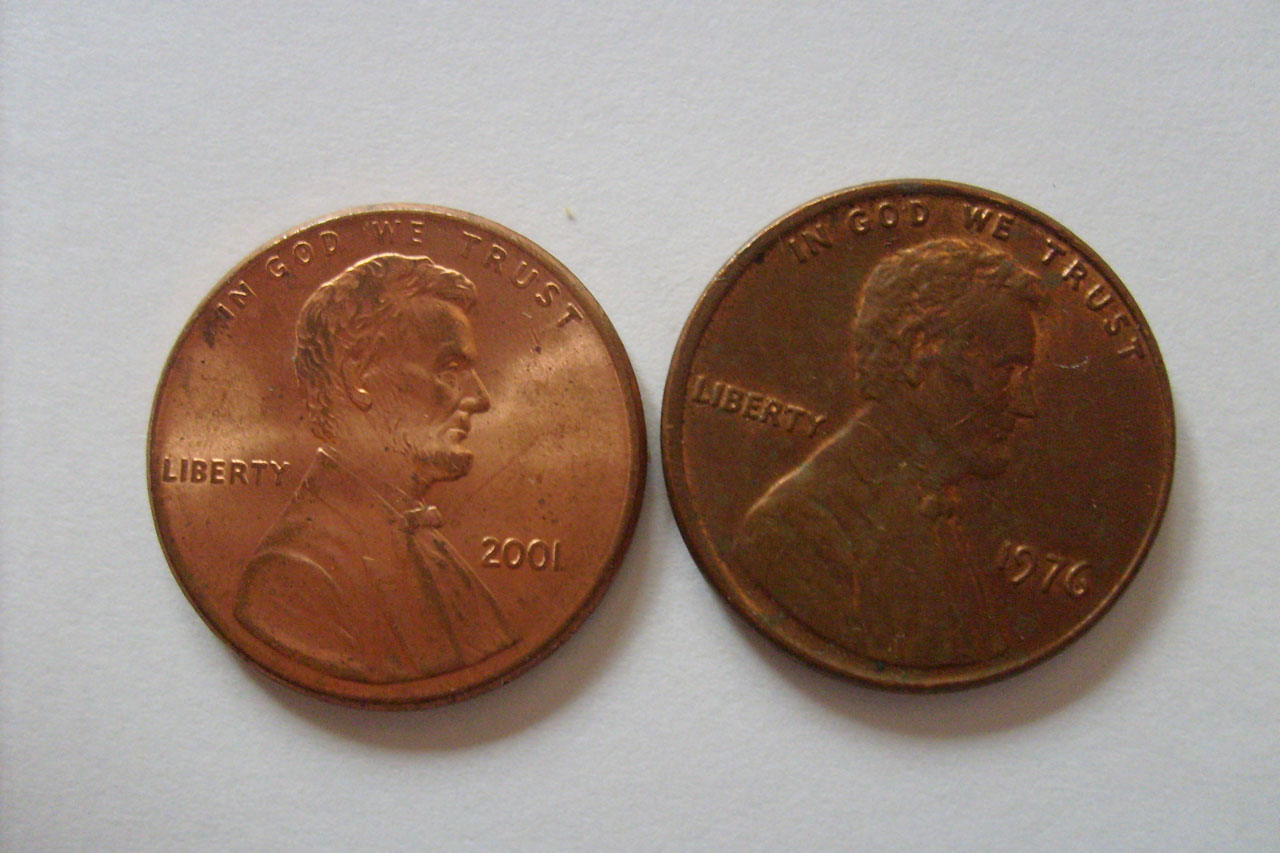
In light of President Donald Trump trying to get rid of the penny, let’s take a look back at the long and cherished history of one of the United States’ most enduring currencies.
The penny has had a long and interesting history in the U.S., evolving from its original design to become the smallest denomination of currency still in circulation today. Here’s an overview of its history and value over time:
READ: Trump halts penny production, citing ‘wasteful’ spending (February 10, 2025)
Early History (1793–1857)
● 1793: The U.S. Mint first struck the penny in 1793, following the establishment of the Mint in 1792. The first pennies were made of copper, and their design featured a large, flowing Liberty head on the obverse and a wreath on the reverse. These were known as “Liberty Cap” cents.
● 1800s: Over the years, the design and metal content of pennies changed. During this period, the U.S. began to experiment with different designs and materials. In 1857, the composition of the penny changed to 88% copper and 12% nickel, making them more durable than earlier copper pennies.
The Wheat Penny Era (1909–1958)
● 1909: A significant change occurred when the U.S. Mint introduced a new design featuring President Abraham Lincoln on the obverse, created by sculptor Victor David Brenner. This design would become the most recognized and widely circulated penny in American history. The reverse of the penny during this time displayed two wheat stalks, leading to its nickname, “Wheat Penny.” The material remained primarily copper.
● 1930s-1940s: During the Great Depression and World War II, the penny experienced fluctuations in material composition due to economic factors. For example, in 1943, copper was in short supply due to the war effort, and pennies were made from steel instead of copper.
The Memorial Penny (1959–2008)
● 1959: To celebrate Lincoln’s 150th birthday, the U.S. Mint replaced the wheat stalk design with a new reverse, featuring the Lincoln Memorial. The new design was intended to commemorate Lincoln’s legacy and also symbolize the stability of the nation.
● Changes in Composition: Over time, the material used for pennies began to change. In the 1980s, the rising cost of copper led the Mint to adjust the composition of the penny. By 1982, the penny was made from a composition of 97.5% zinc and 2.5% copper, significantly reducing the cost to produce the coin.
Modern Penny (2009–Present)
● 2009: In honor of Lincoln’s 200th birthday, the U.S. Mint released a series of four new reverse designs depicting different stages of Lincoln’s life, including his early years in Kentucky, his log cabin, his time as a young man, and the Lincoln Memorial.
● 2010s to Present: The penny remains mostly the same, both in terms of design and composition, though there have been ongoing discussions about eliminating it due to its cost of production. In fact, it costs more to mint a penny than it is worth. As of 2025, it costs around 2.1 cents to make each penny, while its face value is just 1 cent.
Penny’s Declining Value
The penny’s purchasing power has dramatically decreased since it was first introduced. For example, in 1909, the value of a penny was far more significant, able to buy a loaf of bread or a bottle of milk. However, as inflation has increased, the penny no longer has the same value. Today, it’s often considered obsolete for everyday transactions.
The rise in the cost of materials and labor has led to a situation where it costs more to produce a penny than the value it represents. As mentioned, this has sparked debates about whether it is worth continuing to produce pennies or if they should be eliminated.
Recent Debate and Possible Elimination
In recent years, there has been increasing discussion about eliminating the penny from circulation. Critics argue that the penny is no longer necessary, given the inflation and the fact that modern payment systems (credit cards, digital payments) make small cash transactions less relevant.
On the other hand, some people still value the penny as a piece of American history, and others argue that its elimination could hurt certain low-income individuals who rely on small denominations for everyday transactions.
READ: Donald Trump declares ‘TikTok is back’ ahead of inauguration (January 20, 2025)
Current Value
As of 2025, the penny’s value remains at one cent, but its purchasing power is extremely limited. While it may still be used in transactions, it is often considered more of a symbolic piece of currency, and its future remains uncertain.
Despite its low value, the penny holds significant historical importance and is a cultural icon in the United States. Whether it will remain in circulation or be phased out in the future is a question that continues to be debated.