



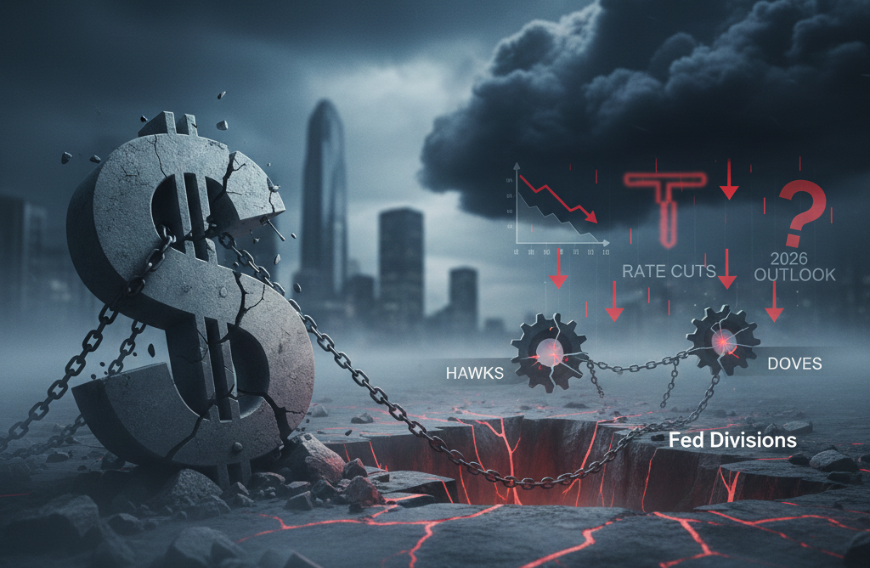
The US dollar is closing out the year with its sharpest decline in nearly a decade, and the slide may not be over yet.
The Bloomberg Dollar Spot Index is down 8.1% for the year 2025, marking its worst annual performance in eight years. The downturn gathered pace after President Donald Trump announced sweeping tariffs in April, branding the move “Liberation Day,” a moment that unsettled currency markets and triggered a sustained selloff in the greenback.
Since then, the dollar has remained under pressure as investors reassess US trade policy, economic growth prospects and global demand for dollar-denominated assets. With those concerns still in play, analysts say the currency could face further weakness heading into 2026.
That uncertainty has only grown as Trump continues to signal that he wants a more pliable Federal Reserve chair in place next year, a stance that has further weighed on the dollar.
Yusuke Miyairi, who analyzes foreign exchange markets at Nomura, said the central bank will be the key driver for the currency early on. “The biggest factor for the dollar in first quarter will be the Fed,” he said, noting that “it’s not just the meetings in January and March, but who will be the Fed Chair after Jerome Powell ends his term.”
READ: Rupee slides past 90 Per dollar as exporters hold back (
Adding to the pressure, markets are now pricing in at least two US interest rate cuts next year. That outlook risks putting American monetary policy out of sync with several other advanced economies, a shift that makes the dollar less attractive for global investors hunting for higher returns.
The euro has already been gaining ground against the greenback. Inflation in Europe has remained relatively contained, and expectations of a surge in defense spending are bolstering growth prospects. As a result, investors see little chance of rate cuts there in the near term. Elsewhere, the picture is even more striking. In Canada, Sweden and Australia, traders are positioning for possible rate hikes, underscoring how far the US policy path could diverge from its peers.
At this point, the market is focused squarely on the Federal Reserve and who will take over from Jerome Powell when his term ends in May.
Trump has recently hinted that he has made a choice for the next Fed chair but has not revealed the name. He has also suggested the possibility of removing Powell before his term concludes, adding another layer of uncertainty for investors watching the dollar.
Kevin Hassett, who leads the National Economic Council, has long been seen as the front-runner for the Fed role.
READ: US Treasury mocks Indian rupee value, highlights dollar’s global dominance (
Trump has also mentioned Kevin Warsh, a former Fed governor, while other names in the mix include current Fed governors Christopher Waller and Michelle Bowman, as well as Rick Rieder from BlackRock.
Andrew Hazlett, who trades foreign currencies at Monex Inc., said, “Hassett would be more or less priced in since he has been the frontrunner for some time now, but Warsh or Waller would likely not be as quick to cut, which would be better for the dollar.”
Federal Reserve officials remain divided over the timing of the next rate cuts. Many see room for additional reductions if inflation continues to ease, while others want to keep rates steady for a longer period. These differences were highlighted in meeting records released Tuesday.
In December, the Fed voted 9-3 to lower its key rate by a quarter point, marking the third consecutive reduction. The benchmark rate now stands between 3.5% and 3.75%, as previously reported by Cryptopolitan.