



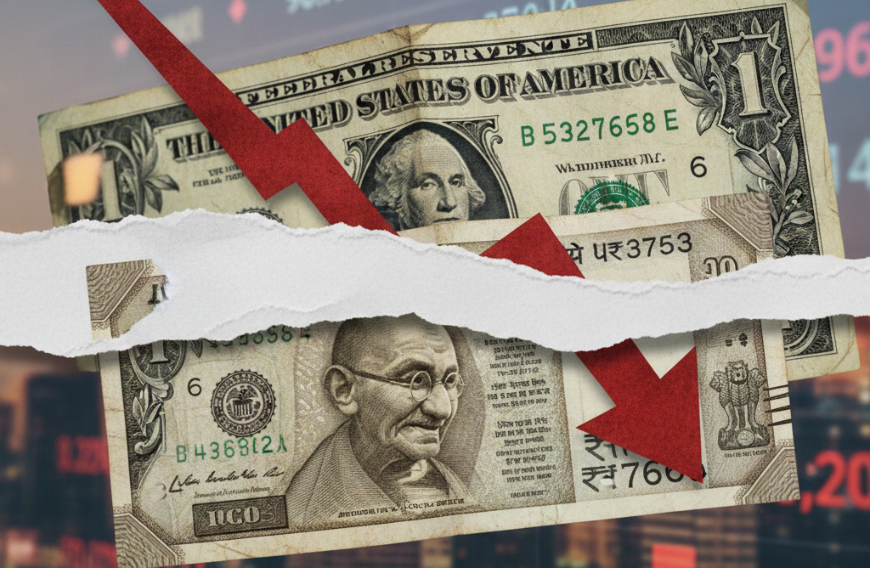
The Indian rupee slipped past the critical 90-per-dollar mark on Wednesday, hitting an all-time low against the U.S. currency. Analysts point to weak trade and investment inflows, coupled with a surge in corporate hedging, as key factors driving the rupee’s continued decline over the past eight months. The slide highlights growing pressure on India’s currency amid a stronger dollar and global economic uncertainty.
The Indian rupee has emerged as one of Asia’s weakest currencies, losing more than 5 percent against the U.S. dollar so far this year. Rising U.S. tariffs of up to 50 percent on Indian goods have weighed on exports to America, the country’s largest trading partner, while dampening the appeal of Indian equities for foreign investors.
READ: IMF reclassifies India’s exchange rate as ‘crawl-like’, signals greater flexibility (
On Wednesday, the rupee touched a record low of 90.29 against the U.S. dollar before settling at 90.19, marking a daily drop of nearly 0.4 percent. The currency’s slide from 85 to 90 unfolded in under a year, taking less than half the time it required to fall from 80 to 85, underscoring the accelerating pressure on India’s currency.
India has emerged as one of the hardest-hit markets globally in terms of portfolio outflows, with foreign investors selling nearly $17 billion in stocks so far this year. The slump in portfolio investment has been accompanied by slower foreign direct investment, further intensifying pressure on the rupee and the broader financial markets.
Net foreign direct investment fell into negative territory for the second straight month in September, driven by higher outward FDI and the repatriation of funds, the Reserve Bank of India reported in its November bulletin.
“There continues to be a meaningful imbalance of supply and demand for dollars in India,” said Michael Wan, senior currency analyst at MUFG.
READ: US Treasury mocks Indian rupee value, highlights dollar’s global dominance (
“This seems to be driven by higher import needs, a wider current account deficit, and, importantly, soft capital flows in FDI and portfolio inflows,” as quoted by Reuters.
At the same time, inflows of dollars from domestic companies’ overseas borrowings and deposits from non-resident Indians have also slowed, reducing a key source of support for the rupee.
Bankers and traders note that every stage of the rupee’s slide, including Wednesday’s breach of the 90 mark, has sparked renewed demand for dollars, especially from importers, while exporters remain cautious and hold back their dollar sales.
“Left on its own, the Indian rupee is a shock absorber for the economy, and an automatic stabilizer for external finances,” economists at HSBC told in a note. “A gradually weakening INR is the best shock absorber for high tariffs.”