



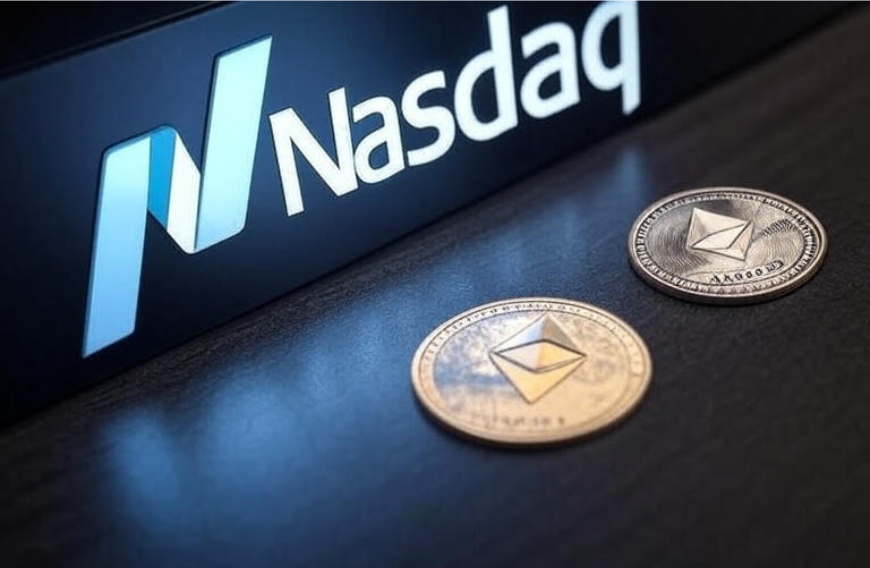
It looks like the Trump administration’s efforts to promote and back cryptocurrency is paying off. The Ether Reserve, a new crypto venture backed by prominent crypto investors, will list on the Nasdaq through a merger with blank-check firm Dynamix Corporation and is expected to raise over $1.6 billion.
Reuters reports that the combined entity, to be named The Ether Machine, aims to launch with more than 400,000 Ether on its balance sheet, positioning it as the largest public vehicle for institutional exposure to the world’s second-largest cryptocurrency.
The Ether Machine highlights growing confidence in Ethereum as a foundational digital asset. This development signals a shift toward regulated, large-scale crypto investment vehicles bridging traditional finance and blockchain innovation.
Andrew Keys, a former executive at ConsenSys — a crypto firm founded by Ethereum co-founder Joseph Lubin — will serve as Ether Machine’s chairman and the company will trade on the Nasdaq under the symbol “ETHM” upon deal close, which is expected in the fourth quarter of 2025.
READ: Crypto 101: A layperson’s guide to cryptocurrency (July 20, 2025)
President Donald Trump has taken a proactive stance on cryptocurrency, significantly shaping the U.S. digital asset landscape. His administration enacted the GENIUS Act, providing clear regulation for stablecoins by requiring full U.S. dollar backing, boosting market transparency and institutional trust. Trump also signed Executive Order 14178, banning the creation of a Central Bank Digital Currency (CBDC) and establishing a task force to develop federal crypto regulations.
The GENIUS Act, signed into law on July 18, has positively impacted Ether (ETH) by bringing much-needed regulatory clarity to the stablecoin market, which is deeply intertwined with Ethereum’s decentralized finance (DeFi) ecosystem. By requiring stablecoins to be fully backed by U.S. dollar reserves and banning interest-bearing stablecoins, the Act has encouraged institutional investors to increase their involvement with Ethereum-based platforms.
This has driven up demand for ETH, used as collateral and for transaction fees, contributing to a significant price increase. The regulatory certainty has also boosted Ethereum-focused exchange-traded funds (ETFs), reflecting growing investor confidence.
As a result, Ethereum is increasingly viewed as a foundational asset in the regulated digital asset landscape. The GENIUS Act thus supports Ethereum’s growth by fostering trust, encouraging mainstream adoption, and solidifying its role in both institutional and retail crypto markets, marking a critical step forward in bridging traditional finance and blockchain innovation.
The Ether Machine’s new partner, Dynamix Corporation is a special purpose acquisition company (SPAC), established in 2024 and based in Houston, Texas. It went public on the Nasdaq Global Market in November 2024 under the ticker symbol DYNX, raising $166 million through its initial public offering.
READ: US Senate approves GENIUS Act: What it means for crypto (June 18, 2025)
Dynamix focuses on identifying and merging with companies operating in the energy and power sectors, including traditional energy, infrastructure, and energy transition industries. The company aims to acquire businesses with proven cash flow, scalable models, and strong growth potential.
Led by CEO Andrea Bernatova and CFO Nader Daylami, Dynamix positions itself as a strategic investment vehicle that leverages evolving market opportunities in energy, particularly in sustainable and innovative solutions.
As of 2025, Dynamix’s shares trade publicly with a market capitalization around $225 million, reflecting investor interest in energy sector transformations. Its mission centers on building value by combining experienced management with targeted acquisitions in a dynamic and critical industry.
The future of crypto looks increasingly focused on real-world utility, regulatory clarity, and mainstream integration. As institutional involvement grows, cryptocurrencies like Ether are poised to play a key role in shaping the global financial ecosystem.