


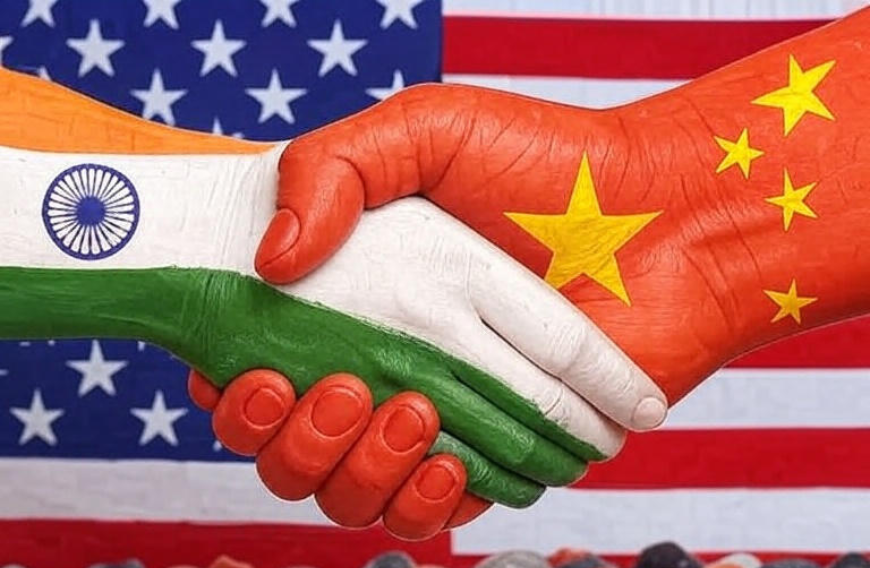
India seems to have found an unlikely ally against the U.S. in China. Chinese ambassador to India Xu Feihong has said that Beijing “firmly opposes” Washington’s steep tariffs on Delhi and called for greater co-operation between India and China.
U.S.–India trade relations experienced significant strain as the United States imposed steep tariffs on Indian imports. Starting in August, the U.S. implemented a 25% reciprocal tariff on a broad range of Indian goods, followed by an additional 25% penalty specifically targeting India’s continued purchase of Russian oil. This move raised the total tariff to 50%, severely impacting key Indian export sectors such as textiles, gems and jewelry, seafood, auto components, pharmaceuticals, and electronics.
The tariffs have not only disrupted trade flows but are also projected to reduce India’s GDP growth by 0.3–0.6%, with the Indian rupee weakening amid the heightened economic pressure. Indian officials have condemned the tariffs as unfair and selective, escalating diplomatic tensions between the two nations.
READ: Who lost India? Trump’s tariff approach puts a generation of U.S.-India progress at risk (
In response to these challenges, Indian exporters are actively seeking to diversify their markets to mitigate the risks posed by U.S. tariffs. Efforts are underway to strengthen trade ties with regions such as Europe, Latin America, ASEAN, and Canada. At the diplomatic level, India has found some support from China, as both countries aim to counterbalance U.S. economic pressures.
Xu likened the U.S. to a “bully,” saying that it had long benefitted from free trade but was now using tariffs as a “bargaining chip” to demand “exorbitant prices” from other nations.
“U.S. has imposed tariffs of up to 50% on India and even threatened for more. China firmly opposes it. Silence only emboldens the bully,” Xu said on Thursday.
Meanwhile, industries in India are adapting strategies to maintain competitiveness despite the tariff hurdles. The ongoing tariff dispute underscores a broader shift in global trade dynamics, where geopolitical considerations increasingly influence economic policies, compelling India to recalibrate its export strategies and diplomatic approach to safeguard its economic growth.
READ: Economist Jeffrey Sachs slams Trump for tariff moves against India (
“At present, tariff wars and trade wars are disrupting the global economic and trade system, power politics and the law of the jungle are prevalent and international rules and order have suffered severe impacts,” he said, alluding to Washington’s tariff measures against India and other countries.
“China will firmly stand with India to uphold the multilateral trading system with the World Trade Organisation (WTO) at its core,” he added.
The U.S. and China have agreed to pause new tariff hikes, marking a rare thaw after years of escalating trade tensions. The temporary truce offers relief to global supply chains and opens the door for dialogue on broader trade and technology disputes. But the move comes as Washington ramps up tariffs on India, highlighting a selective approach to trade in Asia.
Analysts say the contrast reflects a more fragmented U.S. strategy—seeking to ease tensions with China while punishing India over its ties with Russia. China, meanwhile, has sought to capitalize on the moment by voicing support for India, underscoring shifting regional dynamics and intensifying competition in global trade.