



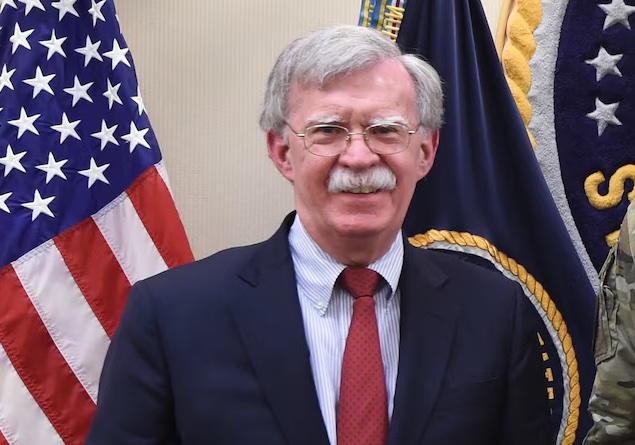
The FBI conducted a court-authorized search of former National Security Adviser John Bolton’s home on Friday morning, part of a national security investigation that underscores the deep animosity between Bolton and President Donald Trump.
While details of the search remain sparse, the highly unusual federal action shines a spotlight on ongoing tensions that began during Bolton’s brief time in the Trump administration, and intensified dramatically after his explosive 2020 memoir.
Bolton, a seasoned diplomat and national security official under several Republican presidents, was appointed as Trump’s national security adviser in April 2018. His tenure ended just over a year later, in September 2019, following public disagreements over foreign policy decisions and internal tensions. Trump described his exit as a mutual decision; Bolton later painted it as a confrontation over principles.
READ: A third Gulf War could rattle markets and strengthen China’s hand (June 23, 2025)
That confrontation escalated months later with the publication of “The Room Where It Happened.” In the book, Bolton recounted numerous occasions where he felt Trump was dangerously uninformed on key global issues, preoccupied with media optics, and willing to solicit political favors from foreign leaders to advance his re-election prospects—a particularly damning claim given its national security implications.
One of the more explosive revelations: Bolton alleged that Trump asked the leaders of Ukraine and China for assistance in his 2020 election campaign. These assertions prompted Trump to publicly threaten Bolton with criminal prosecution and to label him a “loser.” The book was initially cleared for publication by career officials at the White House, but then–Trump appointees tried to reverse the decision.
In the wake of Bolton’s publication, the Justice Department launched an investigation into the possibility that classified information had been improperly disclosed. Still, in 2021—under the Biden administration—the department dropped its lawsuit against Bolton and closed the matter. Publicly, the feud persisted.
Trump continued to make frequent jabs at Bolton. Just last month, the president referred to him as a “fired loser” and “really dumb person,” underscoring the personal nature of their rancor. In January, as Trump began his second term, he promptly had Bolton’s Secret Service protection revoked.
Against this backdrop, the FBI’s search of Bolton’s residence in the Washington, D.C., area—affiliated with a national security investigation—takes on heightened significance. According to CNN, agents were seen entering the home with evidence bags, though they reportedly removed nothing visible in observed footage. An insider familiar with the case told the outlet the probe concerns the possible retention of national security material.
Bolton, for his part, said he was unaware of the FBI’s activity and was investigating the situation further. As is customary with ongoing matters, the Justice Department has not offered comment, leaving the public to wonder whether this search relates to material from his memoir, another sensitive issue, or is driven by entirely new concerns.
This action sits within a pattern of what critics call retribution: a sustained effort by Trump and allies to undermine or retaliate against perceived opponents. Officials ranging from congressional critics like Rep. Adam Schiff to legal prosecutors, and now Bolton, have found themselves targeted through declassification releases, policy shifts, and legal scrutiny.
Bolton’s presence in Trump’s crosshairs reflects not just what he said, but how he said it—and what power he wielded once his voice turned critical. The current FBI investigation, whether tied to the memoir or not, cannot be divorced from the legacy of mutual animosity that has defined their relationship.
If charges do follow, their timing and subject matter will carry symbolic weight—particularly in light of Trump’s broader campaign to use government institutions and procedures to counter or punish dissent. Whether this search represents a routine national security procedure, continuation of a memoir-related probe, or a politically charged moment, the narrative remains clear: Bolton’s time in Trump’s orbit ended with fire—and the flames refuse to die down.