


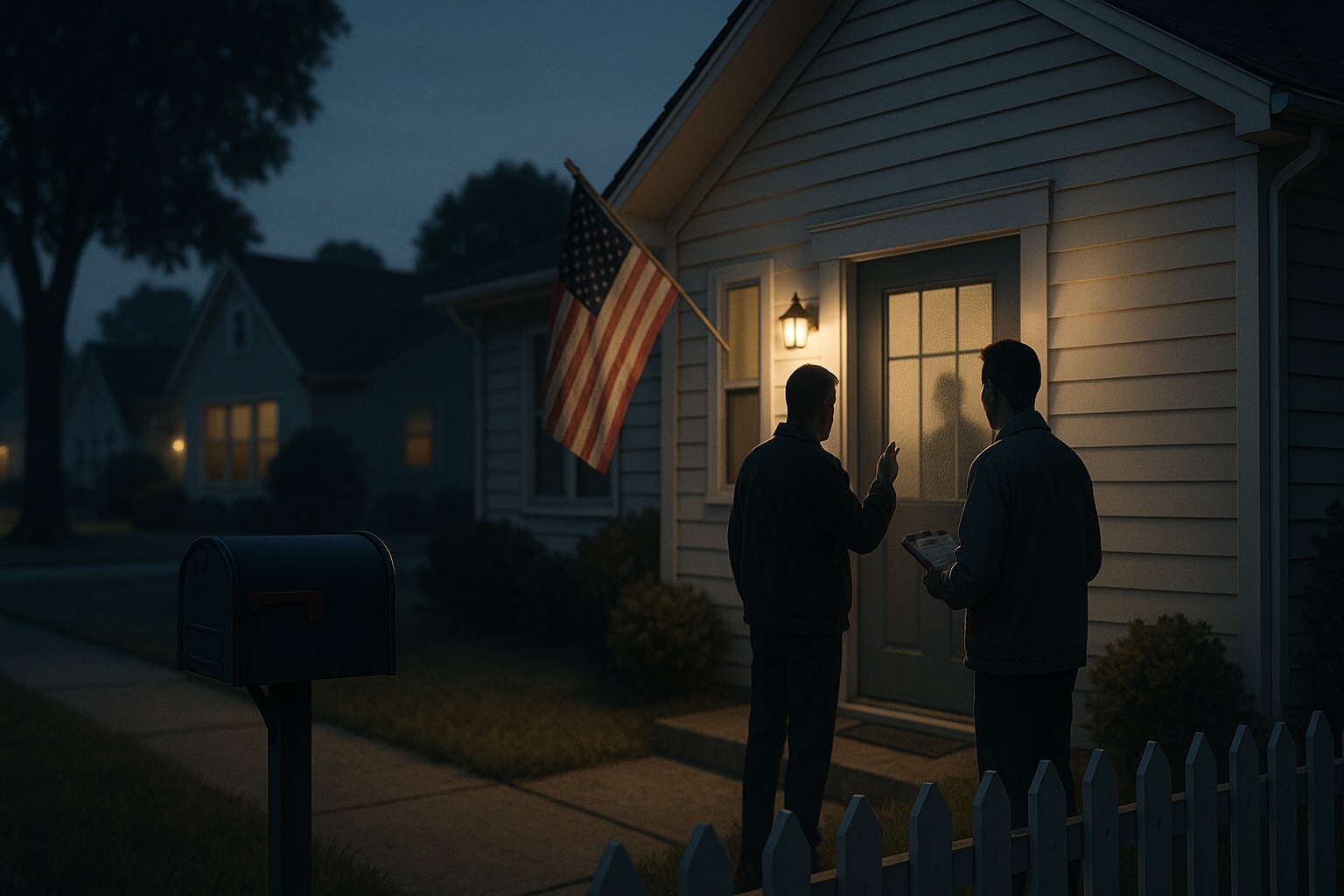
“Love Thy Neighbor” may be an ancient commandment, but in 2025 it’s beginning to sound like a clause from the immigration handbook—especially when the neighbor mowing the lawn next door may also hold the power to mow down your immigration dreams if the Department of Homeland Security (DHS) comes calling.
This week, U.S. Citizenship and Immigration Services (USCIS) announced a major policy shift: the resumption of personal investigations for individuals applying for U.S. naturalization under INA 335(a).
The policy memorandum reads: “INA 335(a) directs USCIS to conduct investigations of aliens applying for naturalization unless waived by the Secretary of Homeland Security. These personal investigations, also known as neighborhood investigations, cover the vicinity of an alien’s place of residence and employment and include at least the 5-year period prior to the filing of the alien’s naturalization application.”
READ: Trump administration pushes proposal to prevent ‘visa abuse’ in the US (August 28, 2025)
Stating the purpose of the investigation, the memo explains: “to corroborate an alien’s eligibility for naturalization, which includes scrutiny of an alien’s residency, good moral character, attachment to the U.S. Constitution, and disposition to the good order and happiness of the United States.”
For decades, USCIS has largely relied on FBI biometric and criminal-history checks. What changes now is that USCIS will no longer generally waive the requirement for neighborhood investigations. Instead, it will review each case individually and determine whether a neighborhood investigation is necessary.
The new policy memorandum once again places additional onus on the applicant to prove that they meet the requirements for obtaining U.S. citizenship. Some fear that even applicants who have followed all immigration rules could see their cases jeopardized by a neighbor’s testimony, which may be inaccurate, uninformed, or motivated by petty personal grievances.
Experts say the reinstatement of neighborhood checks in citizenship cases raises serious concerns on many levels. Ryan Wilck, a partner at Reddy & Neumann, P.C., where he advises on employment-based immigration, explained: “Allowing USCIS officers — which will more likely than not be ICE agents, masked and armed like they’re invading Baghdad — to interview neighbors, coworkers, or employers to assess an applicant’s “good moral character” risks injecting subjective opinions and personal prejudices into what should be an objective legal determination.”
Attorneys also warn that the practice could backfire when neighbors harbor implicit or explicit racial or cultural biases.
READ: USCIS policy change alters green card path for children of H-1B visa holders (August 25, 2025)
The policy is an internal guideline for USCIS officers on how they will handle naturalization cases going forward and does not create enforceable rights for applicants or third parties. Florida-based Leandro Carvalho, who specializes in tax, business, and immigration law at Dell’Ome Law Firm, explains, “It does not create any rights for applicants. It just changes how the USCIS will adjudicate naturalization cases.”
Offering reassurance to those navigating the naturalization process, Carvalho says, “As the adjudication is based on a case-by-case basis, I believe the USCIS officer may request neighborhood investigations if they have any reasonable suspicion that an applicant does not meet the requirements for naturalization. I don’t think is feasible to make neighborhood investigations on all cases.”
Another issue the new ruling may raise is individual privacy. As for whether it can be challenged as overreaching, Rekha Sharma-Crawford, co-founder of Sharma-Crawford Attorneys at Law at Law and known for her advocacy on complex removal defense and immigrant rights, characterizes the policy as invasive but not unconstitutional. She adds, “But, it certainly has the potential to be a violation of civil liberties. While the government has a right to investigate benefits claims, they are not entitled to breach someone’s privacy rights. The fact is that it will slow down processing, it will create false positives, and it can become a way for people with nefarious motivations to weaponize this kind of inquiry.”
Wilck also finds the privacy implications troubling. He says, “Citizenship applications are supposed to be confidential, yet this policy effectively exposes an applicant’s immigration status to third parties. USCIS will ask invasive questions intended to make everyone fearful.”
As for what applicants should brace for right now, Sharma-Crawford says, “Applicants need to be aware that there will be heightened inquiry and scrutiny around their citizenship applications. They also need to understand that their neighbors may now become aware of their immigration status, and that is concerning, especially in the current political climate.”
Underlying the update is a broader concern: that the new approach to naturalization raises alarming questions about fairness, rights, and community trust. Ryan Wilck says, “What’s most concerning is that USCIS will punish applicants for the community’s exercise of constitutional rights, since neighbors have no obligation under the 4th or 5th Amendments to speak with government officials. The result is a policy that intentionally fuels discriminations, undermine trust in communities, and creates inconsistent, arbitrary outcomes in naturalization cases.”