



By Soumoshree Mukherjee
Editor’s note: This article is based on insights from a podcast series. The views expressed in the podcast reflect the speakers’ perspectives and do not necessarily represent those of this publication. Readers are encouraged to explore the full podcast for additional context.
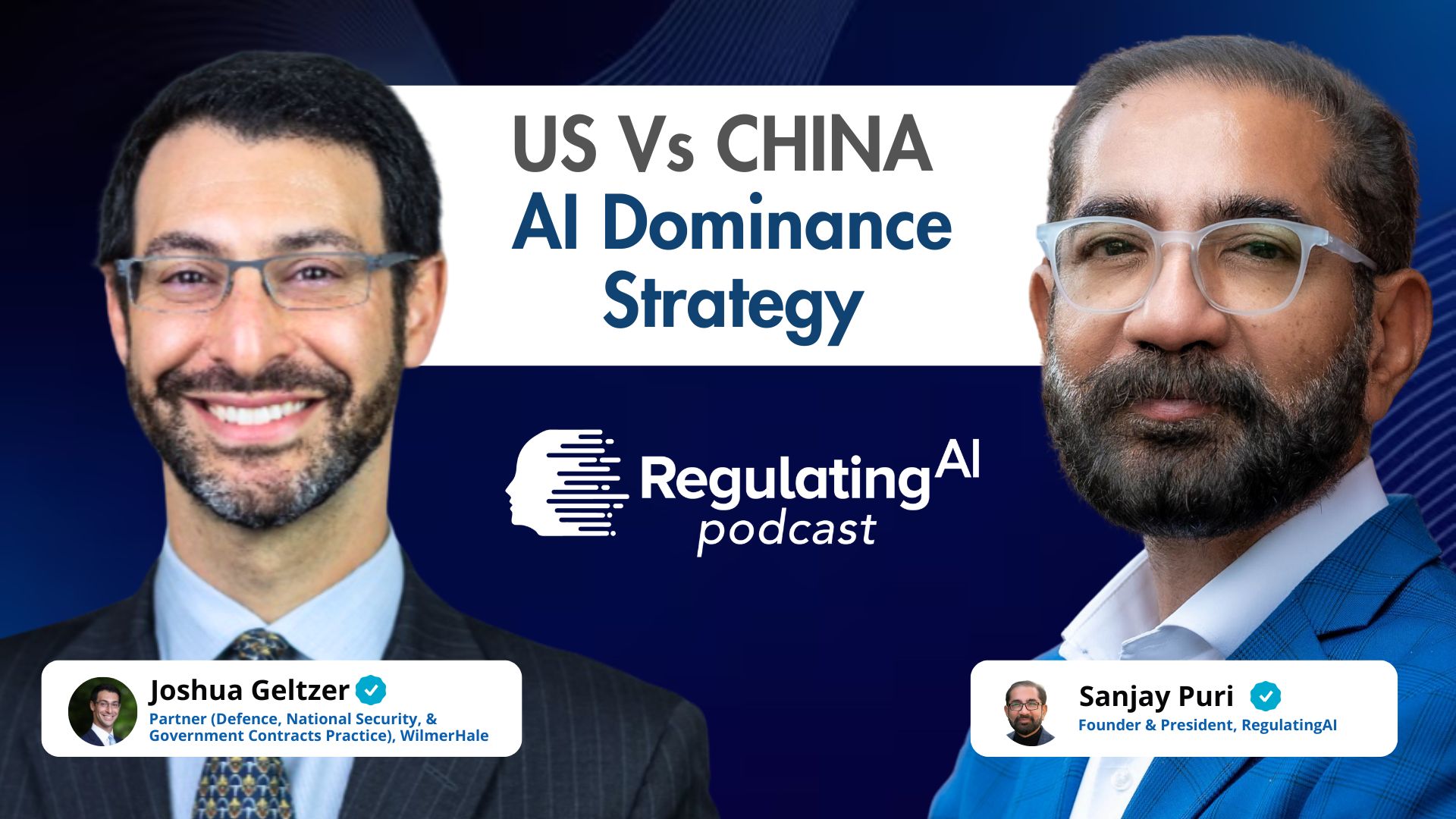
In a recent episode of “Regulating AI,” host Sanjay Puri sat down with Joshua Gelser, partner at Wilmer Hale and former Deputy White House Counsel, to dissect the Trump administration’s newly announced AI Action Plan. With his background in national security and law, Gelser provided a unique insider’s view of how the plan is shaping America’s AI trajectory.
The Action Plan, introduced in July, spans innovation, infrastructure, and internal security. According to Gelser, the guiding thread is simple yet ambitious: “The through line is the notion of supporting the U.S. private sector at home and abroad… so it’s the U.S. private sector’s version of AI that dominates the global marketplace.”
READ: Can AI make aging optional? Inside Professor David Sinclair’s revolutionary quest (
One of the hottest debates revolves around fair use and training data. Recent federal court rulings have split on whether using copyrighted material to train AI models falls under fair use. Gelser noted, “[President Trump] seemed to side with the model developers and [suggested] a lack of feasibility for every copyright holder to be rewarded. In other words, he seemed to lean towards the fair use side. But remarks from a president in passing are not the same as case law from the federal courts.”
The discussion also turned to infrastructure challenges, especially power and land use for data centres. The Action Plan proposes easing permitting and making federal land available. While this could speed up AI development, Gelser warned it comes with trade-offs: “There are things that get sacrificed, including, for example, a commitment to clean energy or some of the environmental considerations. But that’s where this action plan strikes the balance in favor of ‘get that land available, put it in play, let the infrastructure grow on it.’”
Another pressing issue is synthetic media and deepfakes. The plan pushes for voluntary standards, but Gelser cautioned: “This is going to be a source of confusion, disinformation, potentially real public safety and national security challenges for years to come.”
READ: ‘Responsible AI is as abstract as world peace’: Dr. Kathleen Kramer on why AI needs more than just a degree (July 17, 2025)
On the global stage, the plan emphasizes both American dominance and building alliances. Gelser admitted the tension: “It’s very hard… when you have as much of the frontier technology as the United States has, it does give some power, some ability to bring others to one side. But who’s in and who’s out of the alliance that the action plan refers to, that matters a lot.
The federal-state divide in AI governance also looms large. The plan suggests withholding federal funding from states with restrictive AI laws. “…Federal grant money as a cudgel, as a way to try to dissuade states from passing certain laws or even get them to revoke to underact laws already on the books,” Gelser explained, warning of potential constitutional challenges.
Finally, the plan’s tilt toward open-source AI sparked debate. While some see it as innovation-friendly, Gelser raised national security concerns: “Closed model ways… helps guard against potential misuse, distortion, exploitation […] I’m not sure there is yet a definitive national security view.”
As Puri concluded, “This is just chapter one in this whole evolution.” Gelser agreed, calling the AI Action Plan the beginning of a debate that will shape both U.S. innovation and global governance for years to come.