



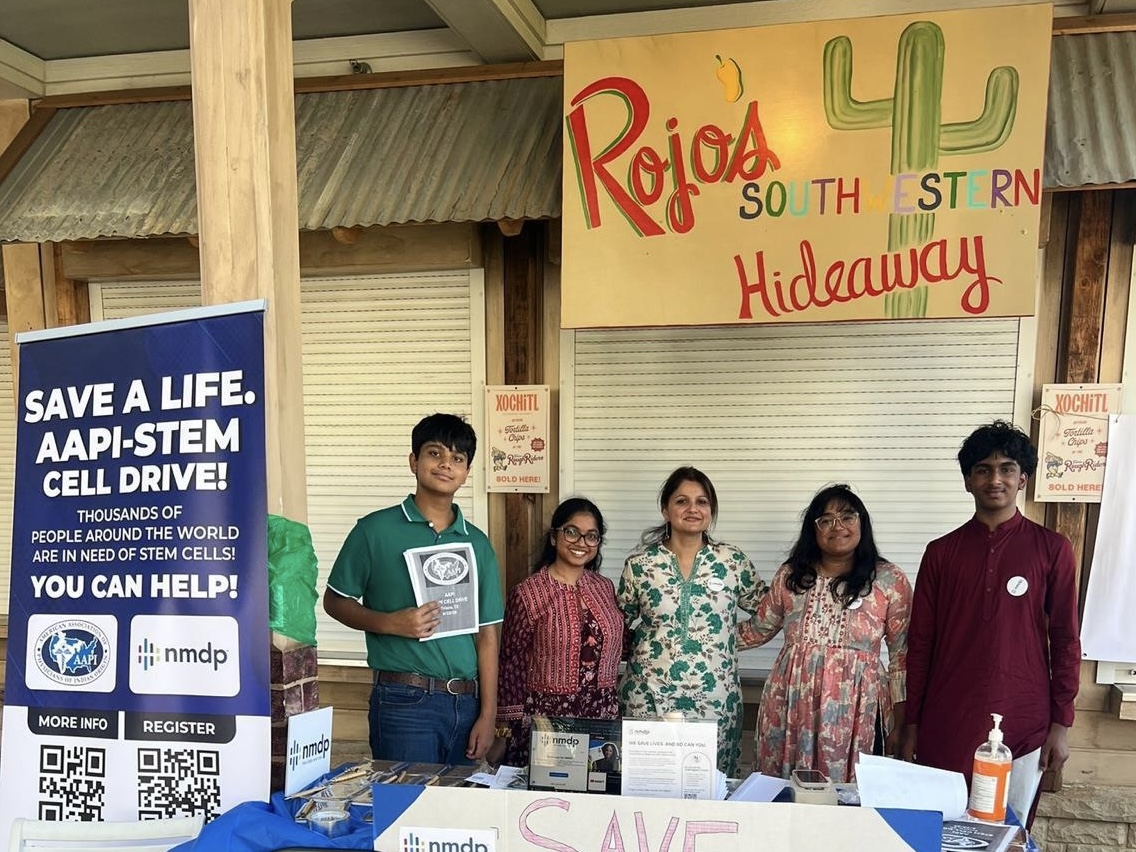
In a groundbreaking initiative, the American Association of Physicians of Indian Origin (AAPI) has launched the first-ever nationwide campaign to expand the stem cell donor pool among Indian Americans.
This effort addresses a critical gap in cancer treatment options for patients of Indian descent, who face significant challenges in finding compatible donors due to ethnicity-specific Human Leukocyte Antigen (HLA) matching, according to an AAPI release.
“Stem cell transplants are a vital treatment for blood cancers such as leukemia and lymphoma HLA markers, which determine donor compatibility, are inherited and vary by ethnicity,” AAPI President Dr. Amit Chakrabarty thanking members and students who have been part of these initiatives across the nation.
Local AAPI Chapter leaders, members and volunteers across the nation are spearheading the bone marrow and stem cell registration across the nation, joining hands with the national AAPI in its efforts in creating awareness and enrolling more youth and adults to be part of this noble mission.
READ: Indian American gastroenterologist links hemorrhoids to cellphone use in bathrooms (
Patients of Indian ethnicity are more likely to match with Indian donors—but the existing donor pool is alarmingly small. Until now, families have had to organize donor drives independently, while also coping with the emotional and medical toll of a cancer diagnosis.
Stem cells are one of the treatment options for certain types of cancers. HLA typing, based on which stem cell donors and patients are matched is ethnicity specific.
Indian patients have higher chances of matching with Indian donors. Unfortunately, Indian donor pool is very limited, making it difficult for patients to find a proper match.
Moreover, until now, patients and their families are doing these drives on their own to find the match in addition to dealing with the diagnosis. There has been no unified push to increase the Indian donor pool.
Recognizing this urgent need, AAPI partnered with the National Marrow Donor Program (NMDP), the world’s largest stem cell registry—in 2024 to launch a unified, nationwide campaign.
READ: Best health insurance for Indian tourists in America: Plans and costs explained (
Dr. Sashi Kuppala, Chair of the Stem Cell Drive, while explaining the science, said “Matching donors is based on HLA typing, which is inherited and ethnicity-specific. Thousands of patients rely on transplants to survive.” He pointed to the “tremendous response to this initiative from the AAPI members and the wider Indian community.”
Since November 2024, AAPI has organized drives in Milwaukee, Atlanta, Louisville, Evansville, San Jose, Los Angeles, San Diego, Chattanooga, Huntsville, Little Rock, Austin, Dallas, Houston, Columbus, Edison, Chicago, Charlotte, Scranton, Sunnyvale, Milpitas, Frisco, Harrisburg, Pittsburgh, Leesburg, and San Diego under the leadership of the local high school and college students. AAPI provides volunteer certificates to the students who participate in the drives.
Dr. Hetal Gor, Chair of AAPI BOT, emphasized the need for commitment saying, “You could be someone’s only match—their only hope. Registering is a serious promise, but the donation process is safe and complication-free.”
With the experience gained in the U.S., AAPI is expanding the stem cell drives to India. AAPI has partnered with the Global Association of Indian Medical Students, and DATRI, the stem cell bank in India and launching stem cell drives at the Global Health Summit in Bhubaneswar, Odisha in January 2026, on a grand scale. The campaign will then expand to medical schools across the country, according to the release.