



By now, most Indians in America — and their families — have likely seen the viral video of a Texas man fuming over a Ganesh Chaturthi street procession, complete with dhols and dancing. His complaint: that H-1B visas should be scrapped because he wants to raise his children in “America, not India.” The remarks drew swift outrage online — and the backlash quickly escalated.
Internet users traced the man’s identity and discovered he operated a local coffee shop. What followed was a wave of digital retaliation: negative Yelp reviews, caustic comments, and accusations of racism and xenophobia.
Daniel Keene, a resident of the Dallas suburbs who posted the video and owns a coffee shop called “Boundaries,” became the target of dozens of critical Yelp reviews.
One review read: “Owner has a problem with legal immigrants because they are brown. He took a video of his Indian neighbors & plastered it all over X. His neighbors were simply walking on the street and minding their own business. A bunch of white nationalist racists were liking and cheering on the owner’s video and comments. Gross.”
READ: Reviving a dying art: How P-TAL is putting India’s coppersmiths back on the global map (
Another user, Bob B., wrote: “Owner stalks and is racist towards people of color. Truly shocking and sad. Genuinely stay away.”
As the wave of negative reviews grew, some users pushed back, posting supportive comments and warning others about possible online doxing. One reviewer wrote: “Indians are review-bombing this coffee shop. The 1-star reviews have nothing to do with the product and should be removed by Yelp.”
Another added: “Don’t be fooled by ignorant Dinguses trying to ruin this coffee company. They’re probably just mad that their mass-phone-scam didn’t work and they’re more broke than they are stupid.”
Others pledged direct support for the business. A user named Angel, responding to messages about mass doxing, wrote: “We all feel the same in the North Dallas area. Will make sure to stop by and support this shop every morning.”
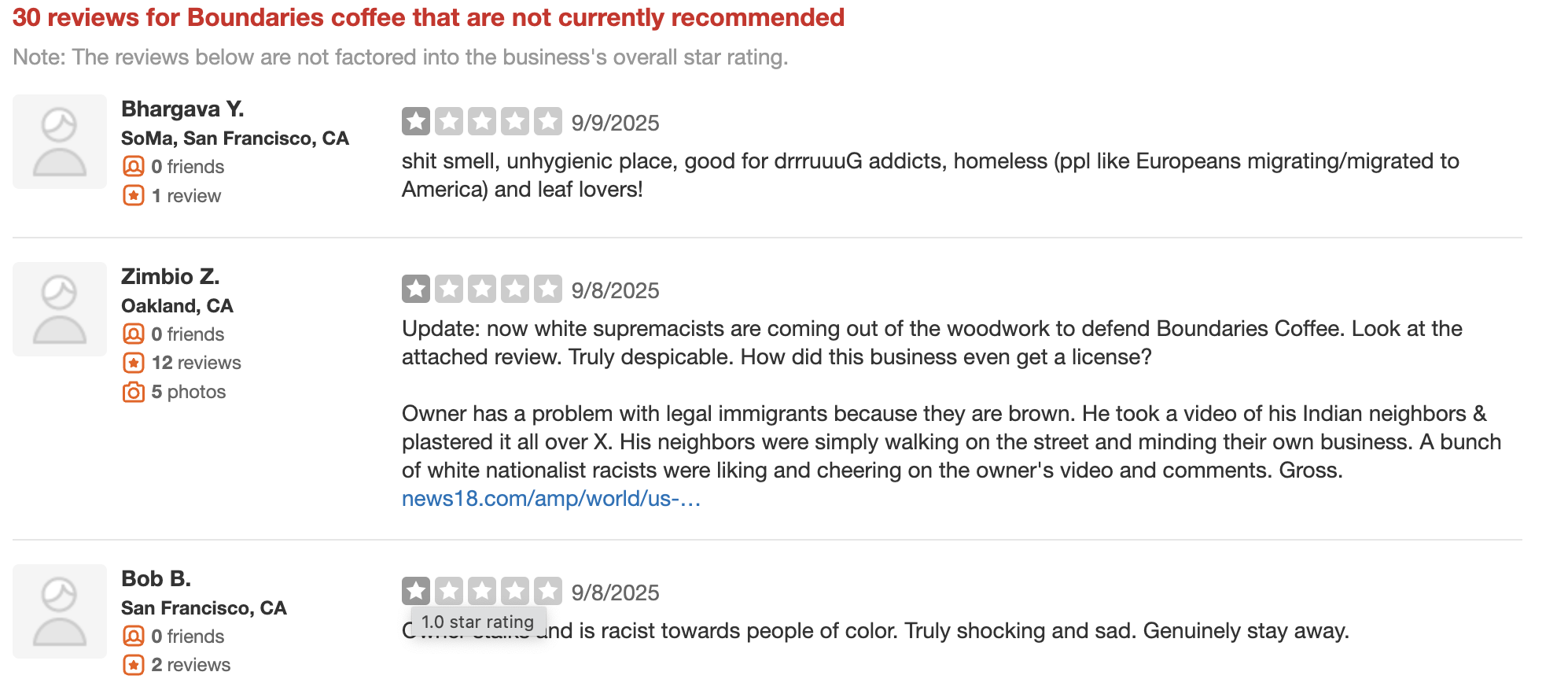
Just days after the video went viral, the community response appeared to rattle the small business owner, who may have reported the influx of online hostility. Yelp has since stepped in, posting a disclaimer and restricting new reviews.
READ: From climate to code, open source is no longer optional (
The notice reads: “This business recently received increased public attention, which often means people come to this page to post their views on the news rather than actual consumer experiences with the business. We’ve temporarily disabled the posting of content to this page as we work to investigate whether the content you see here reflects actual consumer experiences rather than the recent events.”
Yelp’s notice also adds: “If you’re here to leave a review based on first-hand experience with the business, please check back at a later date.”
The episode has reignited debate within the community about free speech and the limits of online retaliation. While some Indians argue that mobilizing to leave negative reviews amounts to digital vigilantism, others see it as an unavoidable feature of the social media age, where comments and responses often spiral beyond control.
Neelam S., an Indian American resident of Dallas, said: “I feel there should be some ethics of online retaliation. Singling out the person’s business and posting anonymous reviews puts the community in further bad light.”
The controversy underscores a broader question: how diaspora communities can defend their cultural identity in a hyper-connected world without crossing the line into actions that damage individual reputations or businesses.