



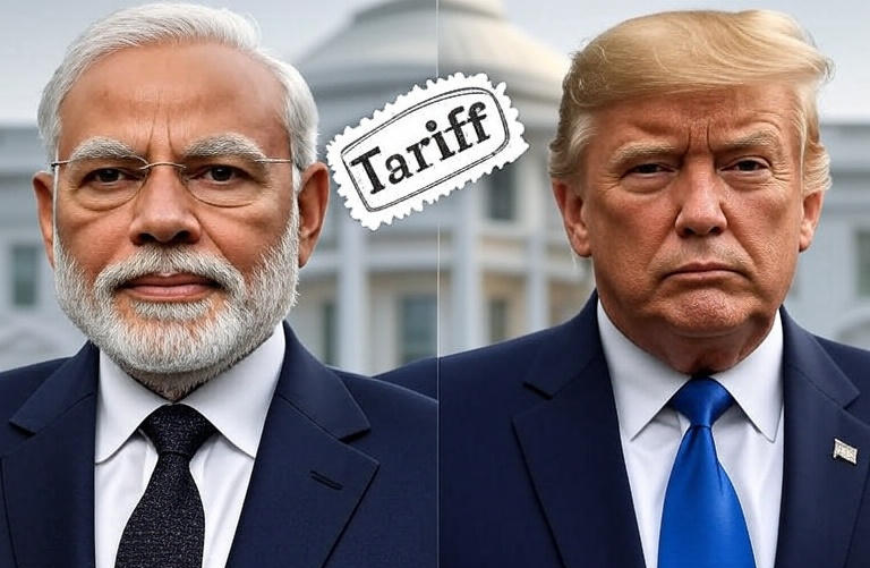
It looks like U.S. President Donald Trump is pleased with the steps India has taken regarding its purchase of Russian oil.
Trump, speaking to reporters at the White House on Thursday, said India “has largely stopped buying oil from Russia,” and added that if Prime Minister Narendra Modi invited him, he would visit the country in 2026.
Evoking memories of his last visit to India, Trump called Modi “his friend” and a “great man.”
India and the United States are negotiating a Bilateral Trade Agreement (BTA) in 2025 aimed at expanding bilateral trade, potentially doubling it to around US$500 billion by 2030. However, as of late 2025, the deal remains under negotiation and no final agreement has been signed. A first “tranche” or interim agreement is targeted for late 2025, but this is not guaranteed and could be delayed due to unresolved issues such as tariffs, agriculture, and labor-intensive sectors.
“Negotiations between New Delhi and Washington D.C. are ongoing and both sides appear optimistic about a trade deal being reached by the end of the year, possibly even in the next few weeks,” said Alexandra Hermann, Head of Southeast Asia Research at Oxford Economics.
READ: India, Russia, and the $16 billion oil arbitrage: What’s really going on? (
India seeks tariff relief for exports like textiles, leather, gems, and seafood while protecting farmers, fishermen, and MSMEs. The U.S., meanwhile, is pressing for greater access to Indian markets, particularly in agriculture, dairy, industrial goods, and services. These talks take place against a backdrop of existing U.S. tariffs—some as high as 50%—which complicate negotiations. The exact terms and scope remain fluid, and nothing will be finalized until both sides resolve these contentious issues.
Indian officials emphasize that the deal will not be rushed, stressing that national interests and sensitive sectors must be safeguarded. Timelines are only targets, not binding commitments, and major disagreements could delay or reshape the agreement. While a BTA could redefine India–U.S. economic relations, its final content and impact remain uncertain, and references to a “deal” in media or official statements refer only to ongoing negotiations, not a signed treaty.
Hermann added that the baseline tariff on India “may not fall to Japan and South Korea’s level of 15%” due to sticking points around purchases of Russian oil, agricultural imports, and India’s limited capacity to commit to large-scale investments in the U.S.
READ: ‘Modi is a great man,’ Donald Trump says, claiming India will stop buying Russian oil (
“Over the long term, completely phasing out Russian oil isn’t realistic for India,” said Prateek Pandey, Head of APAC Oil and Gas Research at Rystad Energy, adding that as Russian crude becomes available at a sharper discount, “New Delhi’s approach of ‘economics first’ will be tested more than ever.”
Last month, the U.S. imposed sanctions on Russian oil majors Rosneft and Lukoil, which will take effect from November 21. As a result, Indian and Chinese refiners have begun to reduce imports of Russian oil.
While both sides remain optimistic, timelines are aspirations rather than guarantees. Sensitive sectors in India, including farmers, fishermen, and MSMEs, continue to be shielded. Meanwhile, India’s approach to Russian oil imports reflects a careful balance between economic pragmatism and diplomatic pressures. The U.S. sanctions on Russian oil majors and India’s gradual reduction in imports highlight this delicate equilibrium—as New Delhi seeks affordable energy while maintaining its strategic partnership with Washington.
Overall, 2025 underscores how India–U.S. trade and geopolitical relations are increasingly interconnected, evolving, and influenced by both ongoing negotiations and wider global developments—with final outcomes still uncertain.