



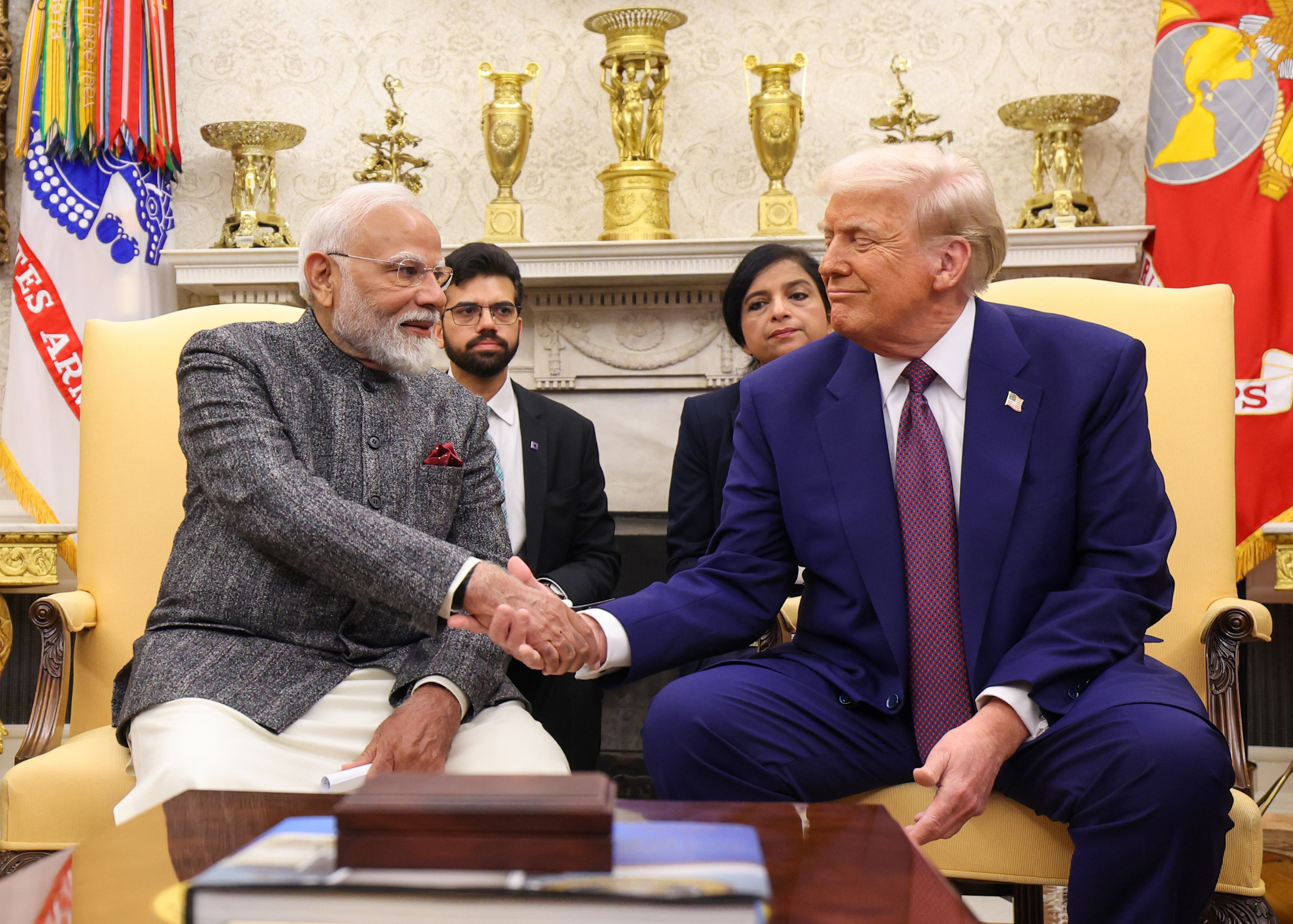
President Donald Trump has seemingly made an interesting declaration. India will no longer purchase Russian oil, according to Trump, a major victory in his effort to pressure Vladimir Putin to end the war in Ukraine.
“I was not happy that India was buying oil, and [Indian Prime Minister Narendra Modi] assured me today that they will not be buying oil from Russia,” Trump told reporters in the Oval Office. “That’s a big step.”
“[Modi] can’t do it immediately, it’s a little bit of a process, but the process will be over with soon,” the president added later in the news conference, adding that “Modi is a great man, he loves Trump.”
A spokesperson for the Indian embassy did not immediately reply to requests for confirmation but, if true, it would amount to a major deescalation of U.S.-India tensions that surfaced this summer after the U.S. slapped 50 percent tariffs on the country because of its purchases of Russian oil.
READ: India hit by Trump’s 50% tariffs as Modi pushes back with economic, self-reliance measures (
The White House framed this move as a national security imperative, accusing India of indirectly funding Russia’s war efforts by buying discounted Russian oil. Trump publicly claimed in October that Indian Prime Minister Narendra Modi had assured him India would phase out Russian oil imports gradually, signaling potential shifts in New Delhi’s energy sourcing. However, no official confirmation from the Indian government has followed these claims.
India has responded firmly, emphasizing its sovereign right to manage energy needs based on economic and strategic interests. The Indian Ministry of External Affairs criticized the U.S. tariffs as unfair and politically motivated, while Oil Minister Hardeep Singh Puri stated India does not feel pressured and will continue to buy oil from sources offering the best commercial terms.
Despite U.S. sanctions and tariff threats, Russia remained India’s largest crude oil supplier in late 2025, accounting for over one-third of its oil imports. Indian refiners continue to value Russian crude due to favorable pricing and logistical arrangements, although some state-owned refiners have begun exploring alternatives amid narrowing discounts and diplomatic friction.
READ: India, Russia, and the $16 billion oil arbitrage: What’s really going on? (
The announcement comes just days after Trump’s new pick for Indian ambassador, Sergio Gor, met with Modi, where the two discussed defense, trade and technology issues.
Russia, meanwhile, remains confident that its energy partnership with India will persist despite mounting U.S. pressure. Russian officials have dismissed Trump’s statements as unfounded, reaffirming the strategic and economic benefits of energy cooperation with India. As tensions between the U.S. and India escalate, New Delhi is walking a diplomatic tightrope—balancing the need for affordable energy with the risk of economic retaliation.
The future trajectory of India’s Russian oil imports will largely depend on evolving geopolitical dynamics, price competitiveness of alternative suppliers, and the extent to which U.S. trade measures affect Indian exports. For now, India appears to be maintaining its pragmatic approach, cautiously reducing but not fully abandoning Russian crude imports.