



By Kashmira Konduparty
A pilot program conducted across seven emergency care facilities in Texas found that healthcare providers could significantly reduce both operating costs and carbon emissions through relatively simple operational changes, according to results released Wednesday by sustainability consulting firm Minus 2 Degrees (M2D).
The initiative, which involved emergency care centers in cities including Wichita Falls, Odessa, Cypress and Pearland, generated more than $30,000 in annual savings per facility while reducing greenhouse gas emissions by more than 900 metric tons of carbon dioxide equivalent (CO₂e) across the participating sites.
According to M2D, average emissions fell by approximately 130 tons of CO₂e per facility during the study period, with some locations reporting emissions reductions exceeding 60%.
READ: 5.6 million immigrants are keeping America’s hospitals and schools running, study finds (May 7, 2026)
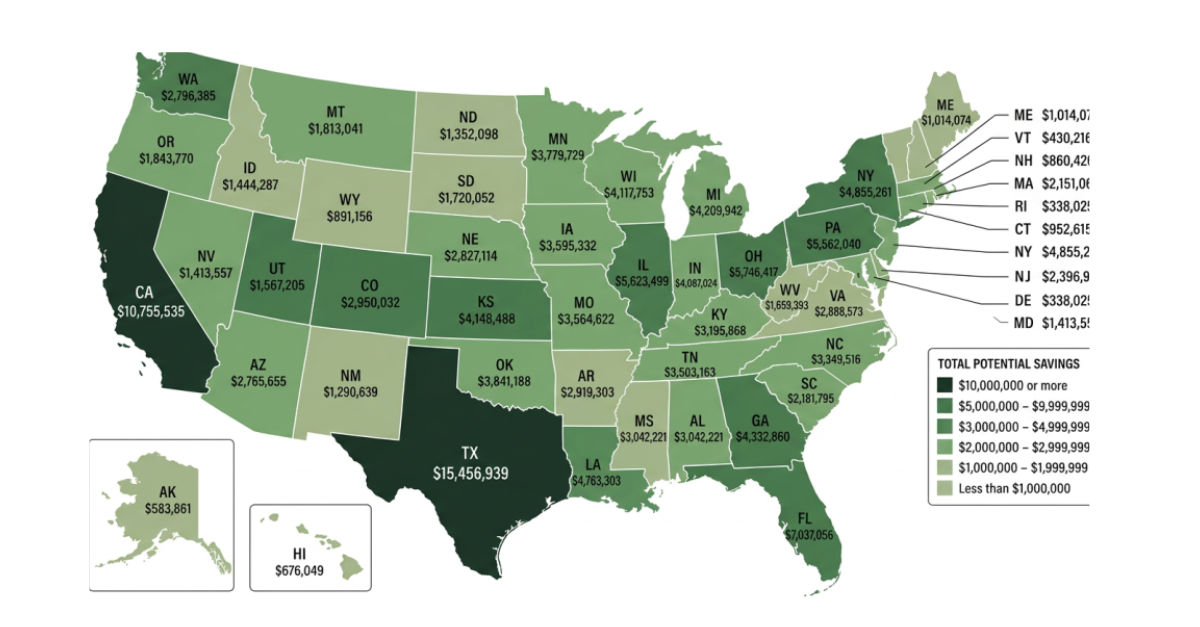
The company said that if similar measures were adopted across comparable healthcare facilities nationwide, the U.S. healthcare sector could save more than $187 million annually while reducing emissions by roughly 793,000 tons of CO₂e each year.
“We’re delighted with the direct impact of this pilot study,” said Sadaf Shah, operations director at Minus 2 Degrees. “Healthcare organizations are under increasing pressure to reduce costs, improve operational efficiency and meet growing sustainability expectations.”
The pilot tracked operational data between baseline reporting and the 2024-2026 period across seven emergency care facilities. Among the largest reductions reported were at Schertz Cibolo Emergency Clinic, where emissions fell from 429 tons of CO₂e to 126 tons and ER Now in Wichita Falls, where emissions declined from 348 tons to 153 tons.
Other participating facilities also reported substantial decreases. Emergency Care of Floresville reduced emissions from 240 tons to 112 tons, while Excel ER facilities in Odessa and Nacogdoches cut emissions by more than half during the study period.
The findings come as healthcare providers face rising operating expenses, supply chain challenges and increasing pressure from regulators, investors and patients to improve sustainability performance.
According to data from the Centers for Medicare & Medicaid Services, U.S. healthcare spending reached $5.3 trillion in 2024, accounting for nearly 18% of the nation’s gross domestic product. Hospital expenditures alone exceeded $1.6 trillion.
Research published in the journal Nature Climate Change has estimated that the U.S. healthcare sector is responsible for approximately 8.5% of the country’s greenhouse gas emissions, making it one of the largest contributors to emissions among major industries.
Facility administrations who participated in the program said the changes produced benefits beyond environmental reporting.
READ: Affordability, immigration top concerns for AAPI adults: Poll (January 27, 2026)
Marcos Sanchez, facility administrator at Excel ER Odessa, said “partnering with Minus 2 Degrees has made sustainability part of how we operate every day.” Laura Russom director of finance at ProCare Health, described the program as “eye-opening,” noting that many of the recommended changes were practical and achievable. Stephanie Ruiz, facility administrator at Schertz Cibolo Emergency Clinic, said the initiative helped the facility lower costs while building a more sustainable operating model.
With more than 6,000 hospitals and thousands of urgent care centers, clinics and outpatient facilities operating across the United States, the pilot’s findings suggest healthcare organizations may have opportunities to improve efficiency and reduce emissions through scalable operational changes.