



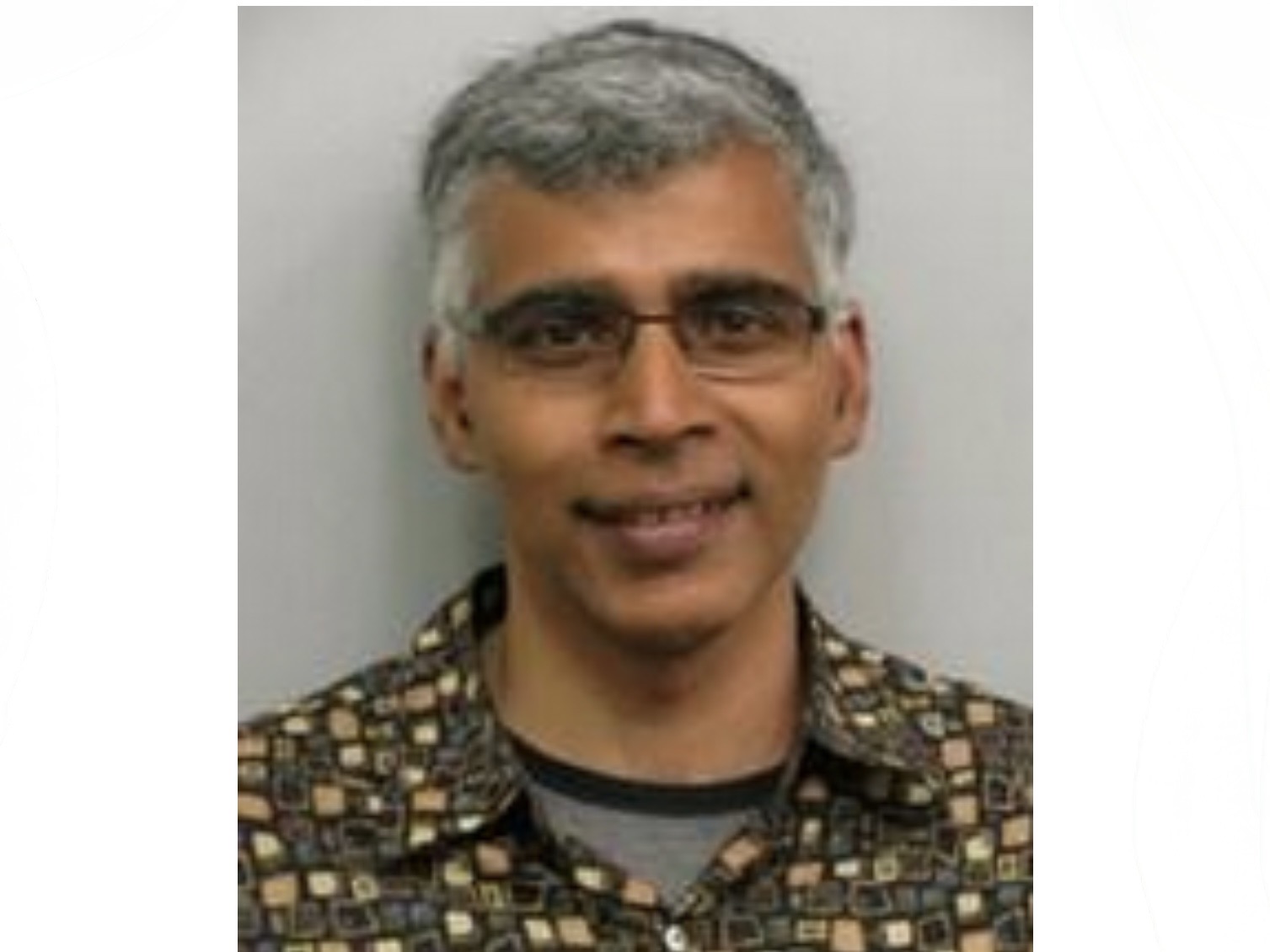
Four top Google AI researchers including Sanjay Ghemawat, an Indian American engineer and senior fellow at Google, are stepping down from the search giant to launch their own AI startup.
Jeff Dean, one of the longest-serving and most influential executives at Google, would lead the company as CEO. Coming with him as co-founders are Ghemawat; Quoc Le, a key AI researcher and founding member of Google Brain; and Oriol Vinyals, a senior research scientist at Google DeepMind.
Together, the group is starting Discovery Loop, a public benefit corporation that seeks to use AI to turbo-charge scientific research.
Discovery Loop says it plans to use high-octane algorithms to initiate and iterate thousands of experiments simultaneously, with the goal of partially automating the research process and expanding the scale at which experimentation can be conducted.
The startup is also interested in using AI to help create more powerful AI (a process known as recursive self-improvement), which would cut human iteration out of the loop entirely.
READ: Nitin Agarwal’s research published at world’s top AI conference (July 22, 2026)
“While science and engineering have tremendously advanced society over past centuries, progress has traditionally relied on slow, sequential human iterations, creating a significant bottleneck,” the company stated in a press release. “Discovery Loop is developing advanced AI systems that leverage massive computational scale to fundamentally transform the speed and efficiency of innovation by automating complete experimental loops.”
The company has received financial support from a number of different sources, including Google’s parent company Alphabet. The initial funding round is being co-led by Radical Ventures and Khosla Ventures, the company announced Wednesday. Kleiner Perkins, Lightspeed, and Doerr Capital also participated.
“The next great frontier for AI is to go beyond answering questions and to begin making discoveries,” the founding team said in a joint statement. “By fundamentally accelerating how engineering and scientific discovery are conducted, we can deliver the benefits of transformative technologies to the world far sooner.”
Dean has worked at Google since 1999 and was Google’s 30th employee. Over the years, he has contributed to Google search’s core infrastructure, including its crawling and indexing system and its query-serving system.
“We think there is opportunity for AI to more fully automate what has traditionally been a very human-intensive experimental loop,” Dean told the New York Times. “You will get both a higher quantity and a higher quality of experiments, and that will lead to scientific breakthroughs and advances.”
Ghemawat, Dean’s close collaborator of more than two decades, has been working at Google since late 1999 on distributed systems, performance tools, indexing systems, compression schemes, memory management, data representation languages, RPC systems, and other systems infrastructure projects.
Before joining Google, Ghemawat worked at the DEC Systems Research Center, in Palo Alto, CA. There he began his long-time collaboration with Dean, who worked at another DEC research lab nearby. Their work at DEC included a Java compiler and a system profiling tool. Born in West Lafayette, Indiana, Ghemawat graduated with a PhD in Computer Science from MIT.
Along with Ghemawat and others, Dean designed the enormously complex software systems that allowed Google’s search engine to reliably and efficiently respond to search queries from billions of people across the world, according to the New York Times.
Read: Indian American energy researcher Arif Sarwat wins economic impact award (July 10, 2026)
With names like MapReduce, BigTable and Spanner, these systems served as a template for the rest of the industry, showing companies like Amazon and Meta how to juggle traffic from a global audience. Dean and Ghemawat are the only two Google employees to be named a “senior fellow,” the company’s highest technical honor.
The departing Google researchers declined to reveal how much money their startup has raised, but they appear to be leaving Google on good terms, according to the Times.
Google’s parent company, Alphabet, has also agreed to provide the computing power they need to build their AI technologies for at least the next year, Dean told the newspaper.
“Over 27 years, Jeff and Sanjay helped to drive some of the most significant technology transitions, from our early search infrastructure to the neural networks that helped create the modern AI era,” Google’s chief executive, Sundar Pichai, stated. “On a personal note, it’s been a privilege to work alongside Jeff and Sanjay.”
Google will collaborate with the new startup, Pichai said.