


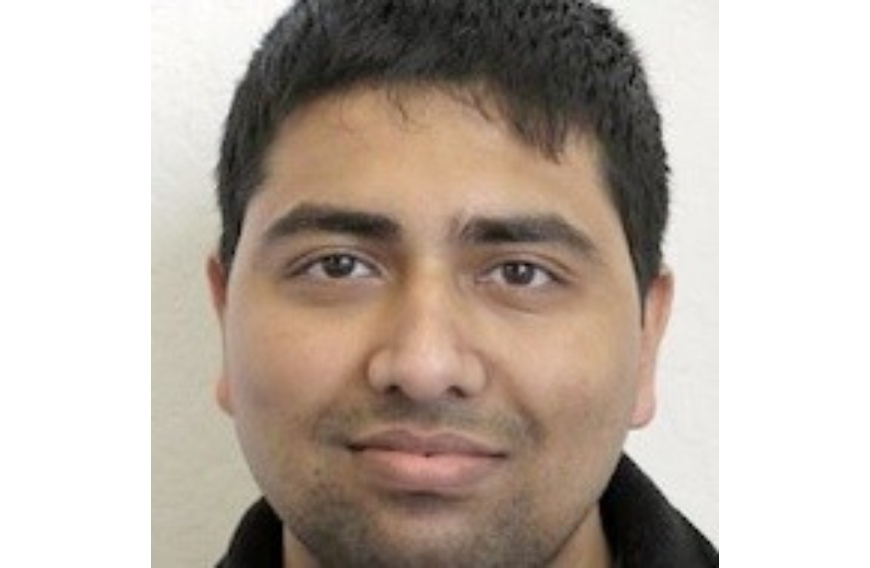
In a shake up of Apple’s artificial intelligence group, the iPhone giant Monday named former Indian American Microsoft, Google veteran Amar Subramanya as its new AI chief replacing John Giannandrea.
Subramanya, an AI researcher who most recently worked for Microsoft and was previously part of Google’s DeepMind AI unit, will lead Apple’s AI efforts moving forward.
The shake up comes as experts this year have said Apple has fallen behind its tech peers in AI, a tech field that has been reinvigorated since OpenAI launched ChatGPT in 2022
Giannandrea, Apple’s senior vice president for Machine Learning and AI Strategy, will serve as an advisor to the company before retiring in the spring of 2026.
Joining Apple as vice president of AI, renowned AI researcher Subramanya will be leading critical areas, including Apple Foundation Models, ML research, and AI Safety and Evaluation, Apple announced. He will report to software chief Craig Federighi,
The balance of Giannandrea’s organization will shift to Sabih Khan and Eddy Cue to align closer with similar organizations, Apple said.
Subramanya brings a wealth of experience to Apple, having most recently served as corporate vice president of AI at Microsoft, and previously spent 16 years at Google, where he was head of engineering for Google’s Gemini Assistant prior to his departure, the company stated.
READ: Microsoft AI chief says company won’t develop chatbots for erotica (
His deep expertise in both AI and ML research and in integrating that research into products and features will be important to Apple’s ongoing innovation and future Apple Intelligence features, it said.
“AI has long been central to Apple’s strategy, and we are pleased to welcome Amar to Craig’s leadership team and to bring his extraordinary AI expertise to Apple,” said Tim Cook, Apple’s CEO.
“These leadership moves will help Apple continue to push the boundaries of what’s possible,” he said. “This moment marks an exciting new chapter as Apple strengthens its commitment to shaping the future of AI for users everywhere.”
After earning a BE in electrical, electronics, and communications engineering from Bangalore University in 2001, Subramanya completed his PhD at the University of Washington in Seattle in 2009 with a dissertation on semi-supervised learning and graphical models, innovative techniques for training AI systems with limited labeled data.
Subramanya’s graduate work also extended to practical applications in speech recognition, natural language processing (NLP), and human activity analysis.
As a visiting researcher at Microsoft Research, he tackled multi-sensory fusion for robust speech systems and speaker verification, earning a prestigious Microsoft Research Graduate Fellowship in 2007.
His scholarly output includes the influential book Graph-Based Semi-Supervised Learning (co-authored with Partha Pratim Talukdar), a staple in machine learning curricula.
READ: Meta’s AI chief says AI lacks ‘4 key human traits’ (
His academic papers span entity resolution, multilingual Natural Language Processing, cross-document coreference, and audio-visual speech enhancement, underscoring his focus on scalable, multimodal systems.
These foundations propelled Subramanya’s 16-year Google tenure, starting around 2009 in research roles that evolved into engineering leadership. By 2023, he was head of engineering for Gemini, Google’s multimodal powerhouse boasting up to 1.2 trillion parameters. Under his watch, teams of over 100 bridged experimental prototypes to production, integrating text, image, and video processing into Search, YouTube, and Android.
Both Microsoft and Google are led by Indian Americans — Satya Nadella and Sundar Pichai — but Subramanya’s stint outside Seattle lasted less than six months before Tim Cook lured him back to Silicon Valley.
Apple said in August that it was “significantly increasing” the amount it spends on AI, and Cook has said it’s a “profound” technology. Apple has struck a deal with leader OpenAI to integrate ChatGPT into some of its products, like Siri.
Although Apple shares are up 16% in 2025, they have lagged many other big tech companies as investors say the iPhone maker has fallen behind its peers that are investing billions into AI data centers, chips and frontier models.
Earlier this year, Apple also delayed the release of a more versatile Siri digital assistant until 2026. Meanwhile, Google, Microsoft, OpenAI and other tech rivals have been releasing ever-improved AI models and features in a fierce race to lead in the technology.