



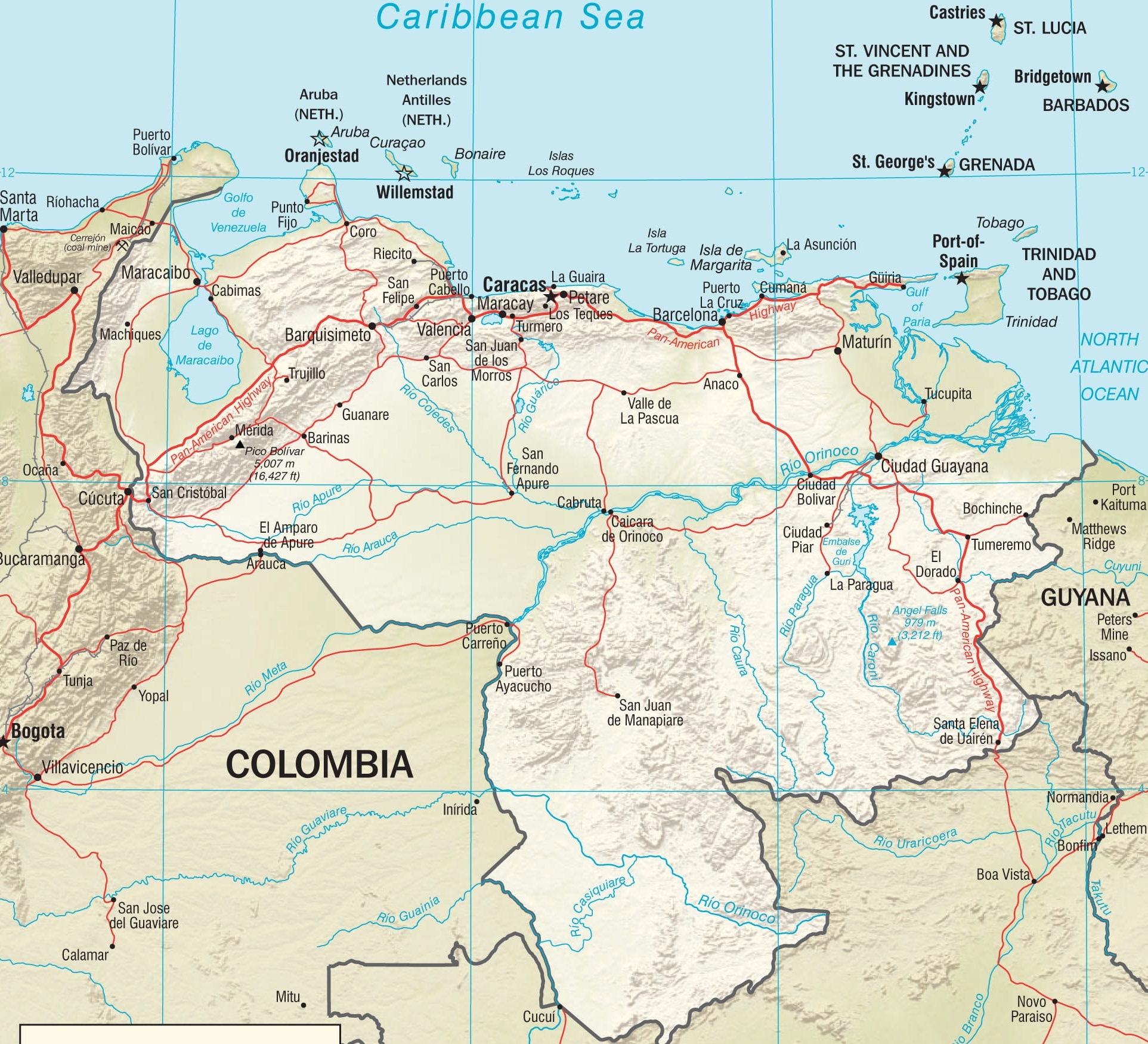
At the crossroads of the Americas, Venezuela’s geography and vast mineral reserves amplify its strategic importance
Now that Nicolás Maduro is in the custody of the United States at the Metropolitan Detention Center in New York, the world has once again witnessed the unmatched reach of American power and the daunting precision of its elite forces. The operation that removed a sitting authoritarian leader from the heart of his own security apparatus was not merely a tactical success; it was a strategic signal.
It demonstrated that in an era of fragmented global authority, the United States retains an extraordinary capacity to project force, intelligence, and coordination across borders with surgical accuracy. Yet this moment is not simply about military dominance. It forces a deeper reckoning with why Venezuela mattered enough to justify such action and what the consequences will be for a region shaped as much by neglect as by intervention.
READ: Sreedhar Potarazu | America at 250: We The People: The common thread (January 1, 2026)
For years, Venezuela existed at the margins of global attention — an oil-rich nation in economic collapse, ruled by an entrenched strongman, generating waves of migration and periodic headlines but little sustained understanding. That changed abruptly with the capture of President Nicolás Maduro by U.S. authorities.
The event is unprecedented in modern hemispheric politics, but it did not occur in isolation. It is the culmination of decades of institutional erosion, criminalization of the state, and geopolitical neglect. To understand why this moment matters, one must first understand why Venezuela itself matters.
Ask an average American to locate Venezuela on a map, and many would struggle. Yet Venezuela occupies one of the most strategically important positions in the Western Hemisphere. Located on the northern edge of South America and facing the Caribbean Sea, it sits along major maritime and air routes that connect North America, South America, Europe, and West Africa. Its geography alone makes it consequential. What elevates its importance further is what lies beneath its soil.
Venezuela holds the largest proven oil reserves in the world, exceeding those of Saudi Arabia. Beyond oil, it possesses vast deposits of gold, iron ore, bauxite, diamonds, coltan, and other strategic minerals essential to modern electronics, defense systems, and renewable energy technologies. Few countries combine this scale of resource wealth with such proximity to the United States. In purely economic terms, Venezuela should have been one of the most prosperous and stable nations in Latin America.
Instead, abundance became a liability. Over time, oil wealth allowed political leaders to centralize power while neglecting institutional development and economic diversification. Under Hugo Chávez, the state oil company became a political instrument, independent institutions were dismantled, and loyalty increasingly replaced competence. By the time Nicolás Maduro assumed power, the foundations of governance had already been hollowed out.
READ: Sreedhar Potarazu | Healthcare year in review 2025: Key trends, challenges and shifts (December 29, 2025)
As oil prices fell and mismanagement deepened, the regime adapted not through reform, but through survival. Venezuela transitioned from a petrostate into something far more dangerous: a criminalized state. While Venezuela is not a major producer of cocaine, it became an indispensable transit hub for the global drug trade. Its long, poorly monitored coastline, permissive airspace, and corruptible institutions made it an ideal corridor for narcotics moving from South America to the United States, Europe, and Africa.
Over time, elements of the military and political elite became embedded in these trafficking networks. The country evolved into a central artery of transnational crime, enabling the global circulation of illegal drugs while eroding the rule of law at home. This transformation did not remain a regional issue. It directly contributed to drug availability, organized crime, and instability far beyond Venezuela’s borders.
Maduro’s ability to remain in power was never rooted in popular legitimacy. It depended on control of the security forces, systematic repression of political opposition, external geopolitical backing, and access to illicit revenue streams, including drug trafficking and illegal mining. Sanctions alone did not create Venezuela’s crisis, but by the time they were imposed, the state had already learned how to function without a legal economy.
The capture of Maduro represents a profound rupture in this model. For the first time, the architecture of impunity that shielded Venezuela’s leadership has been breached. This moment is not simply about one individual facing justice. It signals a challenge to the idea that sovereign authority can indefinitely protect leaders when a state becomes a platform for transnational crime.
What lies ahead is uncertain. A transition away from Maduro presents an enormous opportunity but equally serious risk.
A stabilized Venezuela could re-enter global energy markets, disrupt major narcotics trafficking corridors, slow one of the largest migration crises in the Western Hemisphere, and begin the long process of institutional reconstruction. At the same time, decades of decay have left the state fragile, the economy devastated, and criminal networks deeply entrenched within society.
READ: By Sreedhar Potarazu | Heeding A.R. Rahman’s call: Building the ecosystem Indian classical arts deserve (December 26, 2025)
Rebuilding Venezuela will require far more than elections. It will demand security sector reform, judicial reconstruction, economic transparency, and sustained international coordination. It will also require patience, realism, and an understanding that institutions cannot be rebuilt as quickly as they were dismantled.
Venezuela matters because its collapse has never been contained within its borders. It has affected energy markets, drug flows, migration patterns, and regional security. What happens next will shape not only Venezuela’s future, but the political and economic trajectory of the Western Hemisphere.
For a country that many struggle to locate on a map, Venezuela’s fate will now be impossible to ignore.