



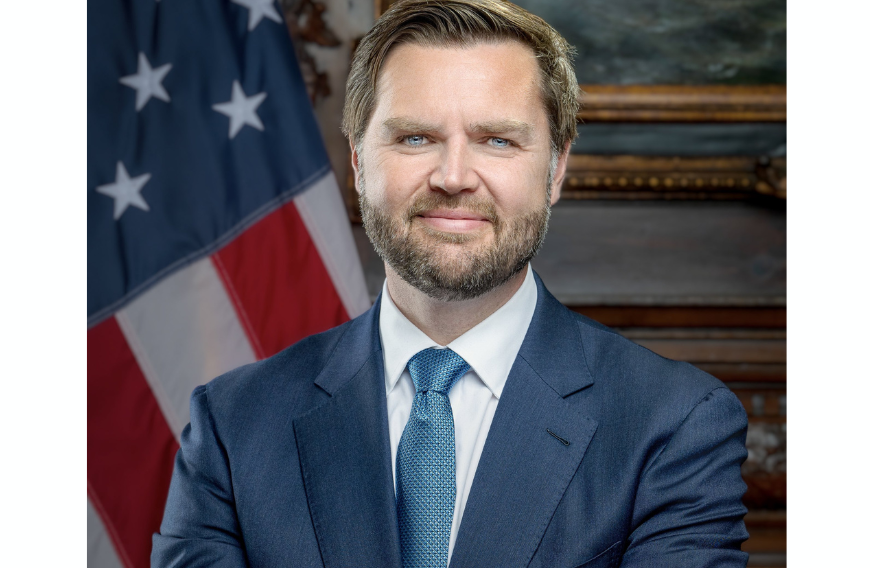
President Donald Trump’s pressure campaign over Greenland appears to be gaining traction, with officials from Denmark and Greenland set to meet Vice President JD Vance.
The foreign ministers of Denmark and Greenland will hold talks with Vance and Secretary of State Marco Rubio on Wednesday, the Danish foreign minister said, as Trump continues to push for greater U.S. control over the Arctic island.
“U.S. Vice President JD Vance also wanted to participate in the meeting, and he will host the meeting, which will therefore be held at the White House,” Danish Foreign Minister Lars Lokke Rasmussen told reporters in Copenhagen on Tuesday.
READ: Vivek Ramaswamy pitches Ohio’s education reform, receives backslash (
“Our reason for seeking the meeting we have now been given was to move this whole discussion… into a meeting room where we can look each other in the eye and talk about these things,” he added.
Rasmussen and his Greenlandic counterpart Vivian Motzfeldt had requested a meeting with Rubio after Trump recently stepped up threats to take over Greenland, an autonomous territory under the Kingdom of Denmark.
Denmark and Greenland share a long territorial and political history rooted in Norse settlement and later European colonial rule. Greenland was first settled by Inuit peoples, supposedly followed by Norse colonies established from Iceland in the late 10th century under the Norwegian crown, though the extent and continuity of this authority remain debated.
When Denmark and Norway entered a union in 1380, Greenland became part of this realm, despite limited direct contact for several centuries. After the union dissolved in 1814, Denmark retained control of Greenland under the Treaty of Kiel, a claim later challenged in international disputes.
During the 18th century, Denmark reasserted its presence through missionary and trading activities, establishing Greenland as a Danish colony. In 1953, Greenland’s status changed from a colony to an integral part of the Kingdom of Denmark. Gradual political reforms followed, granting Home Rule in 1979 and expanded Self-Government in 2009. Today, Greenland remains part of the Danish Realm but exercises broad autonomy, while Denmark retains responsibility for foreign affairs, defense, and monetary policy.
Trump first floated the idea of a U.S. takeover of Greenland in 2019 during his first term in office, although he faces opposition in Washington, including from within his own party.
The renewed diplomatic engagement highlights how Greenland has moved from being a remote territory to a focal point of global strategic interest. The situation reflects broader shifts in international politics, where Arctic geography, security considerations, and natural resources may increasingly shape relations among major powers, though the long-term balance of these factors remains unclear.
READ: ‘Act like Americans’: Indian American Nikki Haley’s son sparks row over anti-H-1B stance (
For Denmark and Greenland, the talks underscore the need to balance autonomy, sovereignty, and alliance commitments while asserting their own political agency, a balance that may face growing pressure in the future.
Importantly, the developments show that historical relationships and legal arrangements still matter in modern geopolitics, even as power dynamics evolve. The decision to address tensions through direct meetings signals an effort to prevent escalation, but whether dialogue will resolve underlying disagreements is yet to be seen.