



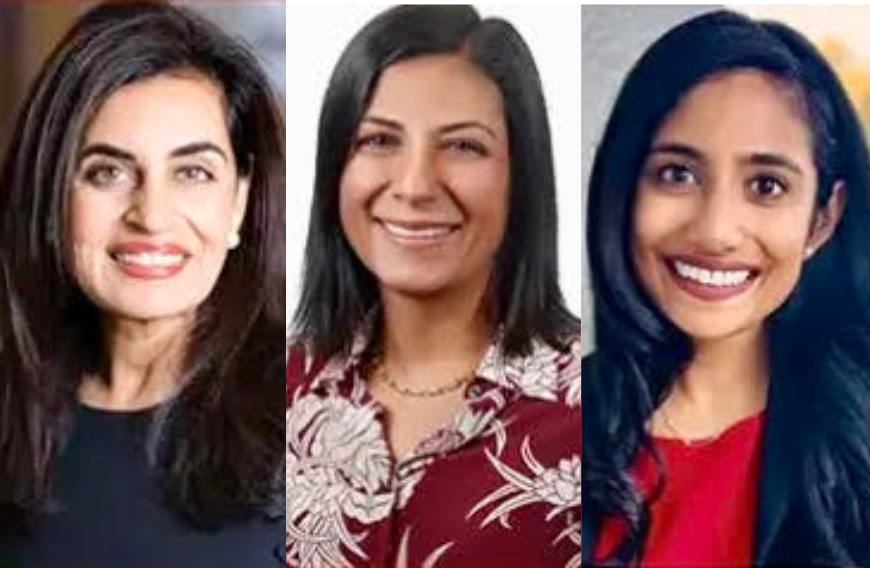
Three Indian Americans — Nisha Kumar Behringer, Arti Garg and Medha Gargeya — are among Harvard Alumni Association (HAA)’s 2026 candidate slates for the Board of Overseers, one of the University’s two governing boards, and the HAA’s own elected directors.
HAA announced a slate of nine candidates for the Board of Overseers and nine for HAA elected directors kicking off the election process for Harvard’s two alumni leadership bodies.
Balloting is open from April 1 through May 19 at 5:00 P.M. Degree holders other than officers of instruction and government may vote for Overseer candidates; all degree holders can vote on the HAA elected-director candidates.
This cycle, virtually all of the Board of Overseers candidates are top executives, though many have experience in the public sector, according to an HAA news release.
READ: Two Indian American alumni elected to Harvard leadership boards (
The candidates for the Board of Overseers — Harvard’s second-highest governing body — include Birkenstock Holding PLC independent director and audit committee chair Nisha Kumar Behringer and Arti Garg, executive vice president and chief technologist at industrial software company AVEVA.
HAA elected directors candidates include Captain Medha-Kameswari Bhamidipati “Medha” Gargeya, an Air Force Reserve officer, Senior Associate, WilmerHale and Lecturer on Law, Harvard Law School.
The 13-member nominating committee, which includes three current or former members of the Board of Overseers, spent the fall reviewing hundreds of prospective candidates before settling on its picks, according to the release.
READ: Harvard students to host India Conference in Feb. 2026 (
Candidates can also self-nominate for the Board of Overseers until Jan. 29 if they receive signatures from more than 1% of the total number of eligible voters in the last election for the board.
Both elections have suffered from low voter turnout in previous cycles. Last year, only 39,725 of more than 400,000 eligible alumni voted in the Overseer election.
Nine Overseer candidates were put forward rather than the traditional eight to account for the resignation of board member Vikas P. Sukhatme.
The candidate with the sixth-most votes will serve for two years to complete the rest of Sukhatme’s term.