



When General Manoj Mukund Naravane’s memoir entered public debate, it triggered predictable controversy.
Accusations of indiscretion collided with defenses of candor. Political loyalties hardened into reflexive outrage. Yet beneath the noise lay a far more unsettling story-not about one general, but about the nature of leadership when uncertainty is absolute, time is compressed, and political authority falls silent.
For some, the episode recalled the Cuban Missile Crisis, studied not merely as a Cold War standoff but as a masterclass in decision-making under radical uncertainty. For others, it echoed the dilemmas of Douglas MacArthur in Korea and Stanley McChrystal in Afghanistan-commanders trapped between battlefield logic and political hesitation.
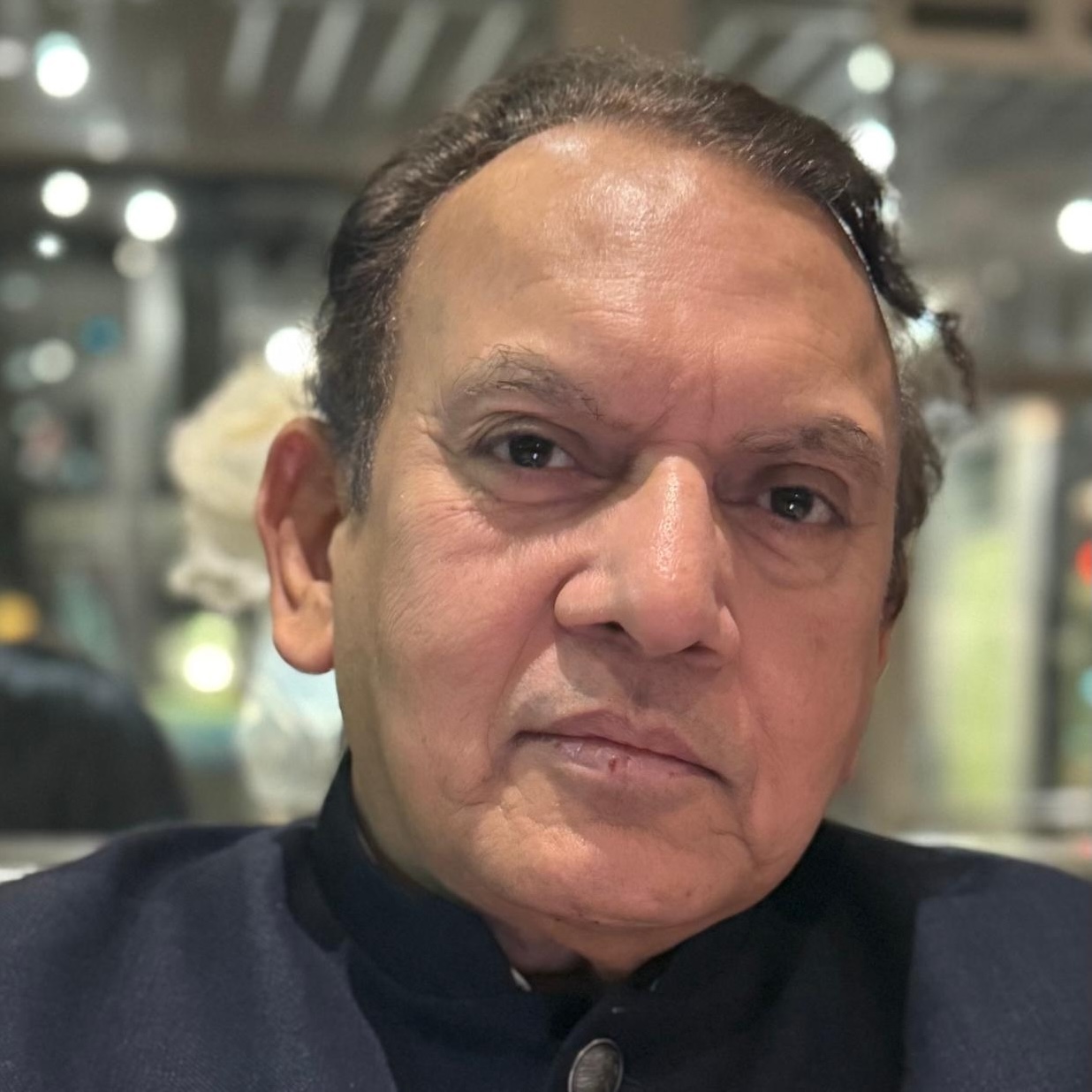
Naravane’s moment, however, reveals something deeper: the transformation of political indecision into a strategic posture, and the moral solitude imposed on commanders when leadership retreats.
Leadership, whether in war or business, rarely operates under conditions of clarity. Corporate executives decide amid volatile markets, flawed forecasts, and partial data. Military commanders operate under an even denser fog: fragmented intelligence, opaque enemy intent, unforgiving terrain, and merciless time pressure. The difference is not uncertainty, but consequence.
A flawed business decision may sink a firm. A flawed military decision may redraw borders, reorder alliances, and bury nations in grief.
In August 2020, that burden converged on Naravane at Rechin La, where Chinese armored columns advanced toward Indian positions along the disputed Himalayan frontier. The moment carried profound danger. A single artillery order could have shattered the brittle calm and triggered escalation between two nuclear-armed states.
Naravane sought clarity from the highest political authority. He did not ask for tactical advice. He sought strategic ownership.
The response – “Do what you think is appropriate” – was not empowerment. It was abdication disguised as trust.
Delegation is a tool of leadership. Abdication is its betrayal. The difference lies in accountability. Delegation retains responsibility; abdication disperses it into silence.
Unlike the Cuban Missile Crisis, where John F. Kennedy constructed a disciplined decision-making architecture: structured debate, dissent, calibrated pacing, and final executive ownership — India’s crisis management produced ambiguity. Kennedy agonized but decided. His caution slowed escalation; his decisiveness contained it. In South Block, strategic clarity dissolved into studied vagueness. Political authority receded precisely when it was most needed.
This silence transformed Naravane’s role. He became not merely a commander but a reluctant statesman. His calculations extended far beyond troop movements and firing arcs. He weighed escalation ladders, alliance responses, economic vulnerability, domestic political shockwaves, and the irreversible arithmetic of casualties. The soldier became custodian of national restraint.
READ more column by Satish Jha
His choice — deterrence without ignition, deploying armor nose-to-nose to halt the advance without firing — succeeded tactically. War was avoided. But strategic restraint purchased at the cost of institutional distortion leaves deeper scars. It forces military leaders into political judgment without political legitimacy.
Naravane’s predicament belongs to a tragic lineage.
Douglas MacArthur, commanding UN forces in Korea, believed political hesitation guaranteed strategic defeat. Truman feared escalation into nuclear catastrophe. Their clash ended not in synthesis but rupture. Stanley McChrystal, decades later, operated in Afghanistan under shifting political objectives and contradictory mandates.
Victory was demanded rhetorically, constrained operationally. Strategy dissolved into tactical endurance.
Yet Naravane’s case is distinct. MacArthur challenged political authority. McChrystal strained against political ambiguity. Naravane confronted political silence, the most corrosive form of civil–military dysfunction.
Silence shifts responsibility downward while preserving deniability upward. It compels generals to make political decisions without political mandate. It turns command into moral isolation.
The deeper pathology is the rise of narrative governance. In an age of permanent media scrutiny, politics increasingly prioritizes perception over position, optics over outcomes. Strategic ambiguity becomes not a diplomatic tool but a domestic messaging device. Silence becomes a shield. Vagueness becomes virtue.
Yet on contested frontiers, narrative does not halt armored columns. Maps do not bend before speeches.
Mountains do not retreat before press releases.
By withholding explicit instructions, political leadership preserved plausible deniability. Had war erupted, responsibility could have been deflected downward. Had peace prevailed, restraint could be retroactively claimed as wisdom. The distribution of risk thus became asymmetrical: soldiers bore consequence, politicians retained narrative flexibility.
READ more column by Satish Jha
Such asymmetry corrodes civil–military trust. In the short run, it forces commanders into existential solitude. In the long run, it weakens strategic culture. Over time, it produces a dangerous normalization of strategic vacuum.
If political silence becomes standard practice, military command becomes strategic roulette, dependent on the temperament and judgment of individuals rather than institutional coherence. National security becomes personalized. Deterrence becomes contingent. Strategy dissolves into episodic improvisation.
Great powers are not distinguished by the brilliance of their generals but by the clarity of their political decision-making. The Cuban Missile Crisis endures not because Kennedy possessed superior intelligence, but because he constructed a system capable of absorbing uncertainty, debating dissent, and producing deliberate action. Institutional architecture mattered more than individual genius.
India’s challenge is therefore not military capability. It is strategic ownership.
Naravane’s memoir does not indict personalities. It exposes structures. It forces a reckoning with a deeper truth: that the gravest failures of leadership often wear the mask of prudence. Hesitation can masquerade as caution. Silence can disguise itself as restraint. Yet at moments of supreme danger, the worst decision is not escalation, nor restraint — it is not deciding at all.
Leadership is not the art of controlling outcomes. It is the courage to own them.
Naravane chose deterrence. He chose restraint. He chose to carry alone a burden that should have been institutionally shared. History may judge his tactical choice kindly. But it should judge far more harshly the strategic vacuum that made such solitude necessary.
For in war, as in governance, silence is never neutral. It is merely responsibility deferred — and deferred responsibility, when it finally arrives, arrives with compound interest.