




By Jaswant Lalwani
“No age lives entirely alone; every civilization is formed not merely by its own achievements but by what it has inherited from the past,” observed the British monuments man Ronald Balfour. The line returned to me as I stepped off Fifth Avenue into the hushed interior of The Frick Collection.

Inside, Manhattan’s hyper-energy dissolves. Marble, silk, and disciplined quiet take over. Few museums disarm so quickly. Fewer still demand that you slow down enough to earn what you are about to see.
After a four-year renovation, the Frick has reopened—not merely refreshed but genuinely reawakened. Henry Clay Frick’s 1914 mansion, long among the most patrician of private homes, now feels newly lucid. The limestone façade glows. The interiors have been restored with a conviction that feels almost radical today: art, when properly placed, speaks for itself.
Led by Selldorf Architects, the renovation is an act of architectural restraint. The Gilded Age bones remain intact, but the house now breathes more freely. For the first time, visitors ascend into the former family quarters, once private, now transformed into serene, light-filled galleries.
READ: Jaswant Lalwani | Christie’s sale confirms it: Indian art has arrived on the world stage (November 5, 2025)
Vermeer’s Mistress and Maid is magnificent in its restraint . The charged stillness between the two women—one standing, one seated—feels suspended, a private exchange revealed only through proximity and patience. Nearby, a Rembrandt self-portrait
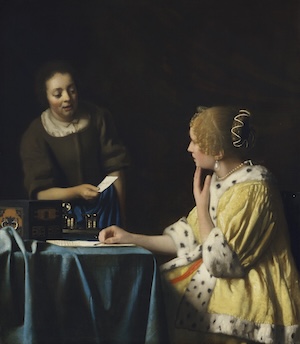
Photo: Joseph Coscia Jr.
meets the viewer with unsparing clarity. The paint is thick, worked, unapologetically physical. The eyes are alert, skeptical, fully present.
Across the galleries, the Frick stages a masterclass in the paintings I return to again and again. Hans Holbein’s Sir Thomas More radiates power through precision: crimson velvet, fur-lined sleeves, intelligence honed to a blade. Everything is deliberate. Having recently read Peter Ackroyd’s biography of More, the portrait registers less as likeness than as moral argument—conscience staring back at you.
The mood shifts with Giovanni Bellini’s St. Francis in the Desert. Here, solitude becomes revelation. The saint stands open-armed before a vast, breathing landscape—rocks, animals, sky, and light arranged with devotional clarity. What moves you is not theology but attention itself: the sense that seeing, fully and humbly, might be a form of grace.
READ: Jaswant Lalwani | Sundaram Tagore: The making of a cultural ambassador (December 6, 2025)
Portraits at the Frick often carry an edge. Titian’s Pietro Aretino exudes intellectual swagger and unapologetic self-regard, his gaze unmistakably modern. Veronese’s Choice of Hercules transforms moral struggle into compositional ease, ethics rendered beautiful. Even El Greco’s fevered, elongated St. Jerome feels disciplined here—fire contained within stone.

Photo: Michael Bodycomb
At the heart of the house lies the Garden Court, the museum’s quiet fulcrum. Water murmurs beneath the glass dome. Palms rise toward filtered light. The space feels cinematic but never sentimental. It resets the eye and steadies the mind.
READ: Jaswant Lalwani | One of New York’s Bravest: A day in the life of an FDNY firefighter (October 21, 2025)
Downstairs, the collection broadens without losing tension. Goya’s The Forge lands with muscular force: bodies bent under labor, muscle and shadow colliding in heat and weight. It is unsentimental, unheroic, almost brutal—and startlingly contemporary. Relief follows with Rousseau’s Village of Becquiny, an 18th-century vision of leisure composed with studied restraint.

Photo: Michael Bodycomb
Then Fragonard arrives, The Progress of Love, painted for Madame du Barry, mistress of Louis XV, unfolds in Rococo splendor—flirtation, fantasy, theatrical desire. Yet even here, indulgence is tempered. This is the Frick’s curatorial genius. The museum offers a roll call of the Western canon—Rembrandt, Vermeer, Titian, Goya, Turner, Gainsborough, Claude Lorrain—yet nothing overwhelms. Paintings are granted space, silence, dignity.
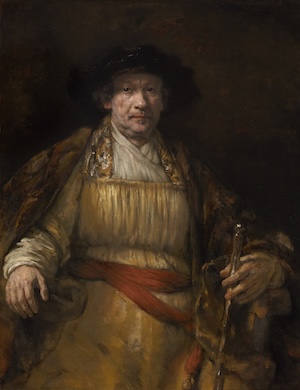
Photo: Michael Bodycomb
The reopening honors Frick’s founding ethos with near-militant fidelity. Skylights have been restored. Daylight falls in measured gradients. Original silk wall coverings were rewoven by the same French atelier that produced them more than a century ago. The experience is tactile and exacting. Venetian glass catches the light. You move not through a timeline but through encounters—each one intimate, human, quietly demanding.
When you step back onto Fifth Avenue, the city feels louder, sharper. The Frick offers no buffer for that return. What it leaves instead is more valuable: a recalibrated sense of solitude. As Paul Sachs once observed, “We must guard jealously all we have inherited from a long past, all we are capable of creating in a trying present, and all we are determined to preserve in a foreseeable future. Art is—and always has been—the visible evidence of the activity of free minds.”
(Jaswant Lalwani is a global real estate advisor and lifestyle consultant in New York City. He is also an avid writer and globetrotter. To read more of his work, visit www.jlalwani.com)