


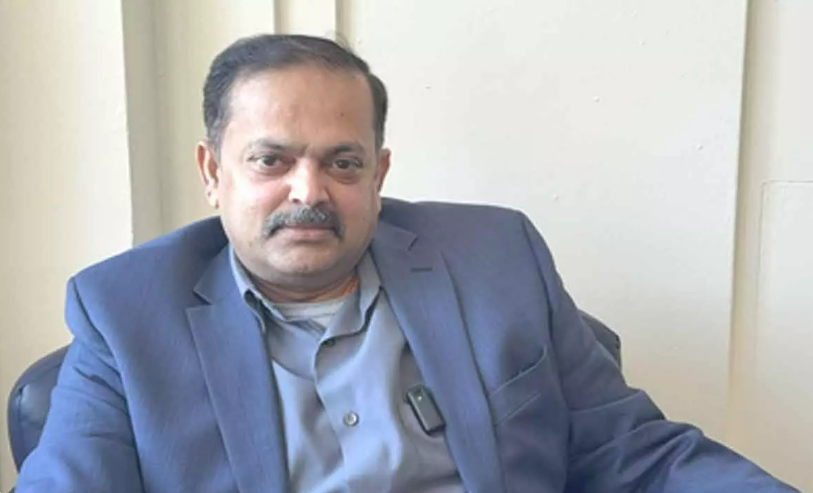
For more than a decade, Ashok Baddi has been a familiar face in the quiet, tree-lined neighborhoods of Troy. Now, the Indian American community leader is ready to trade his local activism for a seat in the state capital with a bid for the Michigan House of Representatives in District 56.
Baddi’s journey to the political stage is a quintessential immigrant story, colored by years of living in rural Missouri and Georgia before settling in the Detroit suburbs.
A native of Hyderabad, India, Baddi arrived in the United States in 2005 with his wife, a pediatric nephrologist. Reflecting on his path, he describes a deep-seated belief that civic engagement is the ultimate expression of American identity.
“Once we are here, we are American, as American as anybody else,” Baddi said, emphasizing that his motivation to run stems from a desire to see tangible, “people-first” leadership in his home district.
His candidacy comes at a pivotal moment for District 56. The area has seen a demographic shift, with Indian Americans now making up nearly 25% of the population. Baddi believes this growing voting block roughly 12,000 strong holds the power to “make or break” the upcoming election.
While Baddi was previously active within the Democratic Party, helping fundraise for the governor and supporting local school board races, he has recently realigned with the Republican Party citing a shift in his core values, particularly regarding education and social issues.
A central pillar of Baddi’s platform is the preservation of academic excellence in local schools. He has been a vocal critic of efforts to eliminate honors programs in Troy, arguing that children should be allowed to learn at a pace that matches their individual capabilities.
Read: Indian American Priya Jain nominated as NJ transportation Commissioner
“I believe every child has a different learning capacity and capability, and it should remain so,” Baddi said. “If they’re capable of learning, they should be allowed to do that.”
On the campaign trail, Baddi is challenging Democratic incumbent Sharon MacDonell. Despite having supported her in the past, Baddi now argues that she has failed to deliver on essential local needs, such as road improvements and balanced educational policies.
Baddi is also a staunch advocate for legal immigration, describing the U.S. as a unique land of “open door” opportunities that must be maintained through proper legal channels.
As the race heats up, Baddi is calling on his community to move beyond passive support and embrace the financial realities of modern campaigning. In his words, “The dollar is the mother’s milk of politics,” and for the Indian American voice to truly resonate in Lansing, it must be backed by both votes and investment.