



By Senator Charles Sydnor III and Sreedhar Potarazu
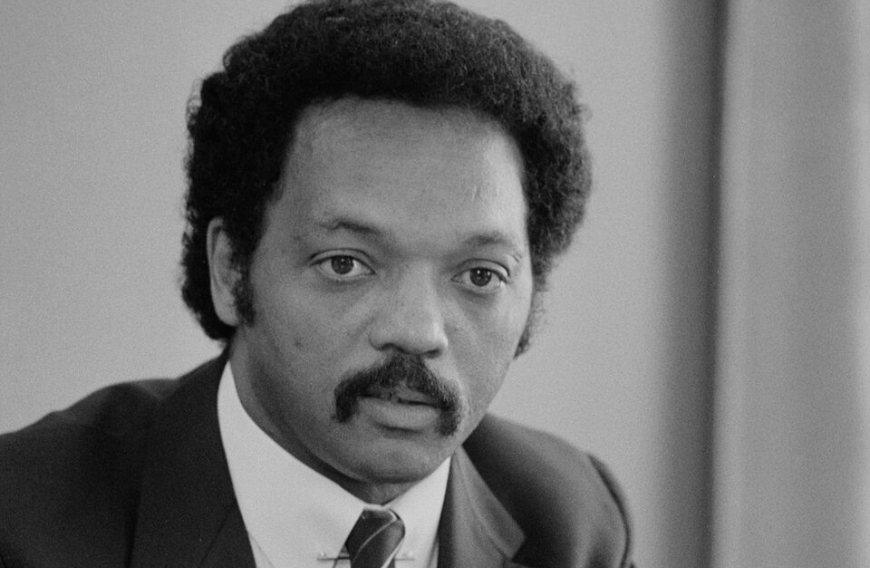
As we remember Reverend Jesse Jackson, we are reminded of a form of leadership rooted not in absolutes, but in balance. Rev. Jackson never framed the Black experience—or the American experiment—as a choice between despair and hope. His life’s work rejected false binaries: protest versus policy, moral outrage versus reconciliation, realism versus optimism.
He understood that progress is born not from denying hardship nor surrendering to it, but from holding both realities at once. Like the half-empty, half-full glass, his leadership reflected an ability to confront injustice without losing faith, to demand accountability without abandoning unity, and to act decisively while acknowledging unfinished work. In honoring him, we are invited to recover balance itself as a moral discipline.
In an era defined by constant uncertainty, polarization, and rapid change, the greatest challenge facing leaders and citizens is not a lack of information or authority, but a diminishing capacity for perspective. We have trained ourselves to see the world as “black or white,” success or failure, threat or opportunity—often recalibrated daily by the flavor of the moment. The deceptively simple question of whether a glass is half empty or half full reveals this deeper limitation in how we perceive and respond to reality.
Across nations, institutions, and organizations, leadership failures often arise from an inability to hold opposing truths at the same time. The instinct to choose sides, to resolve complexity quickly, creates a pendulum that swings endlessly—certainty today, reversal tomorrow. This is not leadership anchored in wisdom, but leadership reacting to discomfort with ambiguity.
Black History Month invites us not only to remember achievements, but to examine the deeper intellectual and moral lessons embedded in the Black experience in America. Few histories illustrate the truth of the “half-empty, half-full” reality more vividly. The Black American story has always existed in simultaneous states of oppression and resilience, exclusion and contribution, suffering and extraordinary creativity. To see that history only as tragedy is to erase endurance; to see it only as progress is to deny injustice. Black history demands the discipline of holding opposing truths at once.
READ: Civil rights leader and former US presidential hopeful Jesse Jackson dies at 84 (February 17, 2026)
This discipline was central to the leadership of Martin Luther King Jr. King spoke of a “beloved community” while sitting in jail, preached nonviolence amid brutality, and insisted on hope without minimizing pain. His leadership did not emerge from naïveté or denial, but from equanimity—the capacity to act morally without collapsing into bitterness or illusion. Like Jackson after him, King understood that clarity does not require simplification, and courage does not require certainty.
For centuries, Black communities were forced to live within imbalances imposed from the outside—laws, systems, and narratives that insisted reality be framed as either failure or threat. Yet survival itself required rejecting these false binaries. Progress came not from denying emptiness, but from recognizing it as space: space for resistance, culture, faith, and renewal. From Reconstruction to the Civil Rights Movement to the present day, Black leadership often rested not on absolute answers, but on steadiness amid contradiction.
In this way, Black History Month is not only commemorative; it is instructional. It challenges us to abandon simplistic thinking in favor of balance—to recognize that justice and patience, anger and hope, grief and purpose can coexist. The half-empty, half-full glass is not an abstract metaphor here; it is a lived reality. The enduring lesson is not choosing one side of the glass, but understanding the entirety of it—pessimism and optimism, despair and hope—as a measure of moral maturity.
Yet embedded within the question itself lies a philosophical error. When we ask whether the glass is half empty or half full, we assume emptiness and fullness are competing states. In doing so, we miss the more fundamental truth: they are not in conflict. They coexist.
And yet, every day we witness decisions on immigration, healthcare, affordability, and social policy being made by leaders who see challenges as either half full or half empty—often changing their conclusions daily. Emptiness and fullness are not alternative interpretations of reality; they are the natural equilibrium of the universe. Leadership rooted in wisdom begins with recognizing that reality rarely offers clean answers—only integrated ones.
Our discomfort with this coexistence arises from a habit of binary thinking. We are conditioned to resolve ambiguity quickly, to reduce complexity into choices that feel controllable. But the most consequential decisions—those involving human systems, ethical dilemmas, and long-term consequences—do not submit to simple categorization.
Modern physics echoes this insight. In quantum theory, reality is governed not by rigid binaries such as zero or one, presence or absence, but by superposition—multiple states existing simultaneously. The universe operates not on “either/or,” but on “both/and.” It is not one or zero; it is one and zero.
Ancient traditions articulated this long before modern science. In the Bhagavad Gita, this balanced awareness is described as sambuddhi—equanimity of mind. It is the capacity to remain steady amid success and failure, pleasure and pain, praise and blame. For leaders like King and Jackson, this was not detachment from responsibility, but freedom from reactivity.
A similar understanding lies at the heart of the Taoist concept of yin and yang. Light contains darkness; movement contains stillness; fullness contains emptiness. Yin and yang do not negate one another—they define one another. Each one carries within it the seed of its apparent opposite, and harmony emerges not through dominance, but through balance.
Seen through this lens, the glass is no longer a psychological test but a symbol of totality. Creation unfolds through paired experiences—love and loss, growth and decline, pleasure and pain. None exist in isolation. To demand only fullness is to deny the emptiness that makes space for renewal, reflection, and possibility. Emptiness, far from being a deficit, is potential.
The refusal to accept this balance may explain the pervasive anxiety of modern life—and the instability of modern leadership. We live in a culture that demands constant progress, unbroken positivity, and perpetual certainty. Leaders project confidence even when clarity is absent, promise growth without acknowledging limits, and treat uncertainty as failure rather than a condition of transformation.
Anxiety, in this sense, is not merely clinical—it is philosophical. It arises from resisting half of reality. When leaders cannot tolerate uncertainty, they compensate with control. When they cannot accept loss, they deny risk. When they cannot sit with emptiness, they fill it with noise, speed, and spectacle. True steadiness, however, emerges not from eliminating ambiguity, but from learning to remain present within it.
Perhaps wisdom—both personal and collective—begins when we stop asking whether the glass is half empty or half full, and instead recognize that we are witnessing equilibrium itself. Black history has always demanded this recognition: the ability to see dignity alongside deprivation, progress alongside unfinished justice, resilience alongside rightful anger. Nothing is erased. Nothing is exaggerated.
For leaders, this way of seeing does not weaken action—it refines it. It replaces reactivity with moral clarity, fear with steadiness, and false certainty with purpose rooted in truth.
This was the quiet authority of King. It was the enduring strength of Jackson. And it remains the most profound lesson Black history offers a world still struggling to see the whole glass.
(Sreedhar Potarazu, MD, MBA, is an ophthalmologist, healthcare entrepreneur, and author with more than two decades of experience at the intersection of medicine, business, and technology.
Charles E. Sydnor III is an American attorney and Democratic politician serving since 2020 in the Maryland State Senate for District 44, after previously representing District 44B in the House of Delegates.)