



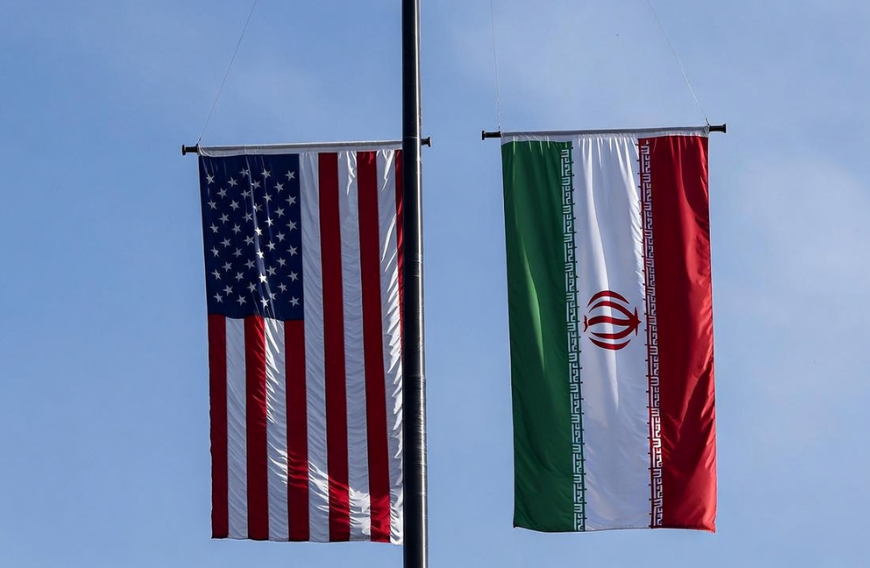
It looks like President Donald Trump is making major threats against Iran in order to get them to sign his deal. Trump says the world will find out “over the next, probably, 10 days” whether the U.S. will reach a deal with Iran or take military action.
Trump stated that discussions were underway but emphasized that Iran would need to agree to what he called a “meaningful deal” addressing concerns over its nuclear program. At the same time, reports indicated that the United States had increased its military presence in the Middle East, including the positioning of additional naval and air assets in the region.
The Iranian government has told the UN Secretary-General that it will regard U.S. bases in the region as legitimate targets if used in any military aggression against Iran.
How each side interprets the other’s actions—whether as legitimate defense, coercive pressure, or provocation, may fundamentally shape the course of negotiations and the potential for conflict.
READ: Trump invokes Insurrection Act, threatens potential troop deployment (October 7, 2025)
Social media and public rhetoric now magnify these effects, allowing messages intended for domestic audiences to reverberate across the international stage, influencing allies, adversaries, and neutral observers alike.
Satellite images have also shown that Iran has reinforced military facilities, and the country’s Supreme Leader, Ayatollah Ali Khamanei, has posted messages to social media threatening U.S. forces.
“The U.S. President constantly says that the U.S. has sent a warship toward Iran. Of course, a warship is a dangerous piece of military hardware,” one of Khamenei’s posts read.
“However, more dangerous than that warship is the weapon that can send that warship to the bottom of the sea.”
As of February 2026, Iran and the United States are engaged in indirect negotiations over Tehran’s nuclear program, aiming to revive some form of agreement on curbing enrichment in exchange for sanctions relief with the talks, mediated by Oman and held in Geneva and Muscat.
Iran wants economic benefits and preservation of its right to peaceful nuclear technology, while the U.S. demands significant limits on enrichment and expanded terms, including regional security issues — points Iran has largely refused to negotiate.
READ: Trump’s federal deployments in US cities rack up a $500 million bill (
Both sides claim some progress, but deep red-line issues remain unresolved, and the risk of escalation persists if diplomacy falters. Observers continue to watch the talks closely, as the next steps are highly uncertain and could determine regional stability for months ahead.
The current situation between Iran and the United States underscores the fragile and unpredictable nature of high-stakes diplomacy in a region where military posturing and public statements carry immense weight. How each side interprets the other’s actions—whether as defensive measures, coercive pressure, or outright provocation— could fundamentally influence whether negotiations succeed or escalate into conflict. Even minor incidents have the potential to spiral, given the heightened alertness on both sides and the complex network of regional and global interests involved.
The role of media and social platforms further complicates the landscape, as messages intended for domestic audiences may reverberate internationally, shaping perceptions, alliances, and responses in ways that are difficult to predict. This amplifies uncertainty for policymakers, who must balance strategic objectives with the possibility of misinterpretation or unintended escalation.